
Two-Tone Accent Wall Ideas for Small Bedrooms
Where to place the color line behind a small bedroom headboard, which pairings hold up at close range, and the peel-and-stick option if painting isn't allowed.

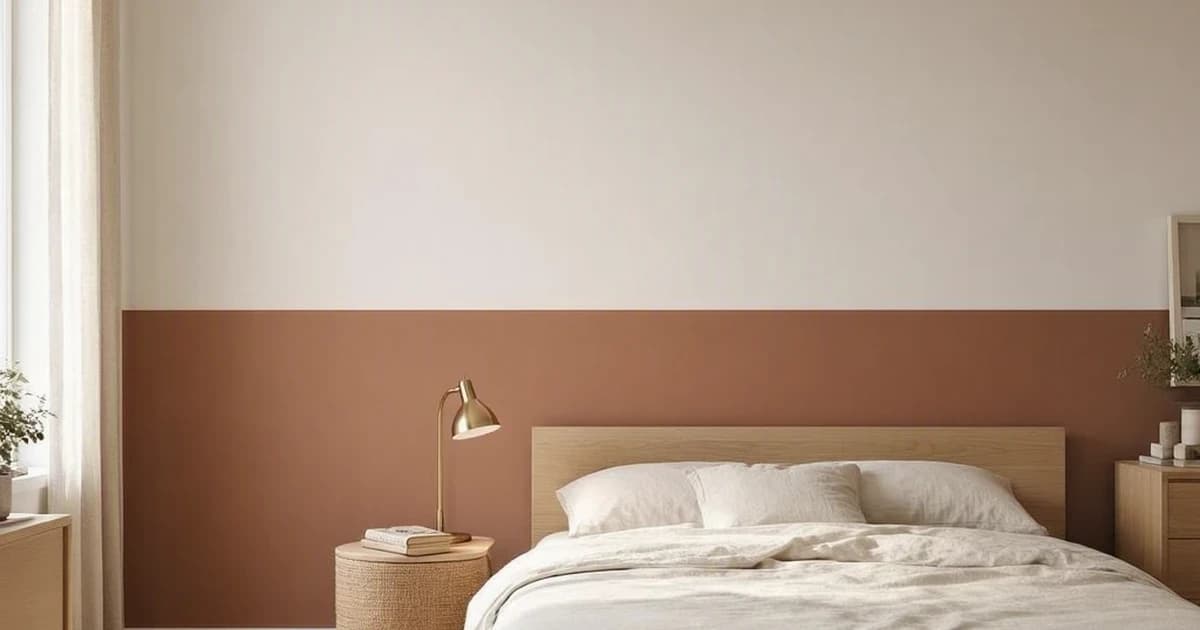
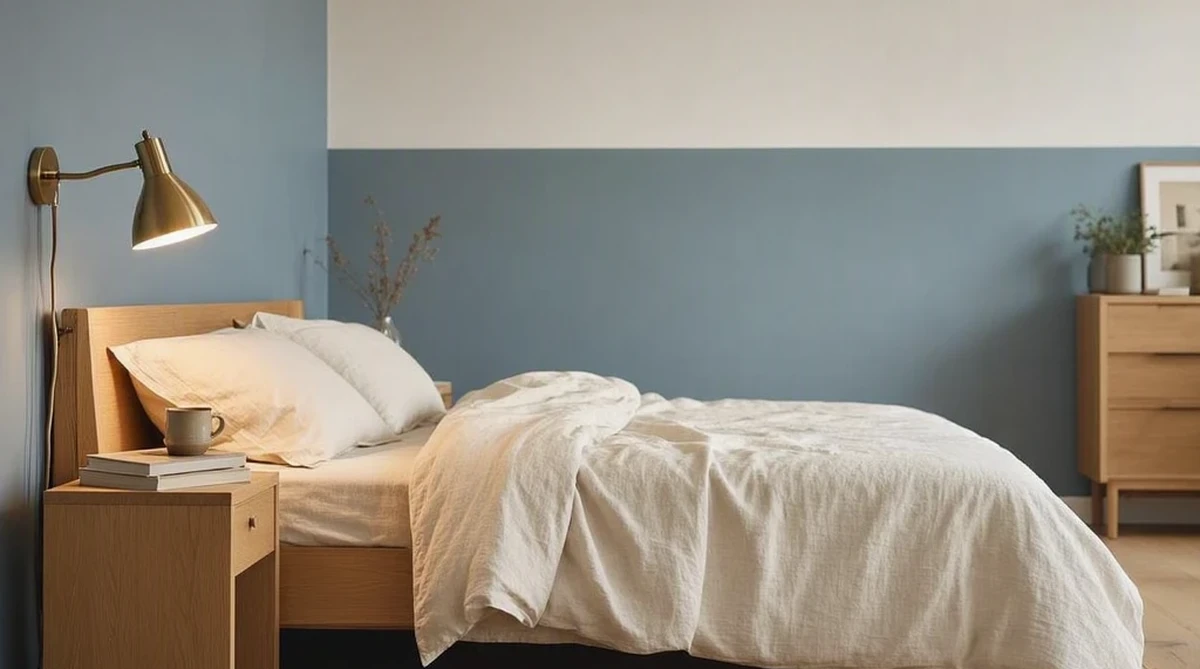
Put the color line 36 to 48 inches up the wall, darker below and lighter above, and a small bedroom reads taller instead of cramped.
Jump to:
- Why this works in a small bedroom
- Where to put the line
- Four ways to do it
- Color pairings for a room you sleep in
- Renter-safe versions: no paint required
- Mistakes that flatten the effect
- FAQs
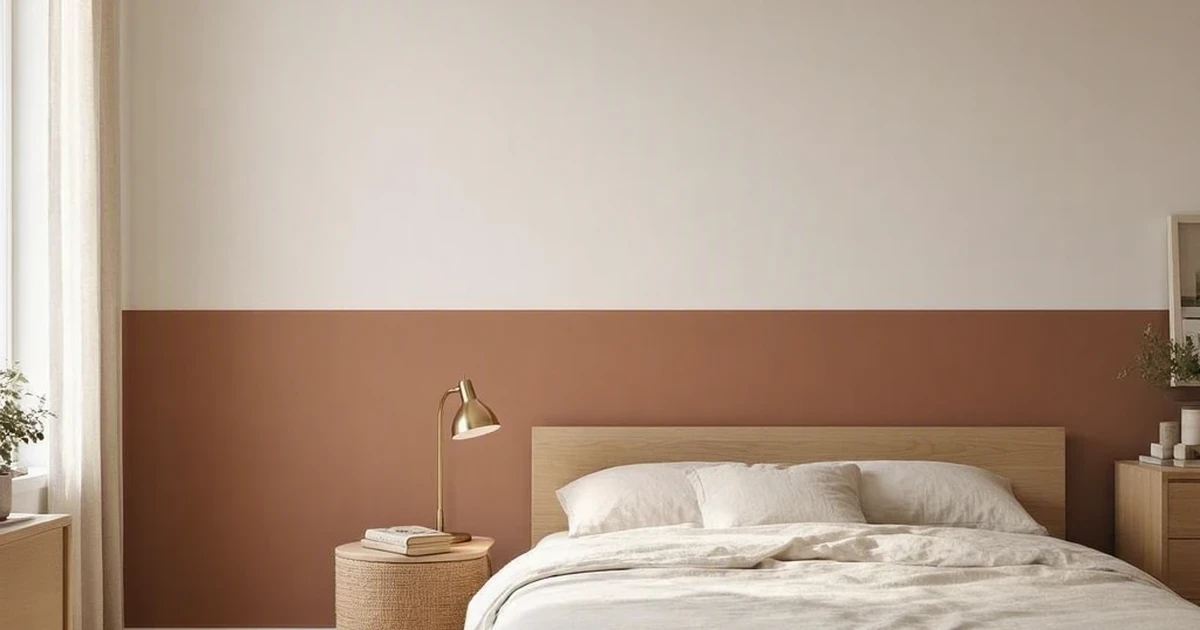
A bedroom is the room you look at from six inches away, lying down, for a third of your life. That changes the math on two-tone walls: the split has to relate to the bed, not just the wall.
Why this works in a small bedroom
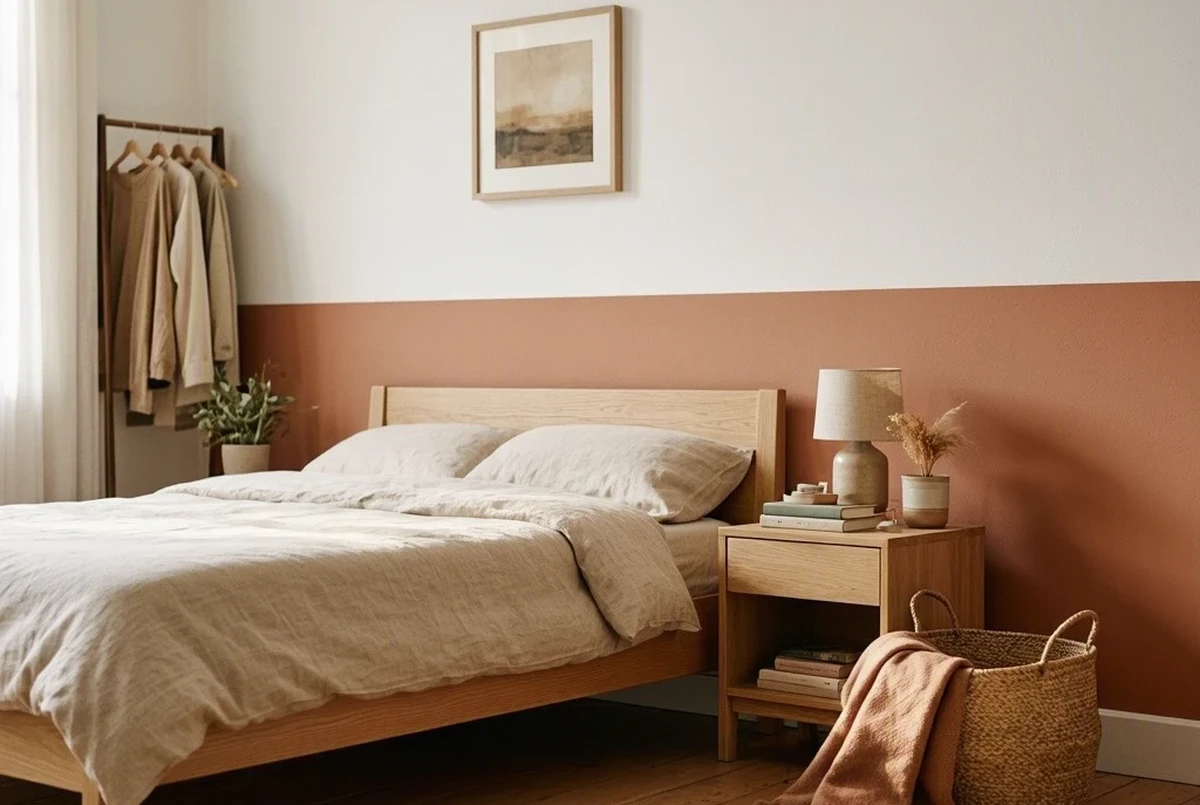
A two-tone headboard wall gives a small bedroom architecture without adding a single object to the floor. The color split reads as intention, the same way crown molding does, except it costs a few dollars in tape and paint instead of a contractor.
It also solves a problem specific to small bedrooms: the bed usually dominates the room, and a plain wall behind it looks unfinished no matter what's on the bed. A two-tone wall frames the bed instead of competing with it, so an off-center bed or an awkward wall with a window stops looking like a compromise.
The proportion rule is the same one that makes two-tone work anywhere: darker tones recede, lighter tones advance. Put the darker half low and the lighter half up top, and the ceiling reads as farther away than it is. I cover the full mechanics of this in the two-tone wall paint guide, including why the same split looks different in a living room than it does six inches from a pillow.
Where to put the line
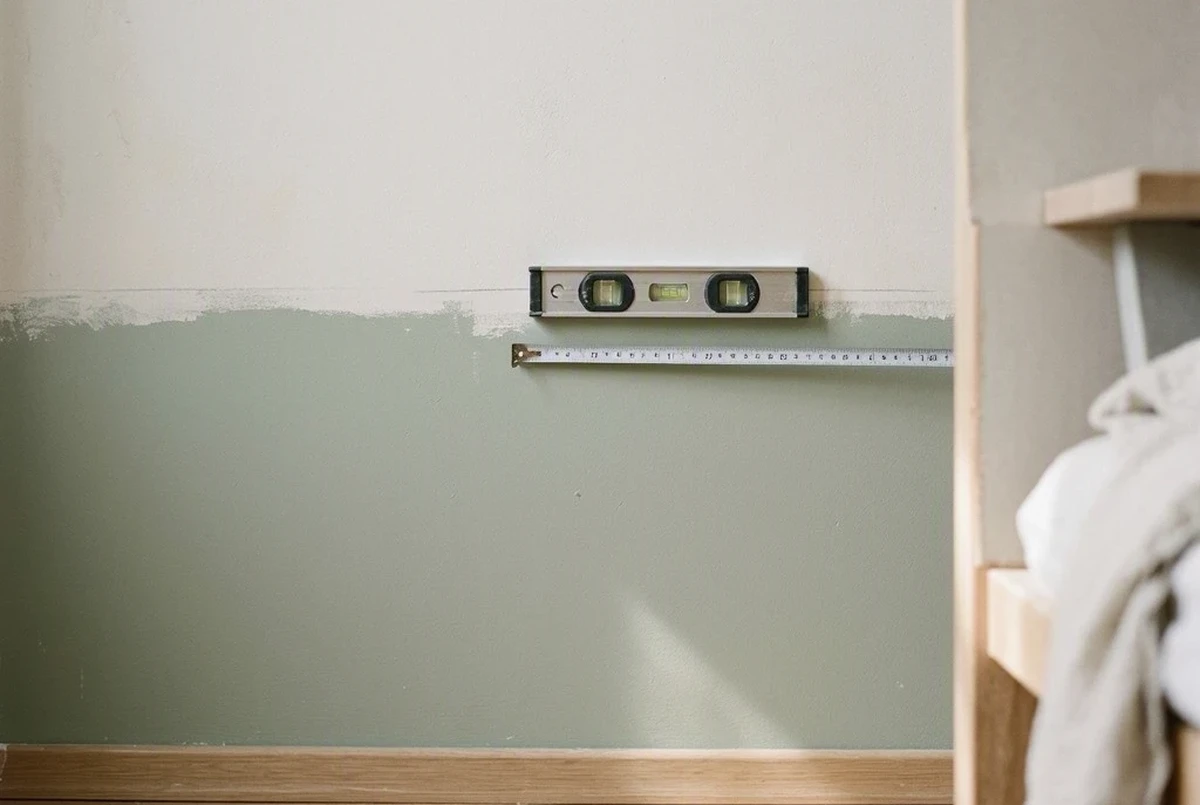
On a standard 8-foot wall, the line goes 36 to 48 inches from the floor. That range covers most bed heights without either color looking like an afterthought.
The number that actually matters is your headboard, not the wall. Most queen and king headboards run 48 to 55 inches tall; low platform beds run closer to 36 to 42 inches. If you want the darker color to fully contain the headboard rather than cut across it, measure the headboard and add 4 to 6 inches. A 48-inch headboard gets a line around 52 to 54 inches.
A line that ignores the headboard looks accidental. One that sits just above it looks designed, even though the only real decision was doing the math first.
Mark the height at both ends of the wall with a pencil, then connect the marks with a level, not just a tape measure eyeballed against an uneven floor. A quarter-inch drift over 10 feet reads as a mistake once the paint or wallpaper goes on.
Four ways to do it
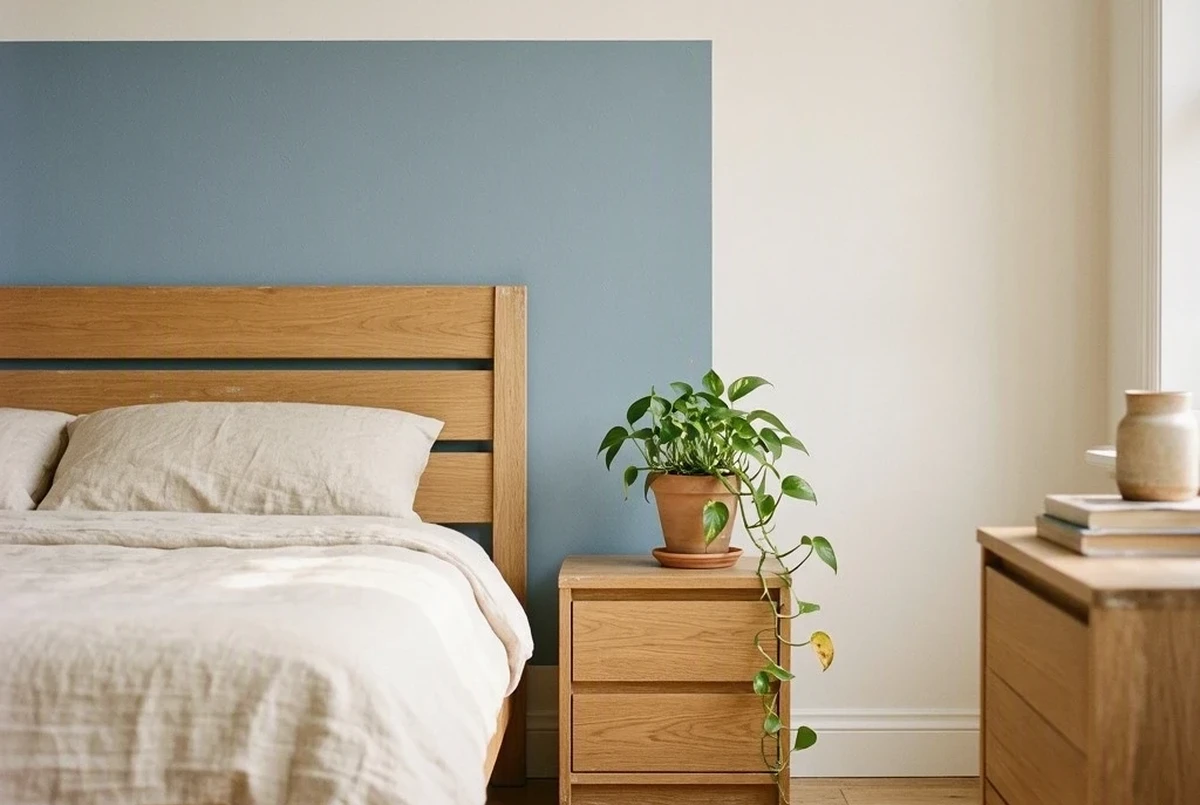
1. Horizontal split, full wall. The classic version. One color from the floor to your chosen line, the second color from there to the ceiling. Works on any headboard wall and is the most forgiving option if your bed is centered.
2. Headboard-height block. A rectangle of color behind the bed only, not spanning the full wall. Make it roughly the bed's width plus 6 to 12 inches on each side, topped 4 to 6 inches above the headboard. This is the better choice when the bed sits off-center or the wall has a window or door interrupting it, since the block just avoids those obstacles entirely.
3. Vertical split. Instead of a horizontal line, divide the wall into two vertical sections, roughly two-thirds and one-third. Useful when the bed itself is pushed to one side of the wall and you want the color change to balance the composition rather than cut straight across the headboard.
4. Painted nook. If a small desk or reading chair shares the wall with the bed, extend the accent color around that corner, 12 to 24 inches onto the adjacent wall. It carves out a second small zone in a room that's otherwise one box, without adding furniture.
Start with the horizontal split or the headboard block unless your room has one of those specific problems. I've seen people pick the painted nook because it looked interesting on a mood board, then regret it once the desk in the corner made the whole thing look accidental instead of intentional.
Color pairings for a room you sleep in
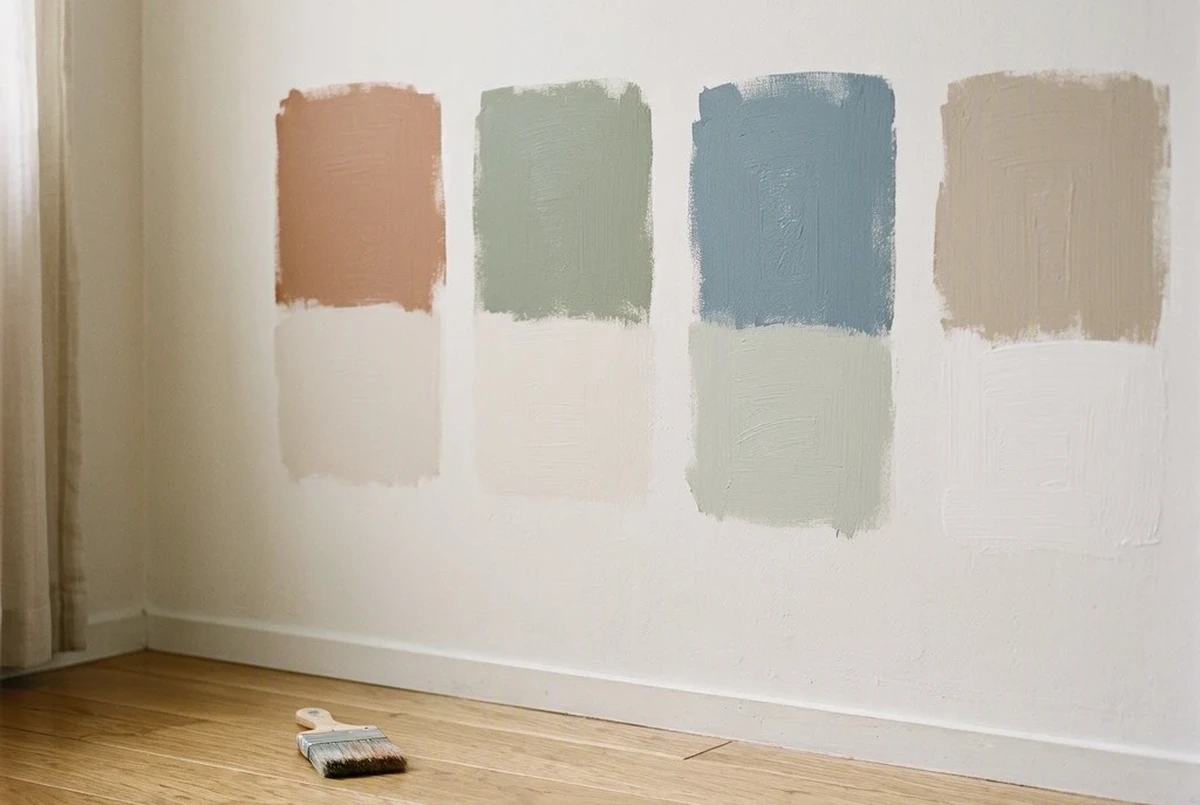
A living room accent wall is for guests. A bedroom accent wall is for you, at close range, for hours at a time. That changes which pairings actually work.
Skip high-contrast combinations here even if they photograph well. Black below and white above looks sharp in a listing photo and restless at 11pm when you're trying to fall asleep. Muted, mid-depth tones hold up better over time: clay, sage, dusty blue-gray, warm greige.
Keep undertones consistent between the two colors. A warm clay below paired with a cool blue-white above looks like two decisions instead of one, and you'll notice the seam every time you walk in. The warm bedroom paint colors guide has the specific codes I use for the warm side of this palette, and they pair cleanly with a darker lower half in the same undertone family.
If your bedroom gets limited natural light, keep the darker color to the bottom third rather than the bottom half. A larger dark zone in a dim room reads as heavy instead of grounded.
Renter-safe versions: no paint required
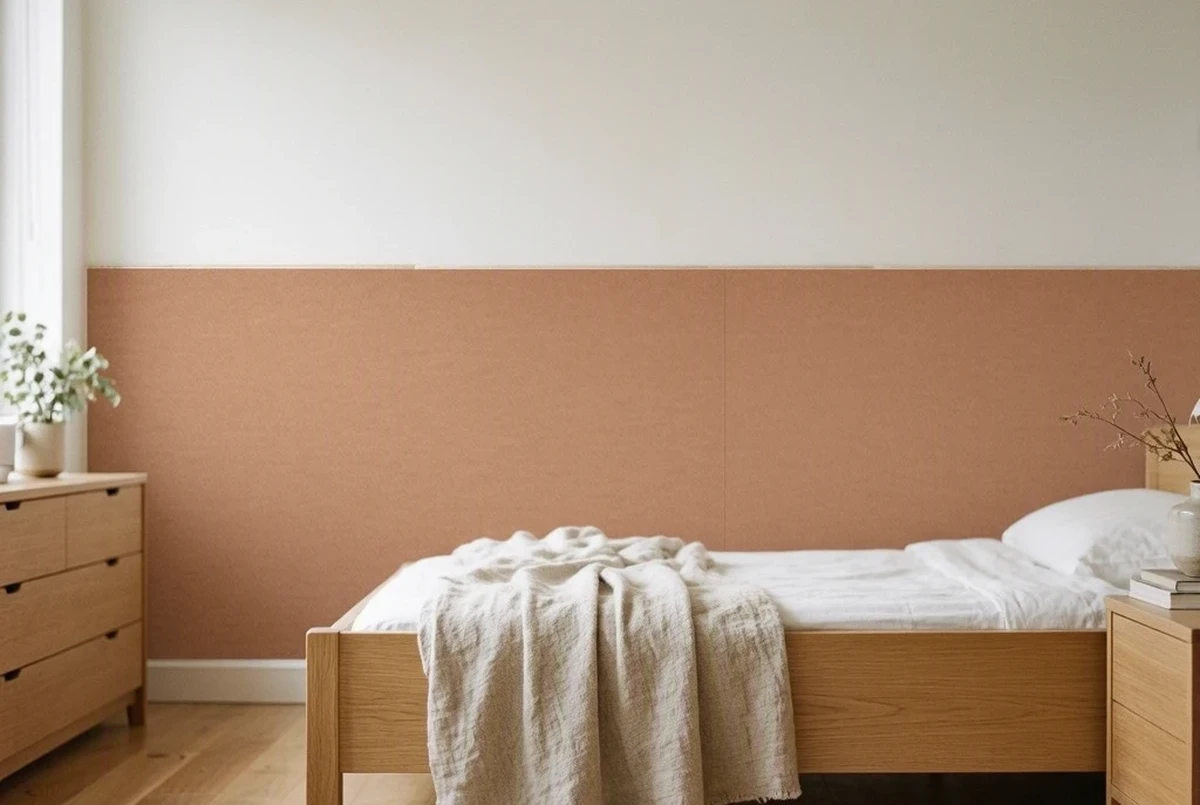
Painting a two-tone wall in a rental means getting written permission first, not a verbal yes. Ask by email or lease addendum, name the exact colors, and state whether you'll repaint to neutral before you move out. Some landlords approve muted, low-contrast pairings while declining anything dark or saturated, which is a reasonable compromise if that's what's offered.
If painting isn't an option, peel-and-stick wallpaper on the lower section does the same visual job. NuWallpaper and RoomMates both run about 20.5 inches by 18 feet per roll, covering roughly 30 square feet, at $25 to $40 a roll. A typical lower-half bedroom accent, say 10 feet wide by 4 feet tall, takes about 2 rolls once you allow for pattern matching.
Amazon Basics sells an unpatterned removable option closer to $20 a roll, which is the one to grab if you just want a flat color band and don't care about pattern.
For the split line itself, 3M ScotchBlue or FrogTape painter's tape marks a clean edge, and either removes without residue within the stated window. Command strips hold trim or a thin decorative batten in place at the split line if you want a slight physical edge instead of just a color change; the picture-hanging strips hold up to 16 pounds per pair, more than enough for lightweight trim.
Test any adhesive product on a small, hidden patch first, ideally inside a closet. Textured or already-flaking walls are the ones most likely to lose paint when the wallpaper comes off, and that's the kind of damage a landlord actually notices at move-out.
The wall decorating guide for rentals covers the full range of deposit-safe options beyond wallpaper and tape. Before you paint anything without a written yes, the HUD tenant rights overview is worth a read too. Deposit rules vary by state, and most disputes come down to what was actually agreed to in writing, not what either side remembers saying.
Mistakes that flatten the effect
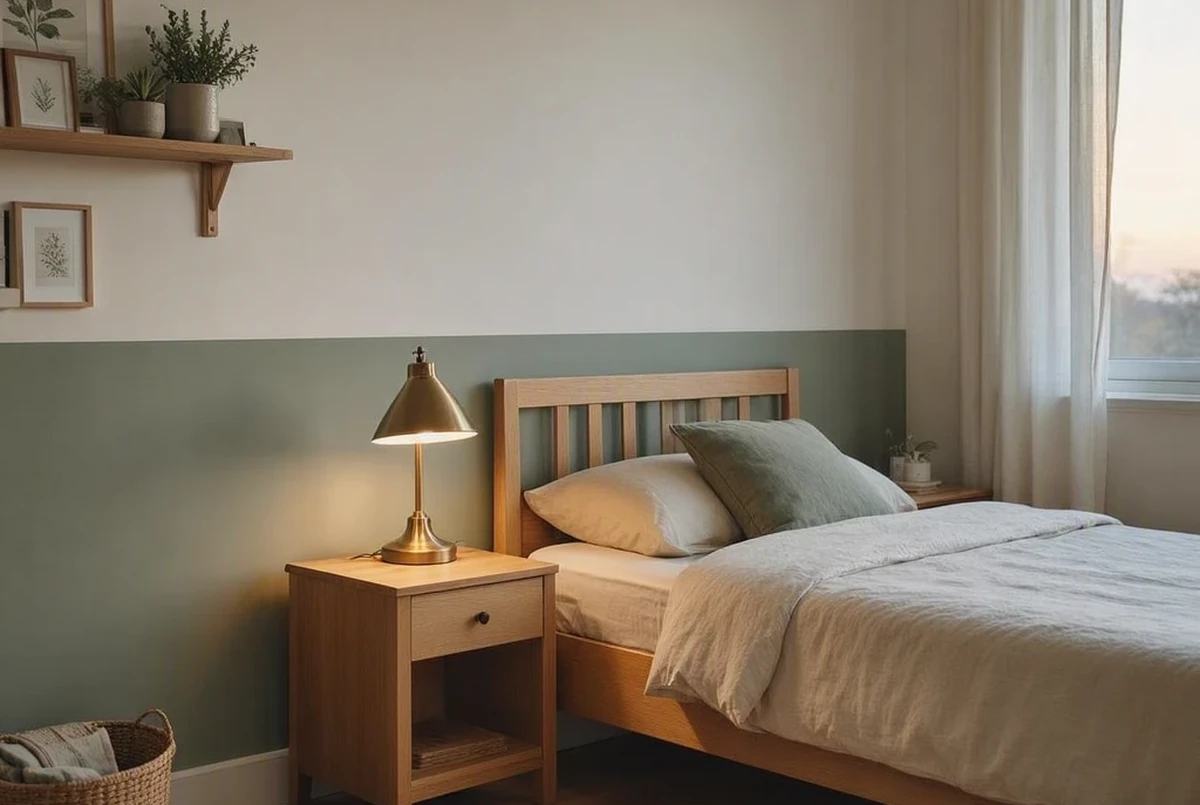
Splitting the wall at 50/50. Dead-center lines read as arbitrary rather than architectural. Keep the darker section closer to a third of the wall height unless you have a specific reason to go higher.
Cutting across the headboard. A line that lands mid-headboard looks like a measuring error even when it isn't. Measure the headboard first, then set the line 4 to 6 inches above it.
Mixing undertones. A cool gray-blue above a warm terracotta below looks like two rooms stitched together. Pick both colors from the same warm or cool family before anything else.
Going dark on top in a dim room. It photographs dramatically and lives poorly. In a bedroom with one small window, dark paint belongs on the lower section only.
Skipping the level. A line that drifts even slightly over the width of the wall is the first thing your eye catches every time you walk in, long after you've stopped noticing anything else about the room.
Doing this on every wall. One accent wall does the job. Two-tone treatments on every wall in a small bedroom compete with each other and erase the calm the technique is supposed to create.
FAQs
How high should a two-tone line be on a small bedroom wall?
For a standard 8-foot wall, put the line 36 to 48 inches from the floor. If you want the darker color to fully contain the headboard, measure it and add 4 to 6 inches, so a 48-inch headboard gets a line around 52 to 54 inches. Lower lines suit rooms where you want the lighter zone to dominate.
Should the darker color go on top or bottom in a small bedroom?
Bottom, almost always. Darker tones read as grounded low on the wall, and the lighter color above keeps the ceiling feeling tall. Dark on top can look dramatic in photos, but in a real small bedroom it presses the room down instead of opening it up.
Can renters do a two-tone accent wall without losing their deposit?
Yes, with two paths. Painting requires written permission naming the exact colors and stating whether you repaint to neutral at move-out. Without that permission, peel-and-stick wallpaper or wide painter's tape creates the same split and removes cleanly.
What is the easiest way to get a straight, crisp line for the color split?
Mark the same height at both ends of the wall in pencil, then connect the marks with a level rather than trusting a tape measure against an uneven floor. Press the tape edge down firmly with a credit card before painting or applying wallpaper up to it.
Is peel-and-stick wallpaper safe to use on apartment bedroom walls?
On smooth, painted walls in good condition, yes. NuWallpaper and RoomMates are built to release cleanly within their stated removal window. Test a small patch in a closet first, and avoid textured or flaking walls.
How many rolls of peel-and-stick wallpaper do I need for one accent wall?
Divide the square footage of the section by roughly 30, since a standard roll covers about that much. A 10-foot by 4-foot lower-half accent needs about 2 rolls once you account for pattern matching and mistakes.
Can I paint over contact paper to get a custom two-tone color that's still removable?
Yes. Prime over the contact paper with a vinyl-adhesion primer, let it cure, then paint your color on top. At move-out, the paint and contact paper come off together, leaving the original wall underneath. Test this on a small section first.
Related Articles
- Two Tone Wall Paint Ideas for Small Apartments: the full mechanics of split-wall proportions, line height by ceiling height, and paint pairings with codes
- Warm Bedroom Paint Colors for Small Rooms: the specific warm-toned colors that pair cleanly with a darker lower half
- How to Decorate Walls in a Rental Without Damage: the full range of deposit-safe wall options beyond wallpaper and tape
- Warm Minimalist Interior Design Ideas for Small Apartments: the broader palette approach that keeps a two-tone wall cohesive with the rest of the room