
Warm Bedroom Paint Colors for Small Rooms
Warm bedroom paint colors for small rooms: LRV targets, sheen levels, and renter-safe picks from Benjamin Moore, Sherwin-Williams, and Farrow & Ball.

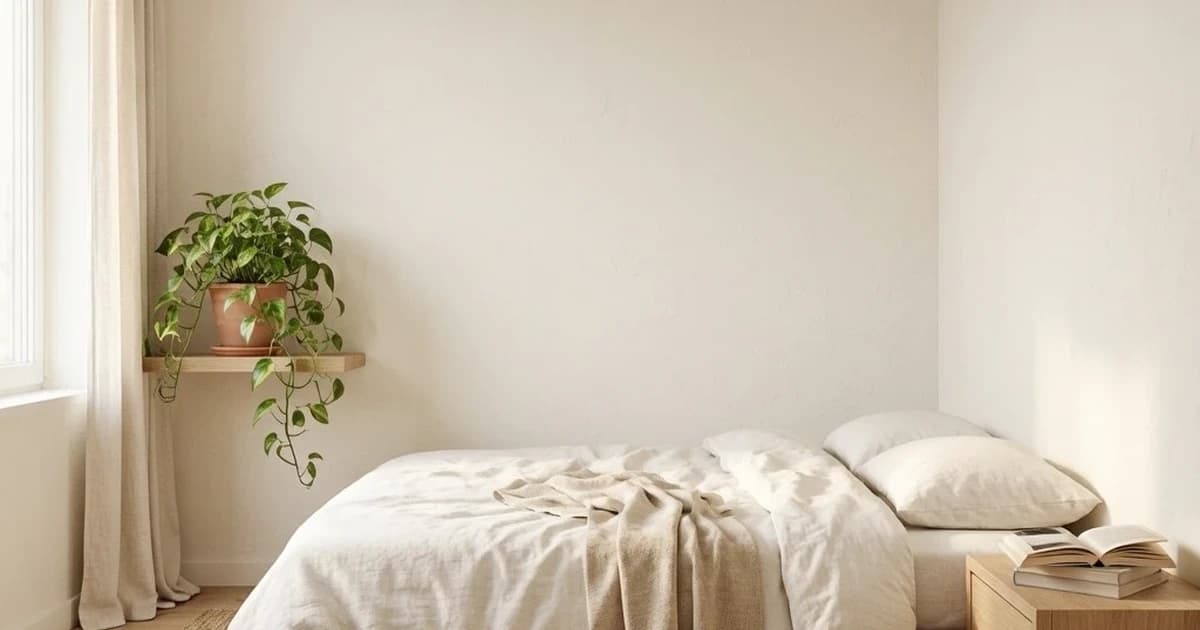
The best warm paint color for a small bedroom is almost always a warm white or greige with an LRV between 70 and 85. Not a saturated terracotta or bold clay.
Specific colors, LRV targets, sheen levels, and how to test without wasting a full gallon on something that looks wrong in your actual light.
Jump to:
- What LRV means and why 70-85 is the target
- Warm whites and off-whites for small bedrooms
- Warm greige: more personality than white
- Deeper warm tones: the accent wall option
- Sheen level: eggshell vs matte
- How to test paint before committing
- If you can't paint: warmth without wall color
What LRV means and why 70-85 is the target
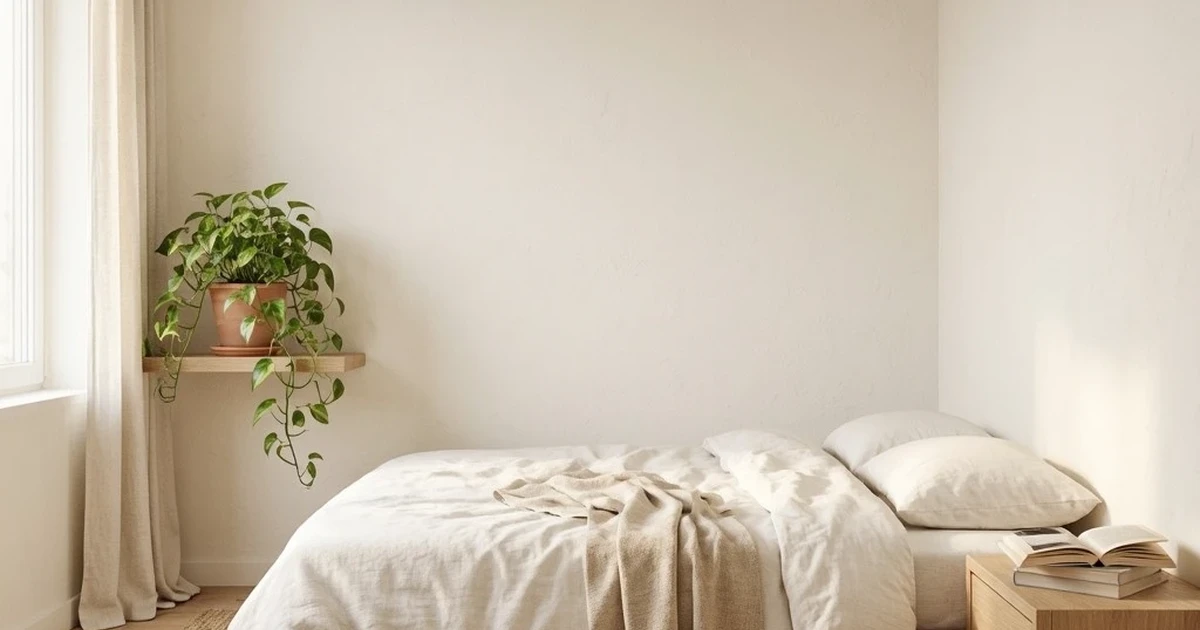
LRV stands for Light Reflectance Value. A number from 0 to 100 measuring how much light a color reflects. Pure black is 0. Pure white is 100. In a small bedroom, that number matters more than whatever name is on the tin.
For bedrooms under 150 square feet, target LRV between 70 and 85. Below 70, walls start to close in visually, especially in rooms with one small window. Above 85 can feel clinical, or start to amplify every imperfection in the plaster.
Most warm whites already sit in this range. Benjamin Moore White Dove (OC-17) lands at LRV 83. Sherwin-Williams Pure White (SW 7005) is at 84. Both read warm in person, particularly with 2700-3000K bulbs. A warm room and a spacious-feeling room aren't a trade-off. You just need the number right.
Warm whites and off-whites for small bedrooms
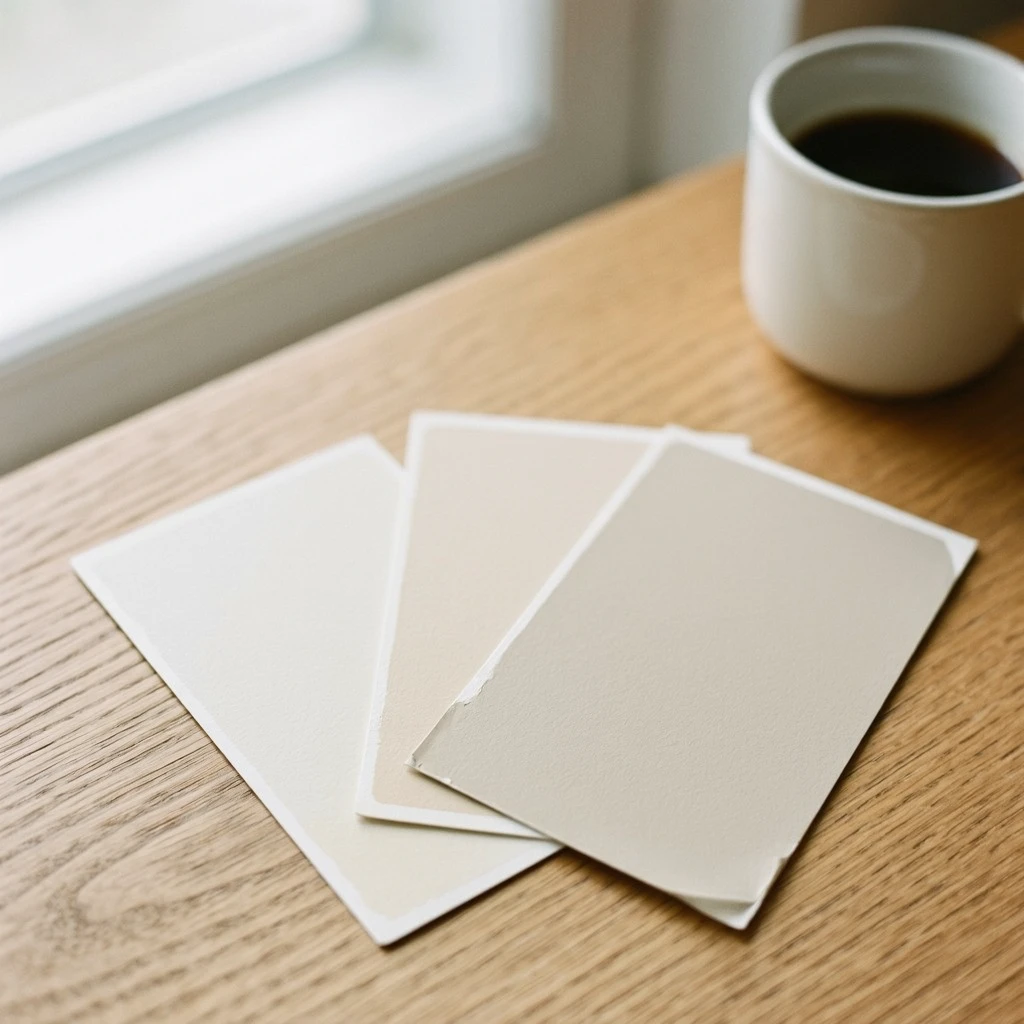
Warm whites are the most landlord-friendly option and genuinely work well in small bedrooms. High enough LRV to keep walls from closing in, while the cream or yellow undertone avoids the blank feel of bright white.
Benjamin Moore White Dove (OC-17) is the one I'd start with. LRV 83, slightly creamy, forgiving next to most wood tones. In a north-facing room, it reads soft rather than dingy or yellow. Benjamin Moore interior paints run roughly $55-80 per gallon depending on the line.
Sherwin-Williams Alabaster (SW 7008) leans a touch more toward beige. Renters use it partly because landlords tend to accept it at move-out without requiring a repaint. If your lease requires written permission to paint, showing an Alabaster chip is a much easier conversation than presenting a terracotta sample.
Benjamin Moore Swiss Coffee (OC-45) is a step creamier than either. It reads as a deliberate choice rather than a rental default, the difference between a room that looks designed and one that just hasn't been touched. Good for rooms that feel cold or blue-cast no matter the time of day.
Warm whites as a category: almost always the path of least resistance with landlords. They feel like an upgrade when you're living with them, but stay within what most landlords call a returnable neutral.
Warm greige: more personality than white
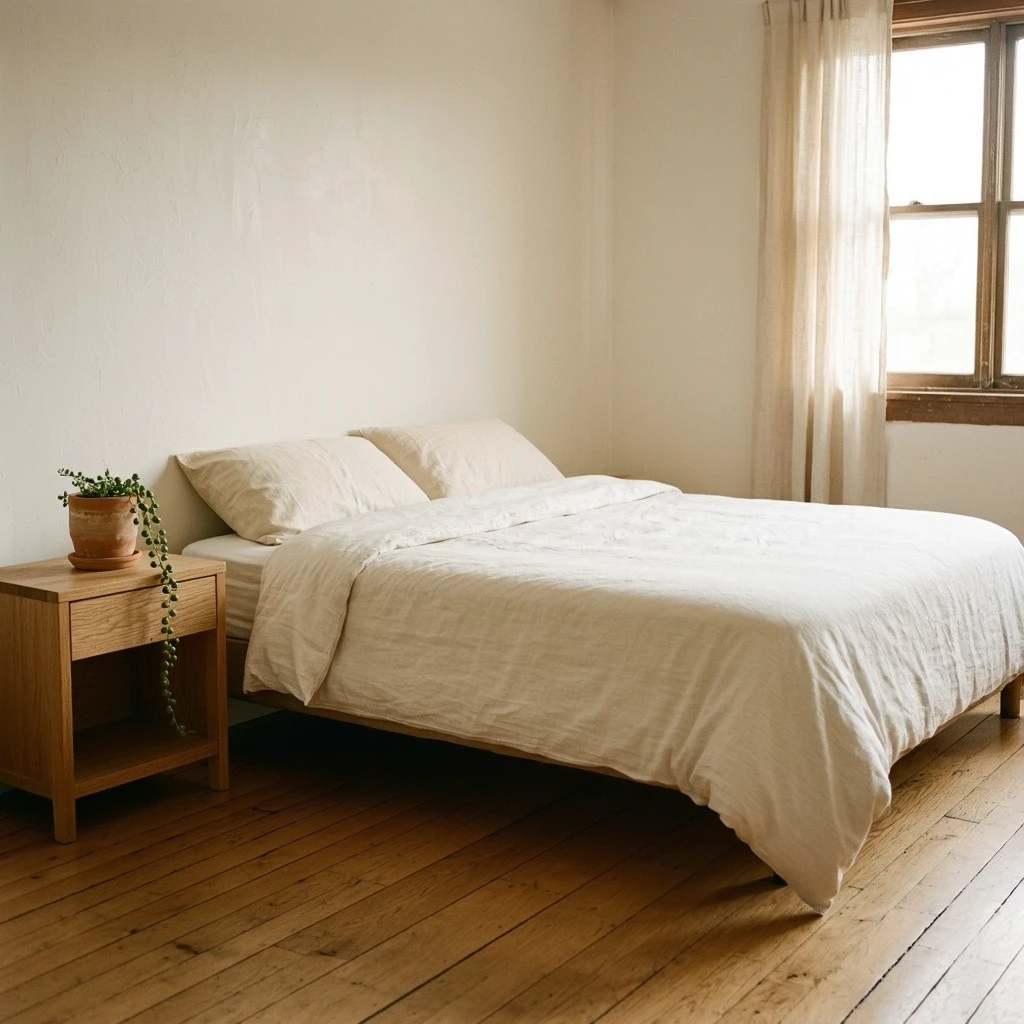
Greige sits between gray and beige. Tipped warm, it adds real presence to a small bedroom without committing to an actual color. The room reads as a deliberate choice rather than an untouched rental.
Benjamin Moore Pale Oak (OC-20) has an LRV around 70, right at the lower edge of the target range. Beige undertones rather than pink or purple mean it sits cleanly next to warm oak floors without fighting the wood tone. It pairs well with the warm minimalist palette I cover in the warm minimalist interior design guide, where earth-based, low-saturation tones do the work.
Sherwin-Williams Accessible Beige (SW 7036) lands in similar territory. Both avoid the dated, mid-2000s connotation of "greige." They read more like natural stone or undyed linen than the gray-beige that aged out of every renovation show circa 2012.
The color shows up when you live with it but doesn't become a problem at move-out. Far easier to cover than anything with real saturation.
One caveat: LRV 70 is noticeably darker than White Dove at LRV 83. In a bedroom under 100 square feet with one window, Pale Oak can feel heavy on a cloudy day. If the room already feels dim by afternoon, go with a warm white instead.
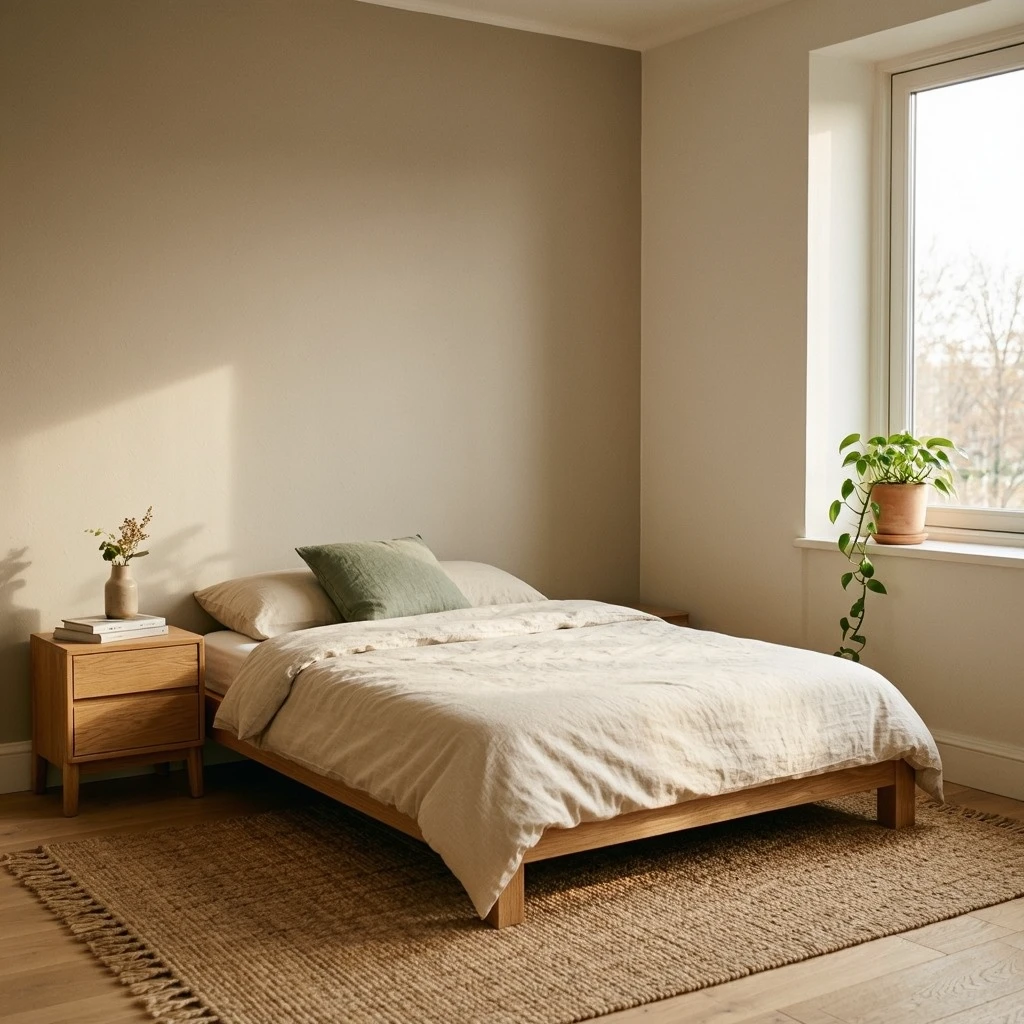
Deeper warm tones: the accent wall option
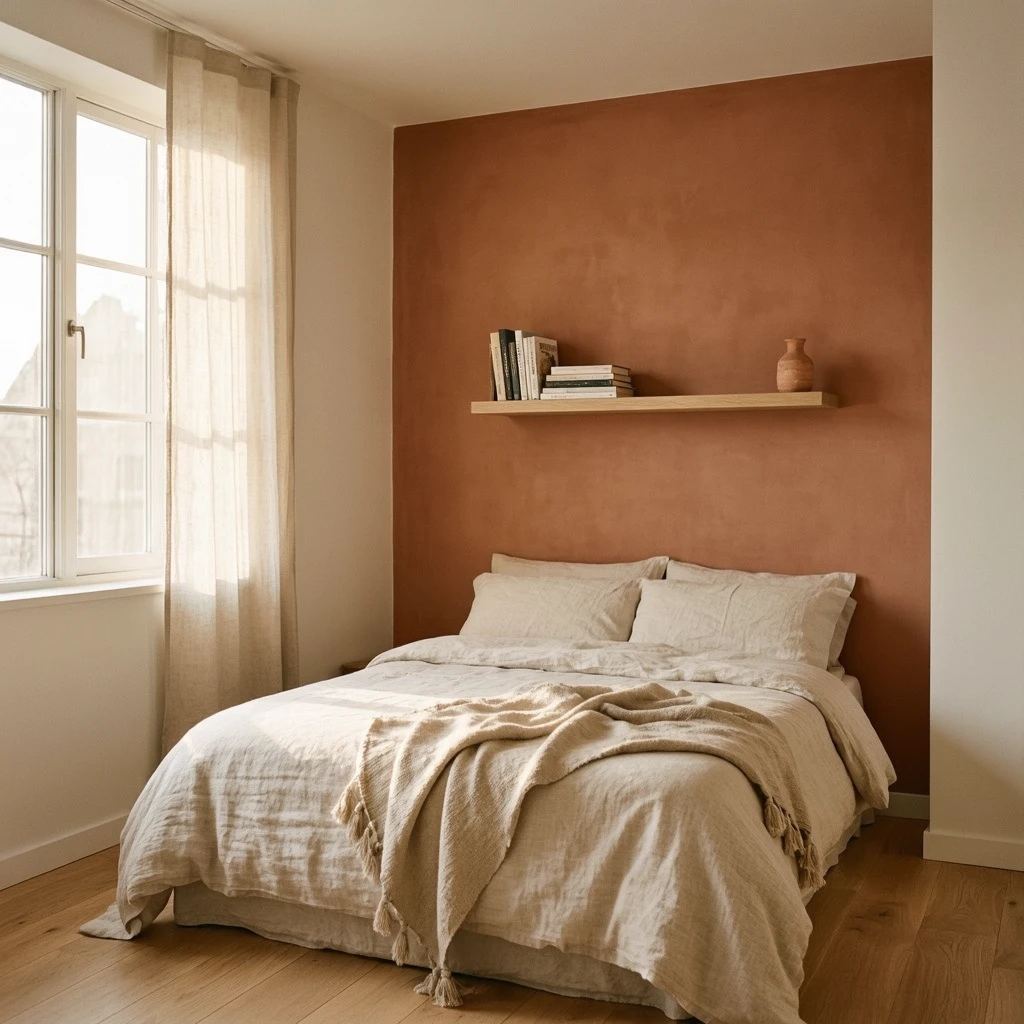
If you want a stronger color, put it on one wall. The headboard wall gets the deeper tone; the other three stay in a light warm white. This works in small bedrooms in a way that all-over saturation doesn't.
Farrow & Ball Setting Plaster is a warm clay pink that reads soft and earthy in small rooms, sitting right at the edge of what most landlords accept as neutral. The color wraps around the bed in a way that photographs well. But Farrow & Ball runs $120-130+ per gallon in the US. That's a real number for a wall you'll repaint before you leave.
Benjamin Moore Pale Terracotta (2174-40) is softer, less expensive, and leans more rust-pink than orange. Easier to live with across seasons and lighting shifts. Also easier to cover at move-out than full terracotta, which often needs three coats back to white.
For any saturated color on a rental wall: confirm upfront that you can get back to the original shade in two coats. Deeper colors often need more, and landlords charge for extra prep. Get that in writing before you open a can.
If you're considering paint blocking or two-tone approaches with these shades, the two tone wall paint guide goes into detail on where to place the paint line for maximum effect in a small room.
Sheen level: eggshell vs matte
Eggshell or matte on walls. Satin on trim. That's the rule.
Eggshell has a slight sheen that bounces more light. In a tight room, that matters. Benjamin Moore Regal Select Eggshell and Sherwin-Williams Emerald Interior Eggshell both give solid one-coat coverage on lighter warm colors.
Matte gives a flatter, truer read of the color with less glare. In a room with decent natural light, matte creates a softer surface. In a dim bedroom with one window, go eggshell.
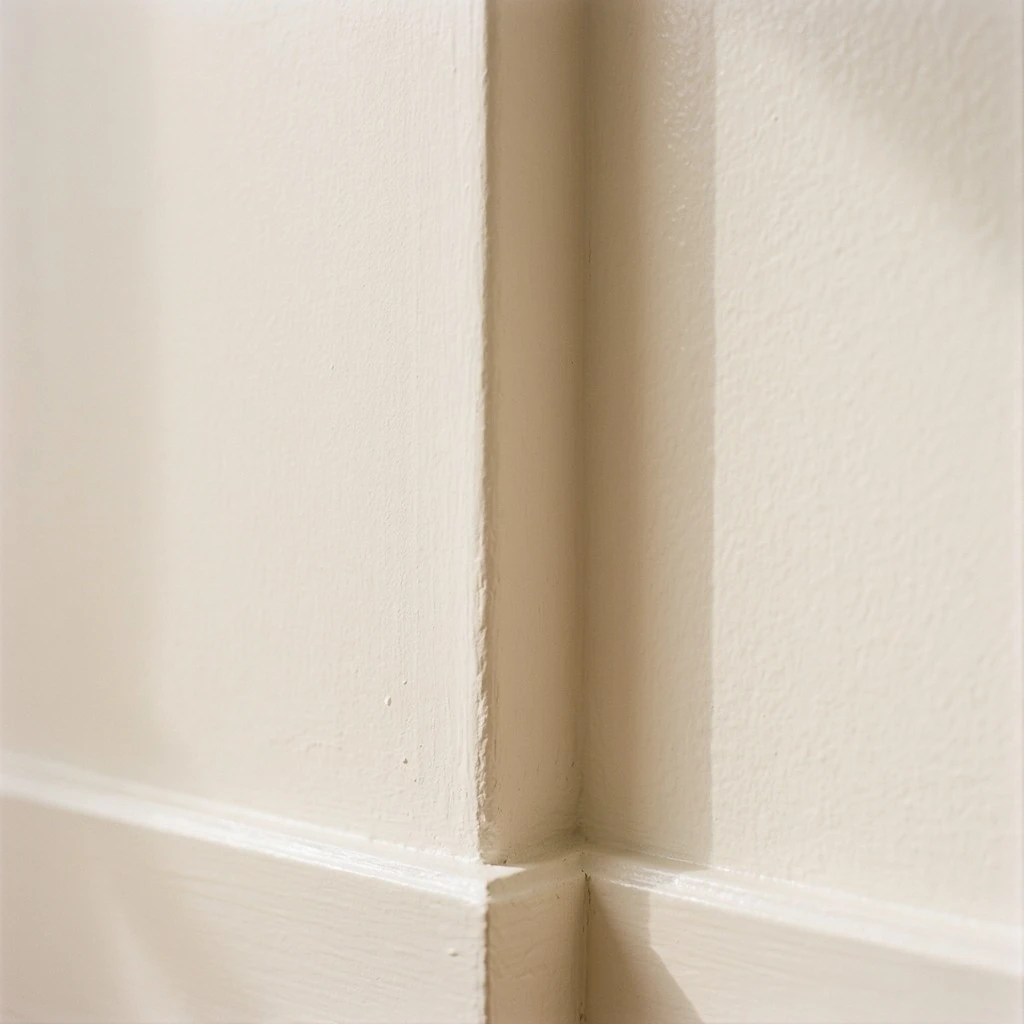
The move most people skip: paint the trim and baseboards the same color as the walls, or within one shade. The wall-meets-trim line disappears and the room reads as a single envelope rather than a series of framed surfaces. The Benjamin Moore small room guide covers this with specific pairing examples.
Ceiling: same warm white family as the walls. A bright white ceiling against a mid-tone wall creates a visual cap that makes the room feel shorter than it is.
How to test paint before committing
Buying a full gallon based on a 2x3 inch chip is the most expensive paint mistake you can make. In a closed space with one light source, undertones shift significantly from what you saw at the hardware store.
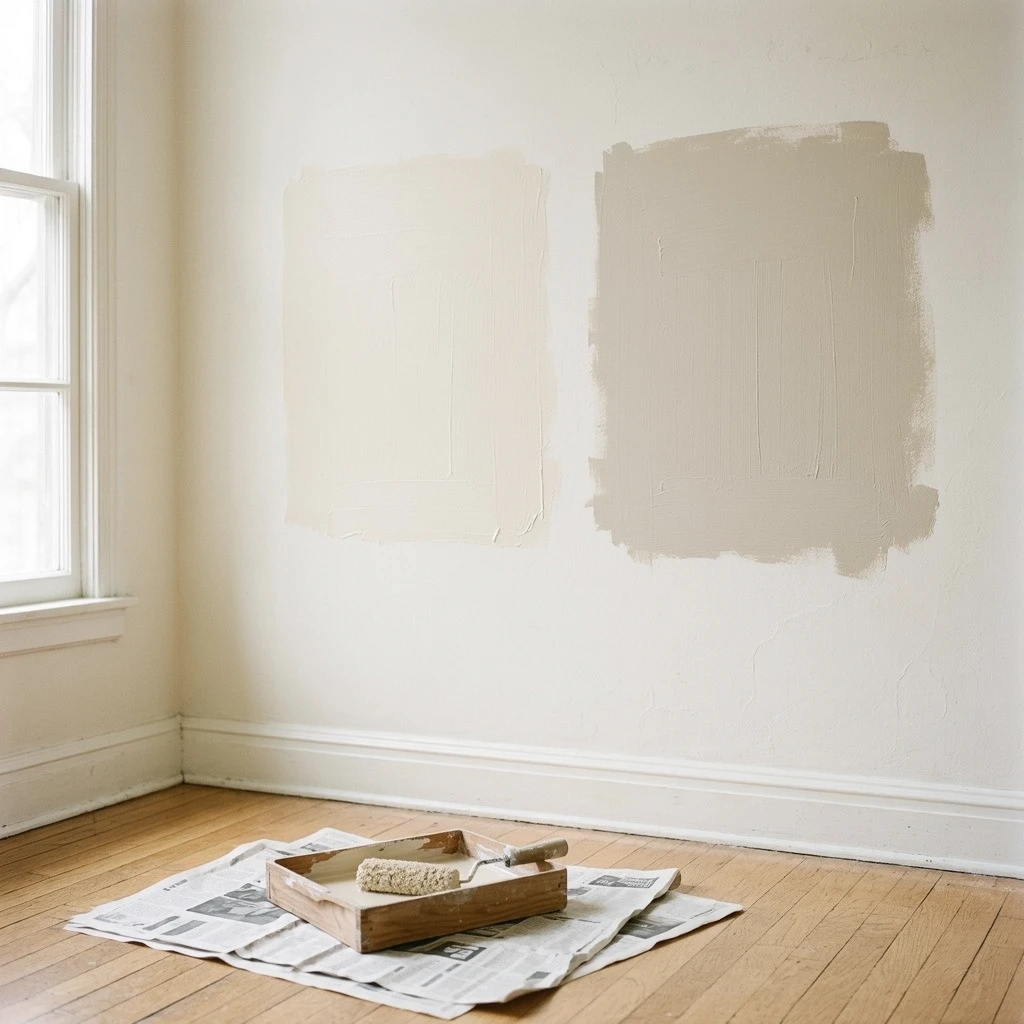
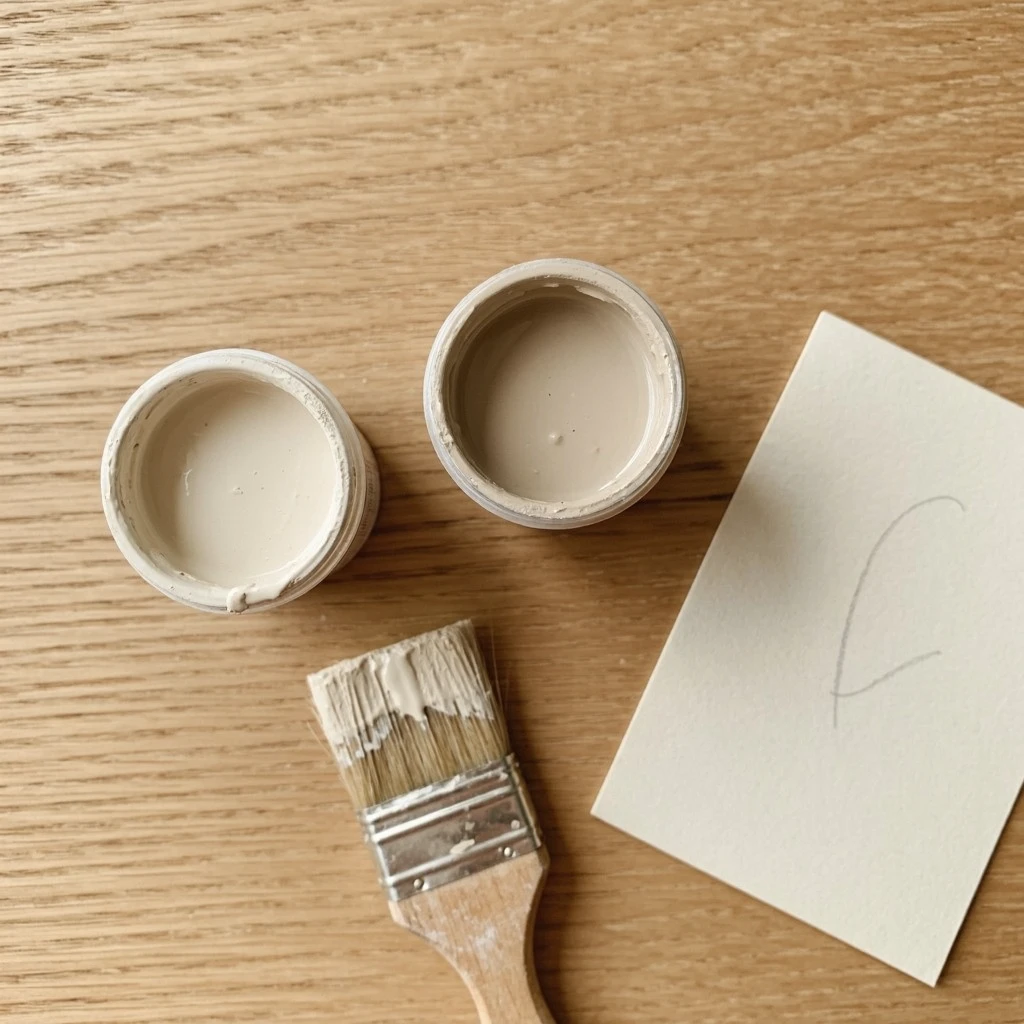
Buy sample pots first. About $5-7 each. Paint 18x18 inch swatches on the wall in at least two spots, including a corner. Check them at three moments: morning daylight, afternoon, and evening with your actual bedroom lamp.
Then put two candidates side by side. One will look "off" against the other: a hidden pink, yellow, or gray cast that only shows up when it has competition. Cut that one.
While you're at it, check the swatch against your floor. Warm oak or honey-toned carpet will fight a gray-leaning greige and make the wood appear more orange. True warm whites and warm greiges sit cleanly next to those finishes.
Sherwin-Williams has a room direction color guide explaining how north, south, east, and west exposures change how paint reads. If your swatch looks completely different at home versus the store, this is why.
If you can't paint: warmth without wall color
Some leases prohibit painting. The landlord said no. The wall color stays, but the room doesn't have to feel that way.
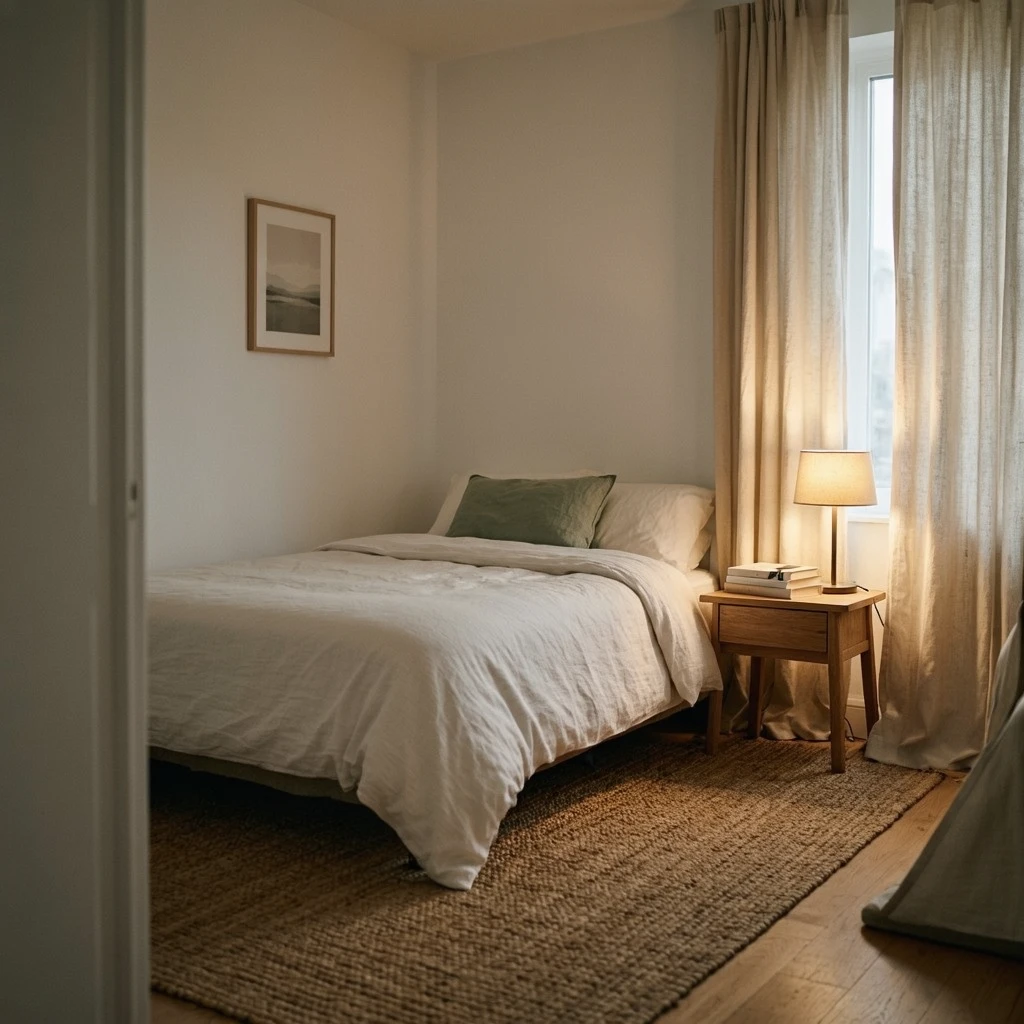
Floor-to-ceiling curtains in cream or ivory linen give you the largest single field of warm color without touching the walls. Panels running the full width of the window wall read as a design decision, not just window dressing. The fabric softens the incoming light and pulls the whole room's palette toward warm.
Before any textile: replace cool-white bulbs with 2700-3000K warm white LEDs. Cool bulbs (4000-5000K) make even warm paint colors look flat or grayish. In a small room where light bounces off every surface, bulb temperature affects perceived wall color more than most people realize. In some rooms, more than a fresh coat of paint.
Removable peel-and-stick wallpaper on the wall behind the bed is a third option. Chasing Paper and Livette's Wallpaper both make repositionable paper in warm neutral textures. The adhesive releases from painted drywall without damage. But test a small corner first, before you commit the whole wall.
A large woven rug in natural jute, undyed wool, or warm oatmeal adds a warm horizontal plane across the floor. Floor color is what the eye tracks first in a small room. A warm rug does more work per dollar than almost any other textile in the space.
Where to start
For paint: start with Benjamin Moore White Dove (OC-17) or Sherwin-Williams Pure White (SW 7005). Buy sample pots, put 18x18 inch swatches on two walls, check them morning and evening. Too flat? Step to Pale Oak or Accessible Beige. Deeper clay or blush only if it's one wall, with a clear plan for covering it at move-out.
No paint: swap the bulbs first. 2700-3000K warm LEDs. Then floor-to-ceiling curtains in cream or ivory. Those two moves cost less than a gallon of paint and shift the room more than most people expect.