
TV Corner Ideas for Small Apartments (No Drilling Required)
IKEA doesn't sell a true corner TV bench anymore. Here's the diagonal-console trick, the right TV size formula, and how to hide cords without drilling.

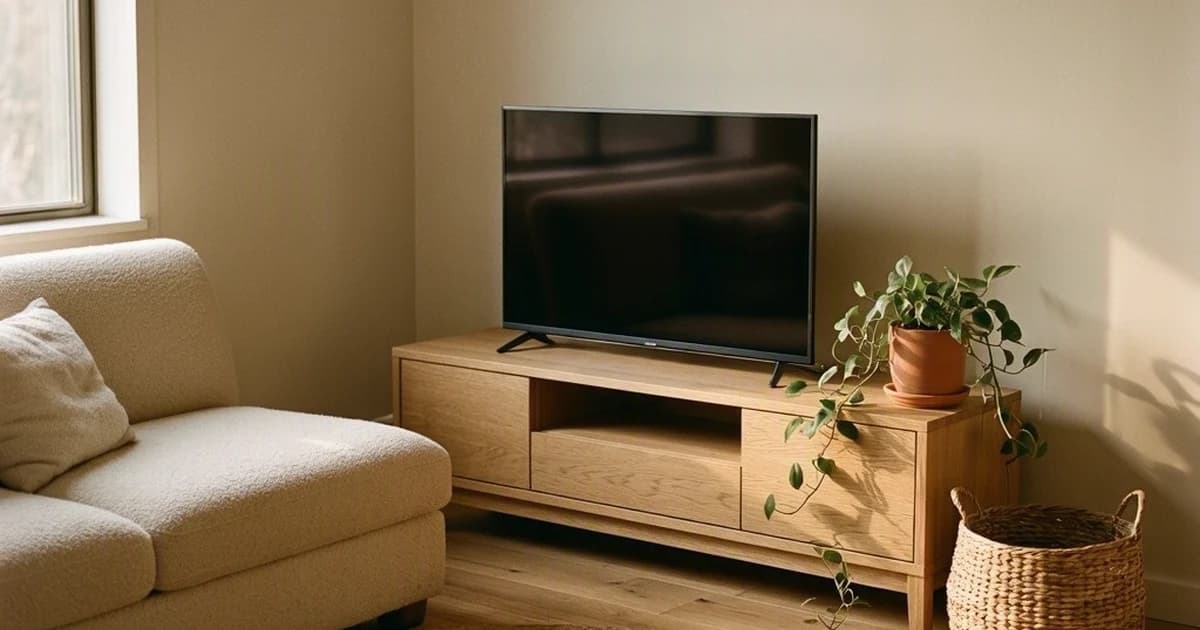
A TV corner works when you stop looking for a special corner-shaped stand and start angling a normal one. IKEA doesn't sell a true corner TV bench in its current US lineup. A shallow console turned diagonally does the same job.
Jump to:
- What Makes a Corner TV Setup Actually Work
- The Right Size TV and Stand for the Corner
- Cord Management Without Drilling
- What You Can Change as a Renter
- Mistakes That Break the Look
- FAQs
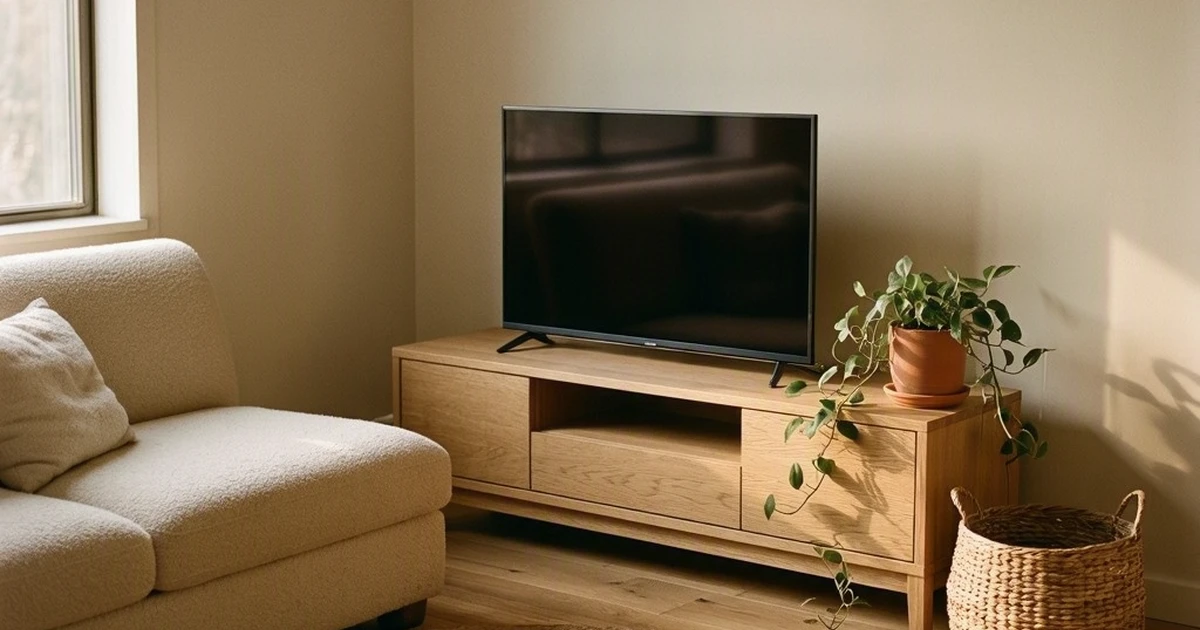
This guide covers how to size the TV and stand for the space, how to angle the setup so it doesn't feel like an afterthought, and how to manage cords without a single hole in the wall. Every idea here works whether your lease allows mounting or not.
What Makes a Corner TV Setup Actually Work
A corner TV setup works when the console sits diagonally across the corner and the seating turns to face it directly, not at an angle you have to twist toward.
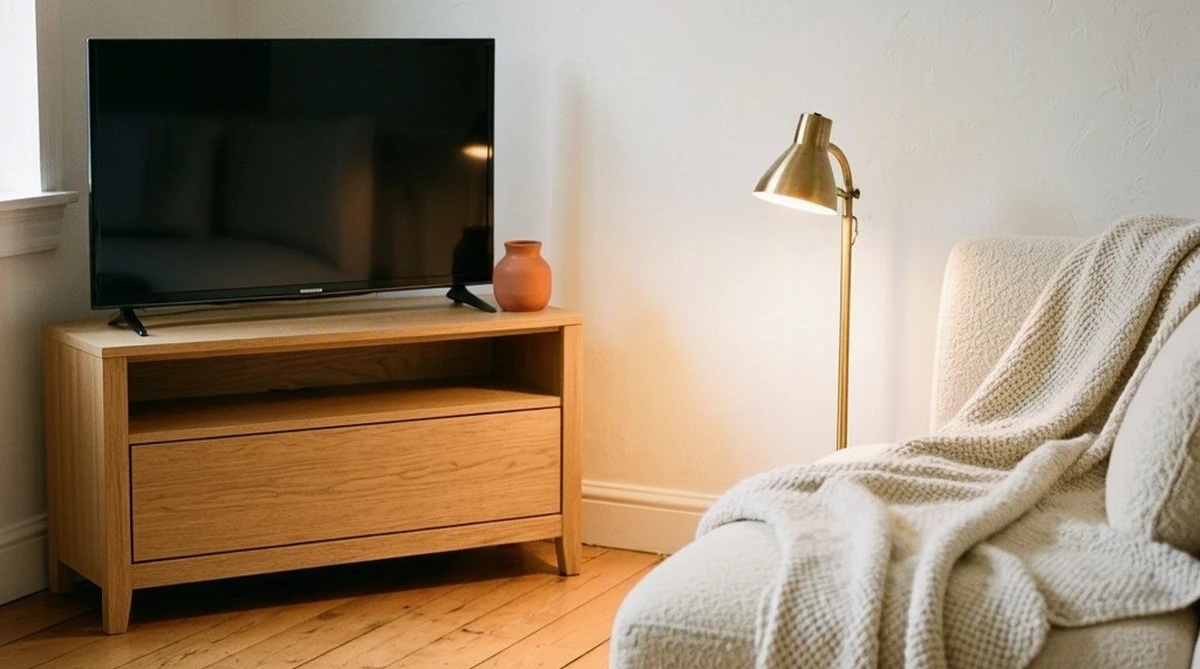
Skip the search for a purpose-built corner unit. IKEA's own corner-specific TV bench isn't part of the current US lineup, and most small-space guides actually recommend the same fix: take a standard shallow TV console and place it diagonally, corner to corner, instead of flush against one wall. The diagonal placement uses the dead space every room has in its corners and frees up a full flat wall for something else (a sofa, a bookshelf, a reading chair).
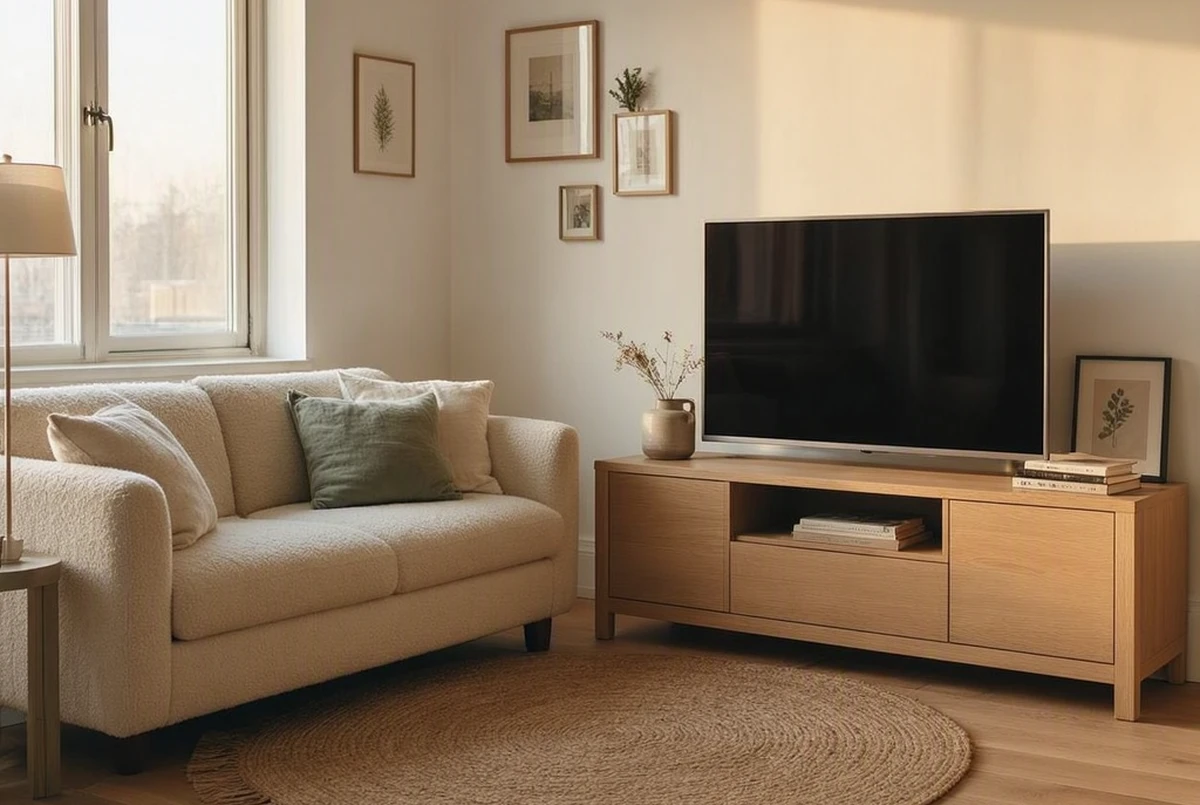
The corner only reads as intentional if the room is arranged around it. Turn the sofa or accent chair to face the screen directly, not the nearest wall out of habit. A small rug in front of the console helps define the zone, the same way it would anchor a seating area anywhere else in the room.
The Right Size TV and Stand for the Corner
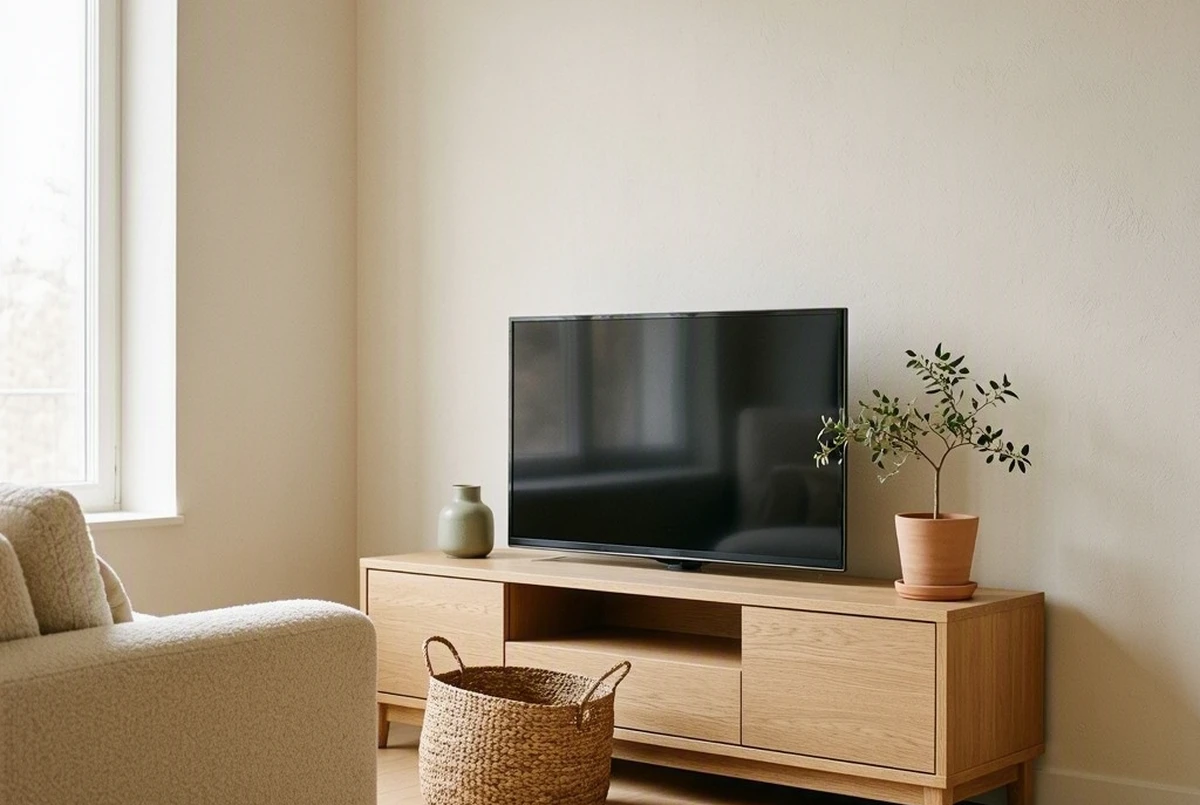
Divide your seat-to-screen distance in inches by 1.6 to get the right TV size, then match the stand to that, not the other way around.
If your sofa sits 80 inches from the corner, that math lands you around a 50-inch screen. Go bigger than the formula suggests and the TV overwhelms a small room from every angle, not just the direct one. Go smaller and you'll find yourself leaning forward to see detail.
For the stand itself, IKEA's LACK TV unit at 47¼ inches wide by 13¾ inches deep by 14⅛ inches tall runs $49.99, shallow enough to angle into a corner without eating much floor. If you need real storage behind closed doors, the HEMNES TV unit at 58¼ by 18½ by 22½ inches runs $349.99 and holds a router, a game console, and cable box out of sight.
Screen height matters more than most people plan for. The center of the screen should land close to your eye line when seated, not mounted high just because it's tucked into a corner. A low, shallow console naturally gets this right since the TV sits close to the floor instead of floating above eye level.
Cord Management Without Drilling
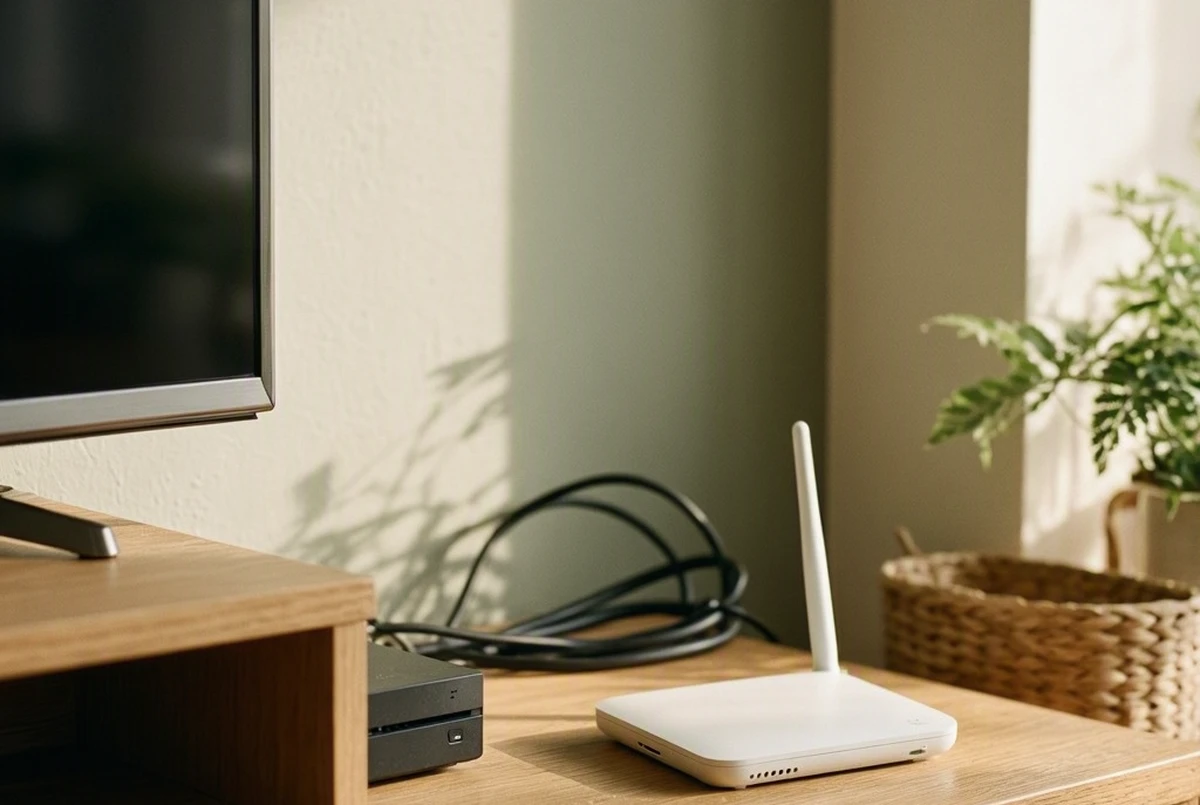
Cords are the single fastest way to make a styled corner look unfinished, and the fix costs less than ten dollars.
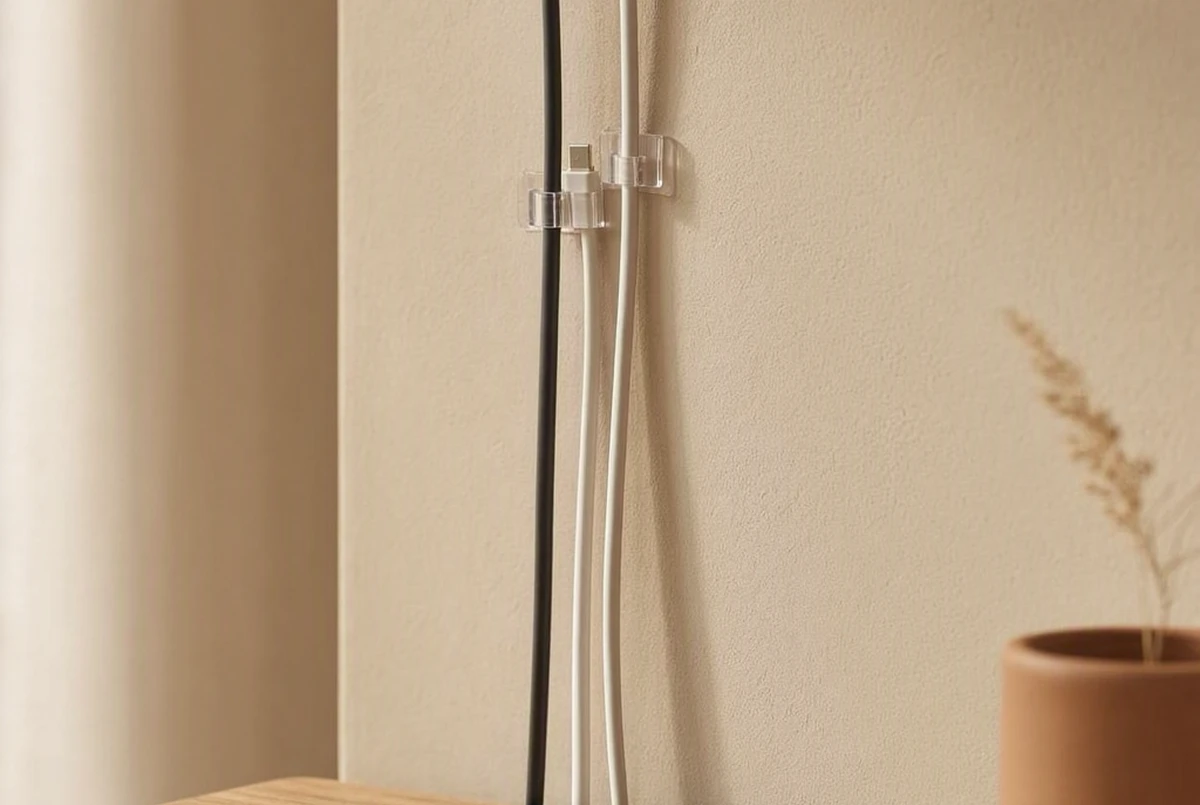
Command's round cord clips run about $4 to $9 for a multi-pack and hold cords flat against the wall or the back of furniture using the same adhesive strips as their picture-hanging line. No drilling, no residue on removal. Run the TV cord and any power strip cable along the back edge of the console before they hit the outlet, so nothing crosses open floor.
Keep the power strip itself out of sight entirely. Set it behind the console or inside a small vented box rather than letting it sit exposed next to a plant or a stack of books. A corner with tidy cords reads as designed. The same corner with a visible tangle reads as a dorm room.
What You Can Change as a Renter
A freestanding console handles every part of this setup without needing a landlord's sign-off.
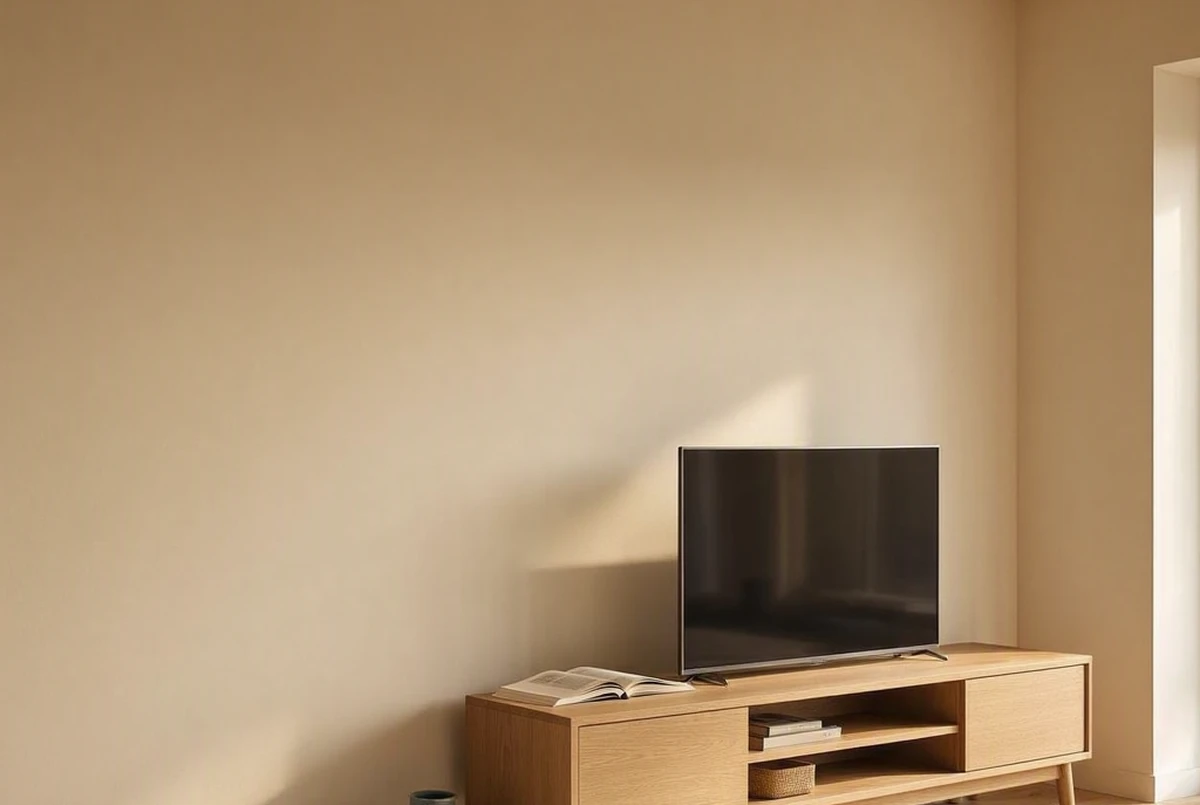
The LACK and HEMNES units above both stand on their own legs. Nothing gets attached to the wall, nothing leaves a mark at move-out, and both move with you to the next apartment exactly as they are. This is the setup I'd default to first in any new lease, before even checking whether wall mounting is allowed.
A swivel wall mount solves sightline problems a console can't, letting you angle the screen toward different seating positions. It also requires drilling into a stud, which most leases either forbid outright or require written approval for. If your lease allows it, confirm the wall type and get permission in writing before buying a mount. If it doesn't, a diagonal console does most of the same job without the risk.
Mistakes That Break the Look
Buying a TV too big for the viewing distance. Measure the seat-to-screen distance first and use the divide-by-1.6 rule before you shop, not after.
Forgetting to angle the seating. A TV in the corner with a sofa still facing the old wall forces everyone to watch at an angle. Move the seating to match the new focal point.
Mounting too high just because it's in a corner. The screen center should still land near seated eye level. A tall stand or an overly high mount undoes the whole setup.
Leaving cords exposed across the floor or up the wall. A single visible cord run undercuts an otherwise well-styled corner faster than almost anything else in the room.
Skipping the styling around the screen. A TV alone in a corner reads as leftover space. A small plant, a stack of books, or a low basket beside the console makes it read as a considered part of the room.
FAQs
What size TV is best for a small apartment living room?
Divide your seat-to-screen distance in inches by 1.6. For a sofa sitting 80 inches from the corner, that lands around a 50-inch screen. Go larger than that and the TV overwhelms the room.
Is a corner TV stand better than wall-mounting in a rental?
A freestanding corner console is usually the safer choice for renters since it needs no drilling and leaves nothing behind at move-out. Wall mounting solves viewing angles better but requires lease permission and a stud to anchor into.
How high should the TV sit in a corner setup?
The center of the screen should land close to your eye line when seated. A low, shallow console naturally gets this right without any extra measuring.
Does IKEA sell a true corner TV stand?
Not currently in the US lineup. The workaround is placing a standard shallow console, like the LACK or HEMNES TV units, diagonally across the corner instead of flush against one wall.
How do I hide TV cords without drilling?
Adhesive cord clips, the kind that use the same strip technology as Command's picture hooks, hold cords flat against the wall or furniture and remove without residue. A multi-pack runs about $4 to $9.
Will a TV in the corner make the room feel smaller?
Usually the opposite. A corner setup frees up a full flat wall for other furniture, which often makes a small living room feel more open than a TV centered on the main wall.
A shallow console turned diagonally, seating angled to match, and cords run flat along the back edge covers nearly every small apartment TV corner. Start there before shopping for anything marketed specifically as a corner unit.
Related Articles
- Cozy Small Apartment Living Room Ideas for Renters: more ways to style the same room this TV corner sits in
- Mini Bar Ideas for Small Living Rooms: another freestanding, no-drilling corner idea for the opposite side of the room
- Renter Friendly Decorating Ideas That Damage Nothing: the full range of no-drilling storage and hanging options, including Command strip weight ratings