
Mini Bar Ideas for Small Living Rooms
A small living room bar works when it stays narrow and stays put. The three renter-safe setups, exact cart and shelf measurements, and mistakes to skip.

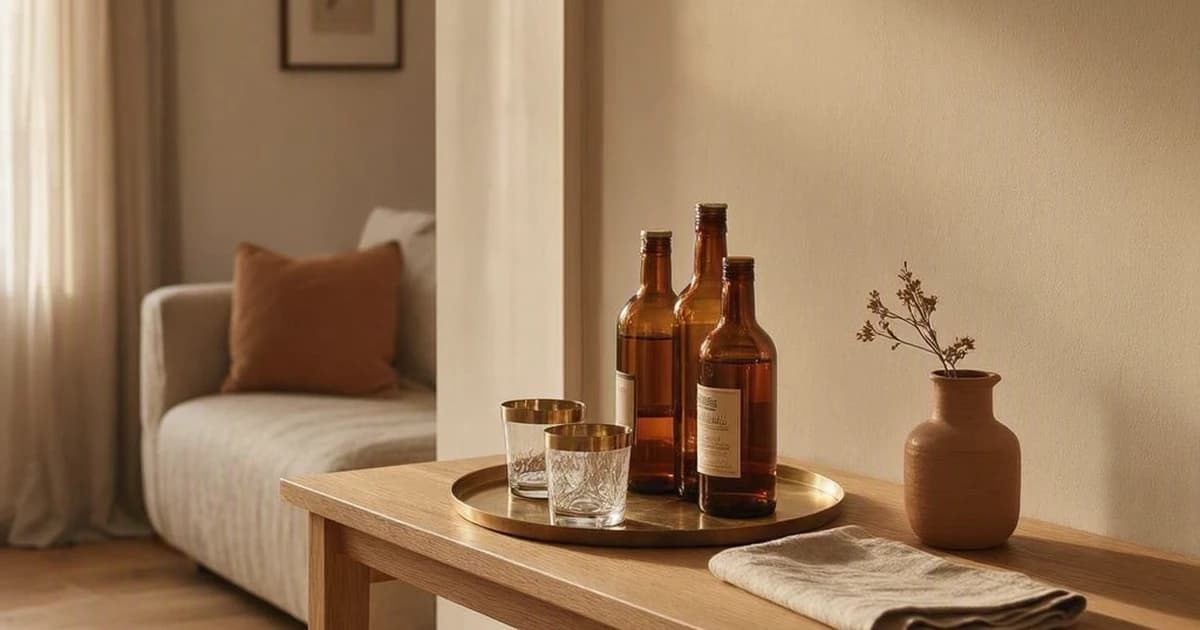
A mini bar in a small living room works when it does one job well: one surface, a few good bottles, and a clear reason to walk over to it. It fails the moment it becomes a second junk drawer.
Jump to:
- What Makes a Small Living Room Bar Actually Work
- The Three Renter-Safe Setups That Actually Work
- How Much Space You Actually Need
- What to Actually Put On It
- What You Can Change as a Renter
- Mistakes That Break the Look
- FAQs
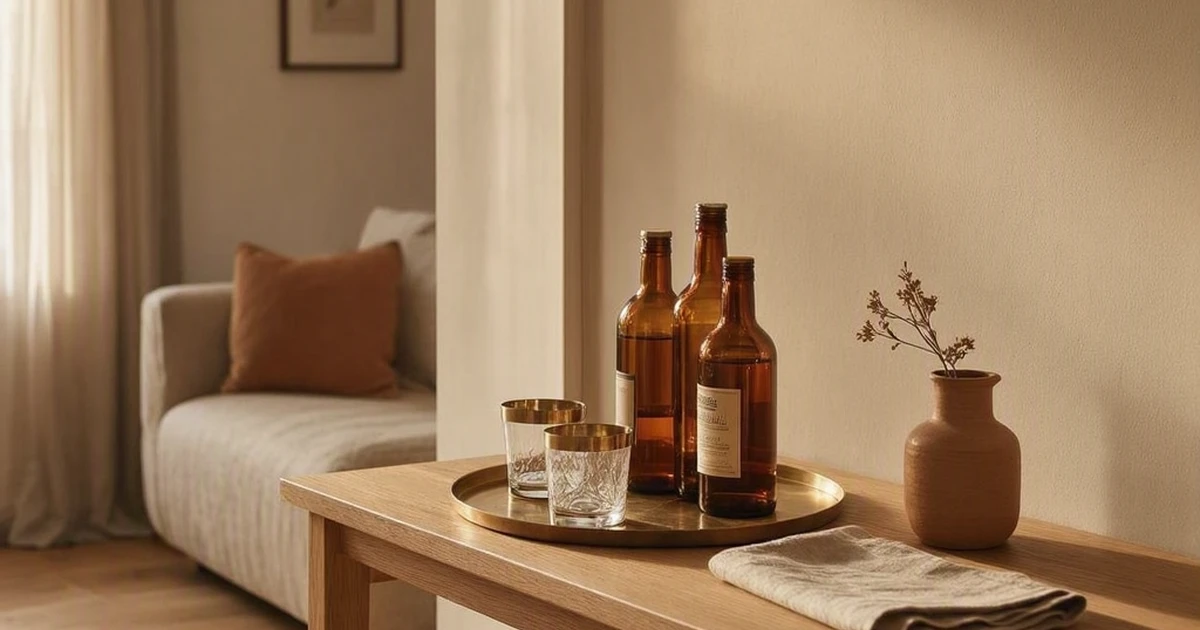
This guide covers the three renter-safe setups that actually work in a small living room, the exact measurements that keep a bar from eating your walking space, and what to skip so it never turns into a themed room instead of a styled corner. Everything here is freestanding. Nothing requires drilling, permanent paint, or landlord sign-off.
What Makes a Small Living Room Bar Actually Work
A small-space bar works when it stays narrow, stays in one spot, and never blocks a path you actually walk.
Go vertical before you go wide. A tall, shallow piece uses far less floor than a low, deep one, and in a living room under 500 square feet, floor space is the resource you're protecting. Pick one dedicated zone for it (a corner, a stretch of wall, the end of a console) and keep every bottle, glass, and tool inside that boundary. A bar that spreads across two surfaces reads as clutter no matter how nice the pieces are.
Most people don't plan for scale until the cabinet is already in the room and won't fit through the door on the way back out. One compact cart or a single narrow shelf unit beats a full bar cabinet in almost every small living room. The goal is an accent, not a second kitchen. Light finishes, open shelving, and pieces with visible legs keep the whole setup from visually swallowing the room the way a dark, boxy cabinet does.
None of this requires touching the apartment itself. Every principle here works with furniture you place and remove yourself, which matters if you're renting and don't want to negotiate a bar setup with a landlord who's never seen the room.
The Three Renter-Safe Setups That Actually Work
Three options cover almost every small living room: a rolling cart, a narrow open shelf, and a styled tray on furniture you already own.
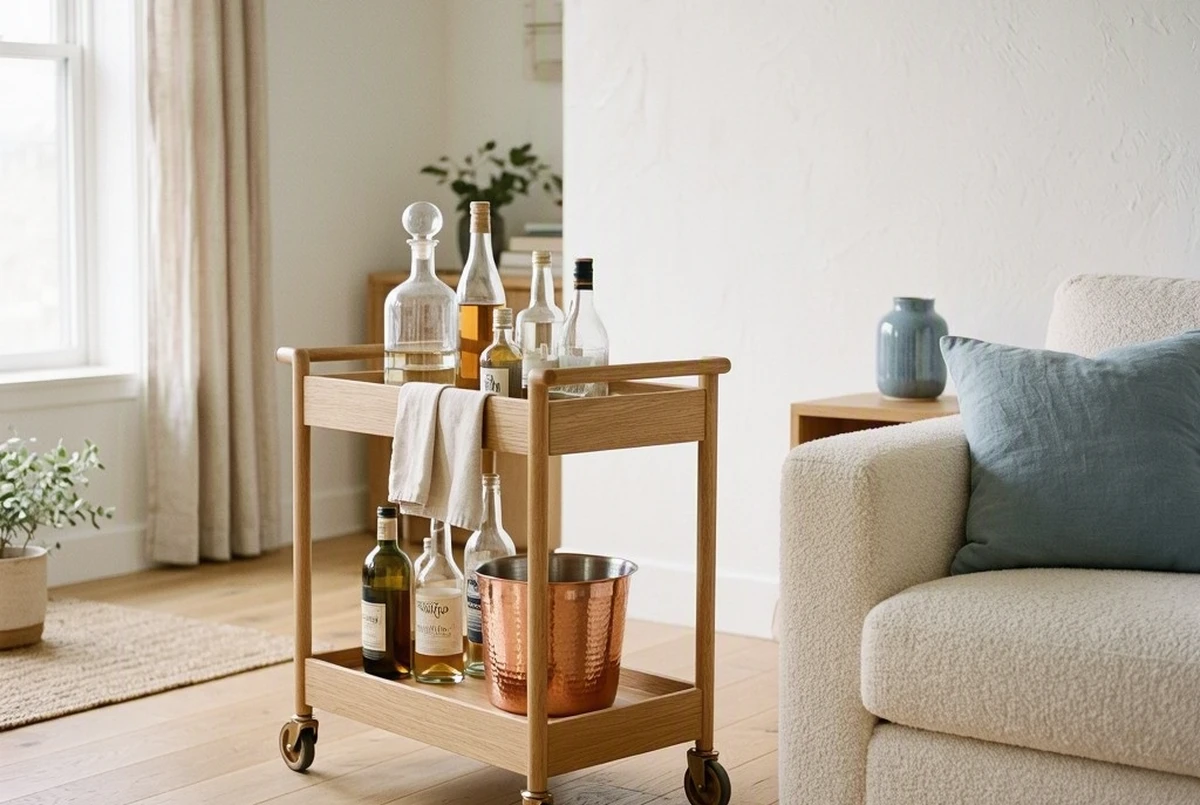
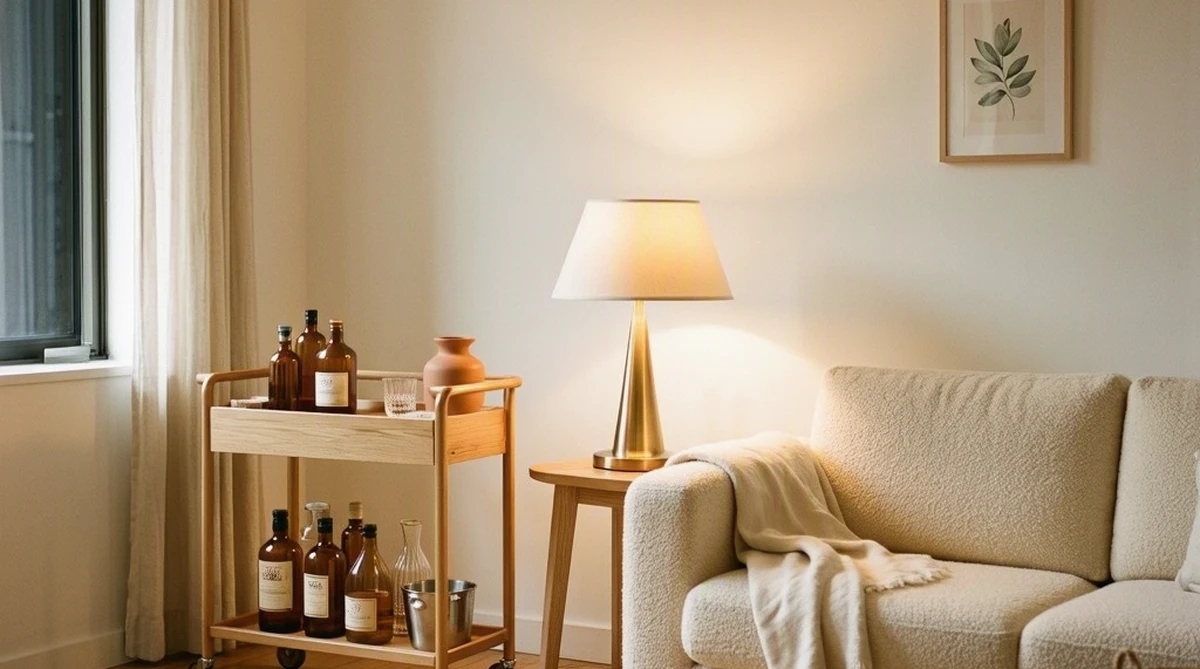
A rolling bar cart is the most flexible option because it moves. IKEA's RÅSKOG utility cart runs $39.99, at 13¾ inches wide by 17¾ inches deep by 30⅜ inches tall, small enough to tuck beside a sofa and roll out only when you're using it. The three open tiers separate bottles, mixers, and glassware instead of stacking everything into one pile.
A narrow open shelf unit works better when you want the bar to stay put and look more like furniture than equipment. IKEA's VITTSJÖ shelf unit in black-brown and glass measures 39⅜ inches wide by 14⅛ inches deep by 36⅝ inches tall, at $79.00, and the shallow glass shelves keep it visually light even fully styled. It stands on its own, no wall mount needed, so it's fully reversible at move-out.
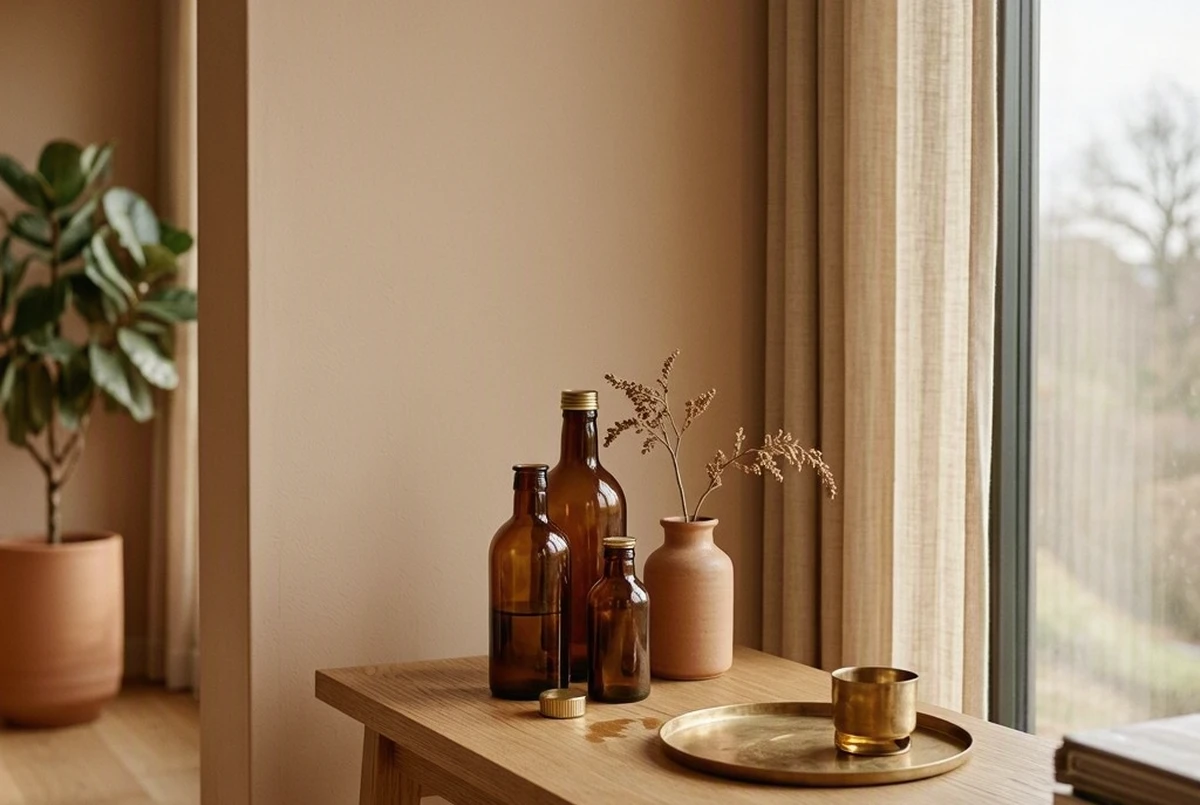
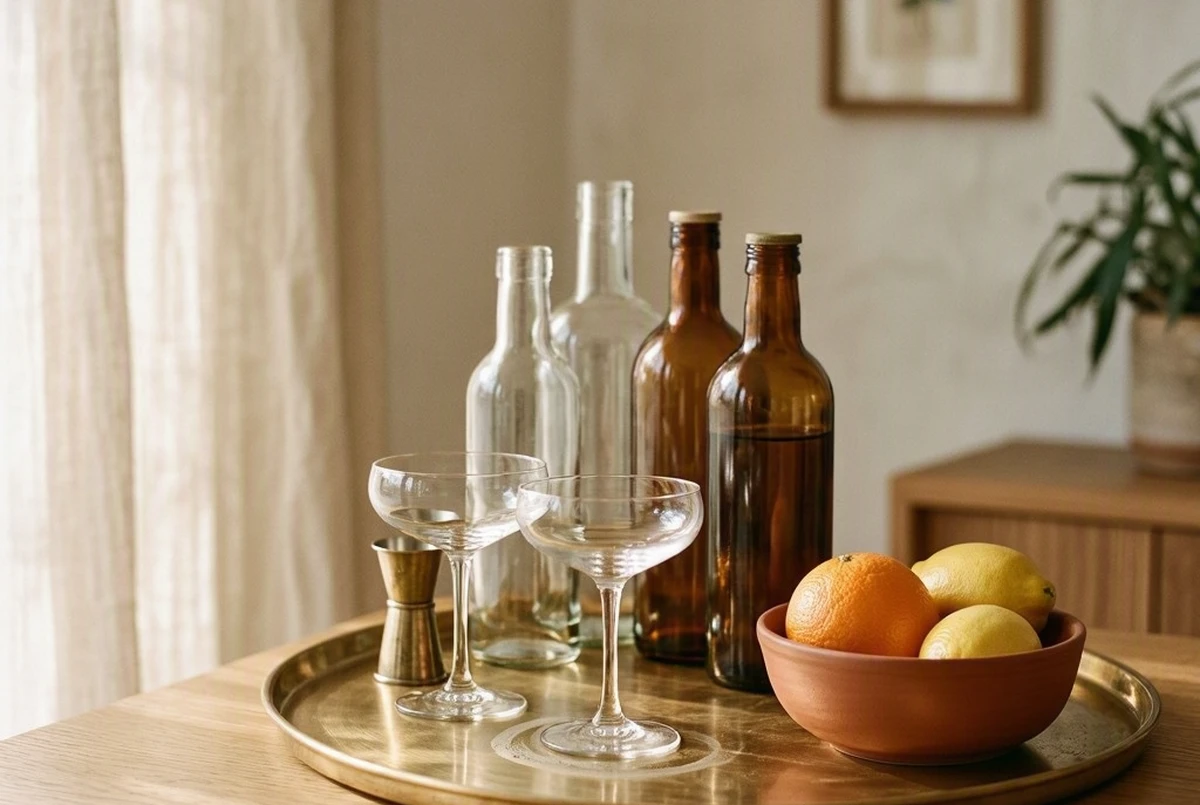
A tray on furniture you already own costs nothing. Pick a console, a sideboard, or one end of a bookshelf, add a round tray, three or four bottles, and a set of glasses. This is the setup I'd recommend first if you're renting somewhere you might leave within a year. There's no furniture to sell or haul when you move, just a tray you pack in a box.
How Much Space You Actually Need
A working small-space bar fits in a 24 to 30 inch wide footprint, whether that's a cart, a shelf, or a corner nook.
If you're using a rolling cart, measure your narrowest doorway before you buy. Leave at least 2 to 4 inches of clearance beyond the cart's widest point, handles included, so it clears trim and door hardware without a fight every time you move it. The RÅSKOG's 17¾ inch depth clears a standard interior doorway with room to spare.
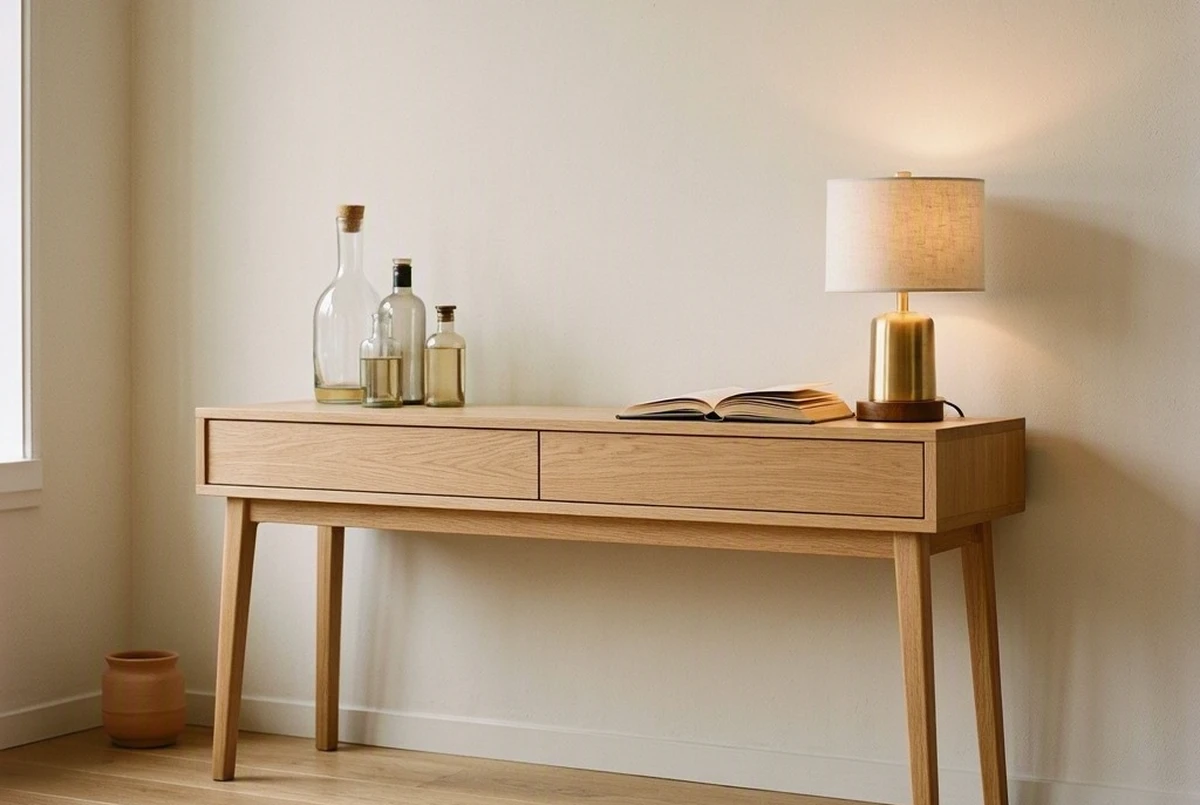
For a floating or open shelf setup, plan for 36 to 48 inches of uninterrupted wall or console width. That's enough for two shelves of bottles and glassware without the shelf looking overstuffed on one end and bare on the other. Less than that and you'll be fighting for room the moment you add a shaker or an ice bucket.
Whatever setup you pick, leave real clearance around it. You should be able to stand at the cart or shelf, reach a bottle, and step back without bumping the sofa arm or a side table. In a studio or one-bedroom, that clearance usually matters more than an extra six inches of display space.
What to Actually Put On It
Four to six bottles and a small set of glasses is the ceiling for most small living room bars, not the starting point.
Pick spirits you actually drink, not a full bar's worth of options bought for a party that already happened. One base spirit, one mixer, one bitters, and a citrus tool cover most home cocktails without turning the shelf into a liquor store display. Add a shaker, a jigger, and one type of glass (rocks or coupe) rather than three glass shapes competing for the same six inches of shelf. A curated shelf is also the easier one to pack when your lease ends. Four bottles and six glasses fit in one box. Twenty of each turns move-out into its own project.
Group everything by height and finish before you call it done. Tallest bottles at the back or top shelf, glassware in front where it's easy to grab, and one small object (a bowl of citrus, a single plant) to break up the row of straight bottle necks. A shelf with everything lined up the same height reads as storage. A shelf with one deliberate height change reads as styled.
The same three setups work just as well as a coffee and tea station if spirits aren't the point. Swap the bottles for a French press, a small kettle, and a few glass jars of loose tea or beans, and keep the same rule: four to six items, grouped by height, one tray holding it together. The RÅSKOG cart in particular does double duty here since the bottom tier hides mugs while the top stays styled.
What You Can Change as a Renter (and What to Skip)
Every setup in this guide is freestanding, which means none of it needs written permission from a landlord.
Rolling carts, open shelf units, and trays on existing furniture move with you at the end of a lease and leave nothing behind for a walkthrough to flag. Freestanding wins over mounted for exactly that reason.
A beverage fridge is the one addition worth pausing on. Confirm your apartment's outlet load can handle it, and check that it has enough clearance around the back and sides to vent properly. Cramming a mini fridge into a closed cabinet without airflow is a fast way to shorten its life and add heat to a small room. If your lease caps the number of major appliances per unit, ask before you buy one.
Skip drilling into a wall entirely for this one. A wall-mounted shelf or hanging glass rack might look good in a photo, but a freestanding cart or console does the same visual job without risking a deposit over anchor holes. If you're weighing other no-drilling storage for the rest of the room, the renter-friendly decorating guide covers the full range of options, including exactly which Command strip rating holds which weight.
Mistakes That Break the Look
Buying a piece too big for the room. A full bar cabinet can eat a third of a small living room's usable floor. Measure your actual clearance before buying anything wider than 24 inches.
Stocking it like a liquor store. Twelve bottles on a shelf meant for six looks cluttered no matter how nice the bottles are. Curate down to what you actually drink and refill as needed.
Skipping the workflow. If your shaker is on one shelf and the glasses are across the room, the bar becomes decorative clutter instead of something you'll use. Keep bottles, tools, and glassware in the same zone.
Drilling for a wall shelf you didn't need to. A freestanding cart or console does the same job as a wall-mounted bar shelf without the deposit risk. Save the drilling for something you can't do without it.
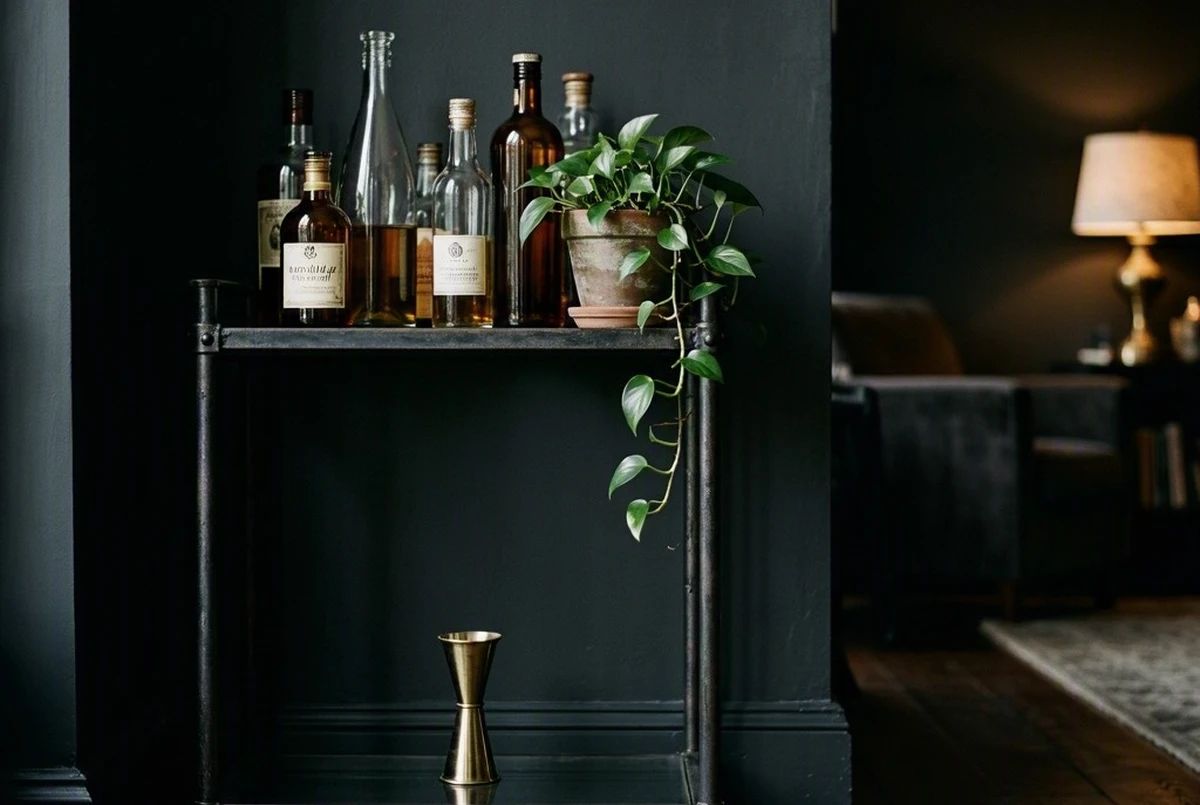
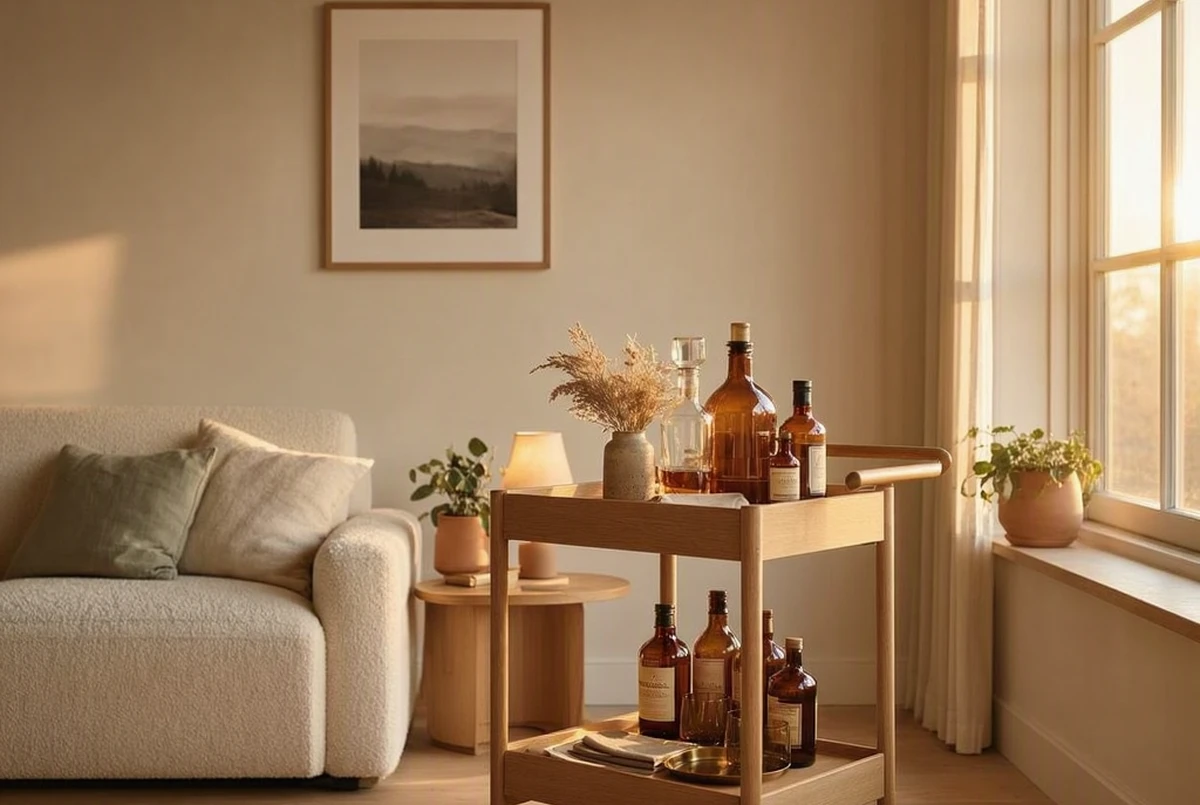
Going dark and heavy in a bright, small room. A black lacquered cabinet can visually shrink a small living room the way a light open cart never will. Match the scale and finish of the bar to the rest of the room, not the other way around.
FAQs
How do I make a mini bar look intentional instead of cluttered?
Keep it to one surface and four to six bottles, grouped by height with glassware in front. A tray under everything visually contains the setup so it reads as styled rather than scattered.
Should I use a bar cart or a shelf unit in a small living room?
A cart works better if you want to move it or roll it out only when guests are over. A narrow open shelf unit works better if you want it to stay put and read as furniture rather than equipment.
What size bar cart works best in a small apartment?
Around 16 to 24 inches wide is the safest range. IKEA's RÅSKOG at 17¾ inches wide fits most corners and doorways without needing a special measurement check.
Can I put a mini bar in the living room without it looking like a themed bar?
Yes. Use the same finishes already in the room, light oak, brass, glass, and treat it like a styled console rather than a novelty piece. The fewer bottles on display, the less it reads as a theme.
How much wall space do I need for floating bar shelves?
Plan for 36 to 48 inches of uninterrupted width for two shelves of bottles and glassware. Less than that and the shelf looks overstuffed within a few weeks.
What's the easiest renter-friendly bar setup?
A tray on furniture you already own. No new purchase, nothing to sell at move-out, and it's the fastest of the three setups in this guide to put together.
How do I keep a small bar from taking over the room?
Pick one zone and stop there. A bar that spreads across a console, a side table, and a shelf reads as clutter, while the same bottles contained to one 24-inch footprint reads as a considered detail.
A tray and four bottles on furniture you already own beats an oversized cart you have to work around. Start there, and only add a dedicated cart or shelf once you know how often you actually use it.
Related Articles
- Cozy Small Apartment Living Room Ideas for Renters: more ways to style the same room this bar setup lives in
- TV Corner Ideas for Small Apartments: another freestanding, no-drilling corner idea for the opposite side of the room
- Renter Friendly Decorating Ideas That Damage Nothing: the full range of no-drilling storage and hanging options, including Command strip weight ratings
- Warm Minimalist Interior Design Ideas for Small Apartments: the broader palette and texture approach behind the finishes used throughout this guide