
Renter Friendly Decorating Ideas That Damage Nothing
How to make a rental apartment feel personal and finished without risking your deposit, with specific products, measurements, and lease-safe techniques that actually work in small spaces.

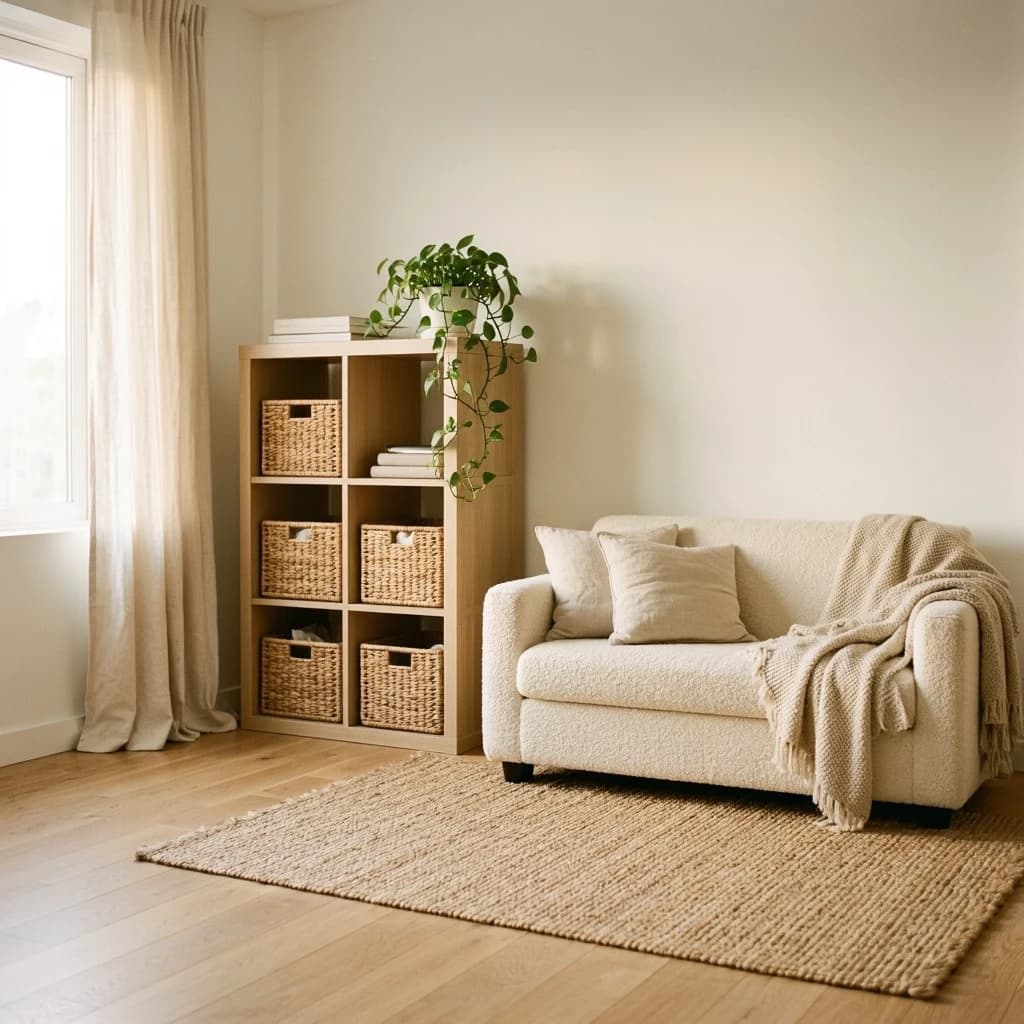
It doesn't look temporary if you get the scale right.
Most renter-friendly decorating advice focuses on what not to do. This guide covers what to do instead: specific products, measurements, and a clear order of operations that makes a rental look like somewhere you chose to live, not somewhere you're waiting to leave.
Jump to:
- Start with textiles
- Removable wall solutions that look permanent
- Lighting upgrades without touching the wiring
- Freestanding storage that works like built-ins
- What you can and cannot do in most leases
- Kitchen and bathroom upgrades under $100
- Making a studio feel like more than one room
- FAQs
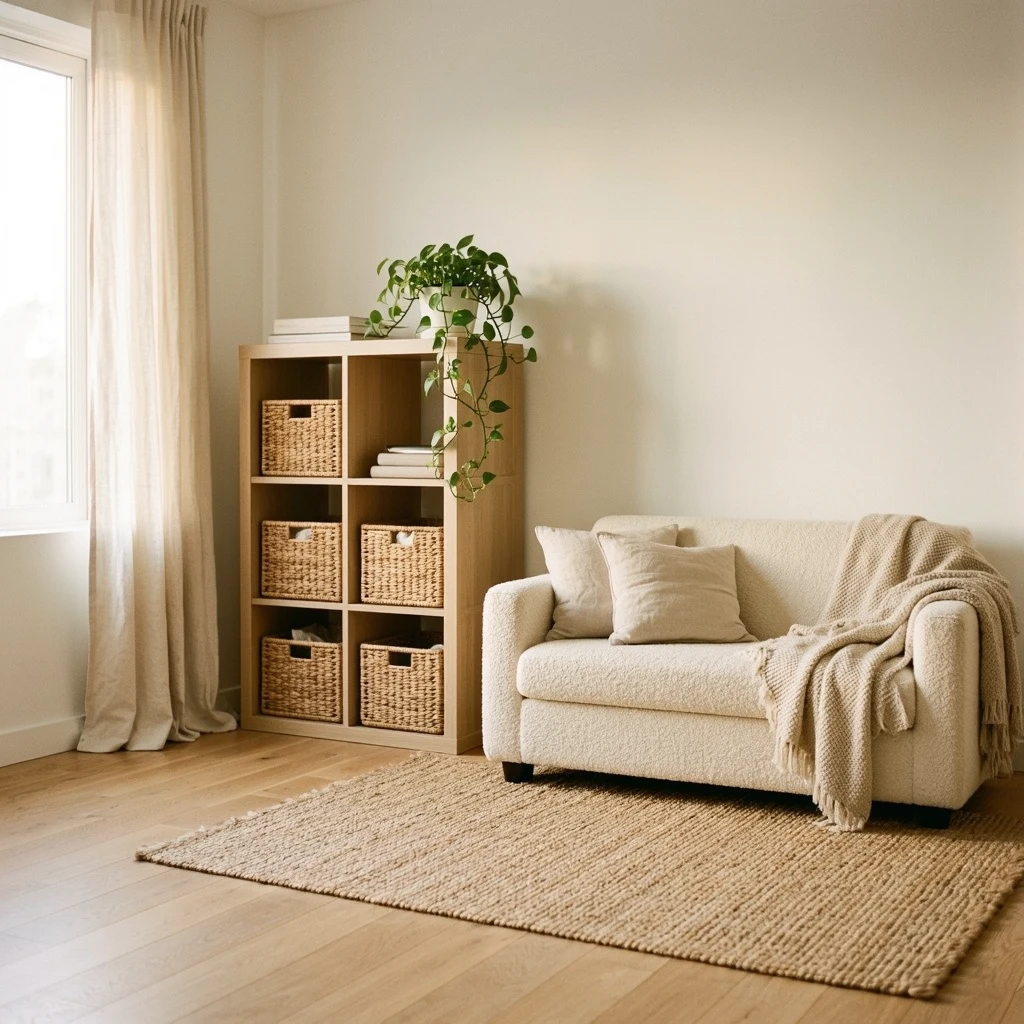
Renter-friendly decorating means reversible changes that look as good as permanent ones. A large rug, full-length curtains, Command-strip art, and a tall freestanding shelf do more for a small apartment than most renovations, and you take them with you when you leave.
Start with textiles
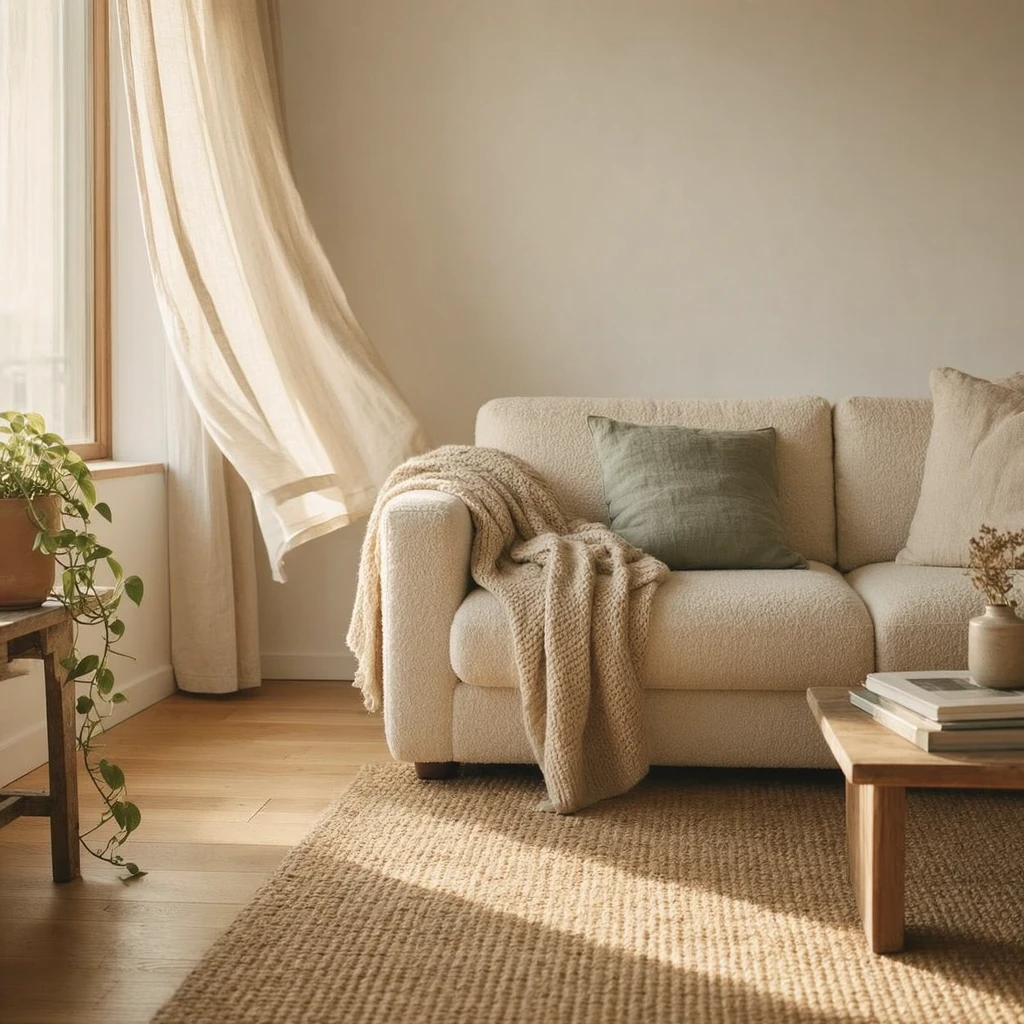
The rug comes first. It's the decision that turns a rental into a room. A rug that's too small (say, a 4x6 where you need an 8x10) is the most common reason renter apartments look unfinished even after spending real money on other things.
For a studio living area, a 6x9 or 8x10 rug is the starting point. The front legs of your sofa and chairs should sit on the rug. If they float off the edge, go up a size. IKEA's STOCKHOLM jute rug at 8'2" x 11'6" runs about $299 and reads as genuinely high-quality without being precious. For a more budget option, the Target Threshold rugs in the 6x9 size hold up well at around $80-120.
Curtains do two things in a rental: they cover the builder-grade blinds you can't change, and they make ceilings feel higher. The rule is to hang them as high as you're willing to go and wider than the window. If you're using tension rods inside the frame, you lose the height advantage but gain a clean look that works for smaller windows. For full-length floor curtains at ceiling height, you'll need either Command curtain rod brackets (rated for about 5-8 lb total per bracket pair, fine for lightweight linen but not for blackout panels) or existing curtain rod hardware.
Bedding matters more than people give it credit for. Crisp, solid-colored bedding in a high-contrast tone for the room (cream against a dark wall, charcoal against a light one) makes a rental bedroom read as finished without a single nail hole.
Throw pillows and blankets add texture without commitment. Repeat one color across two surfaces minimum, otherwise it looks random.
Removable wall solutions that look permanent
3M Command strips are the foundation of renter wall decor. The specifics matter:
- Small wire hooks: 0.5 lb per hook
- Medium hooks: 3 lb per hook
- Large hooks: 5 lb per hook
- Picture strips (medium): up to 12 lb per frame
- Picture strips (large): up to 16 lb per frame
That covers most art, mirrors, and lightweight shelves without drilling anything. One thing to know about removal: stretch the strip down slowly rather than pulling it out from the wall. That releases the bond cleanly. Pulling it at an angle toward you is what lifts paint.
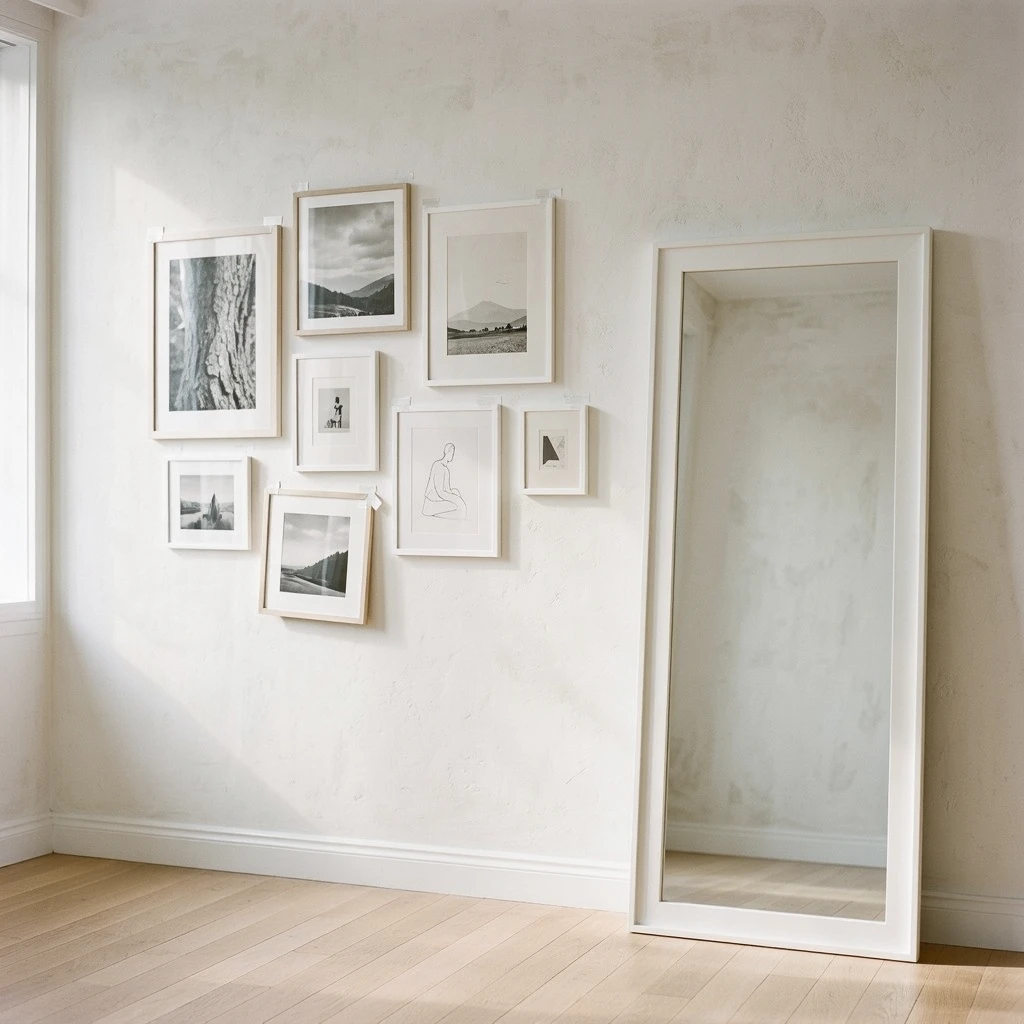
Gallery walls with Command strips work well for art under 12 lb per frame. Arrange everything on the floor first, take a photo, then work from the center out on the wall.
Peel-and-stick wallpaper on a single accent wall is a bigger commitment but a high-impact change. RoomMates rolls run $25-35 per roll (20.5 in wide × 16.5 ft long, about 28 sq ft per roll). NuWallpaper is similar at $30-40 per roll. A 120 sq ft wall takes 4-5 rolls and a weekend afternoon. Test one strip in a low-visibility corner first. Some matte paints don't release adhesive cleanly. Newer walls with properly cured paint are almost never a problem; old walls with multiple paint layers sometimes are.
A large leaning floor mirror does something no wall treatment can: it makes a small room look twice its size and adds vertical height without any wall contact at all. A 65-inch tall leaning mirror in the 24-inch width range leans against a wall and stays put safely. The 71-inch IKEA HOVET at about $199 is the one to compare everything else against.
For the full approach to making a small apartment feel like a considered space rather than a temporary one, the warm minimalist interior design guide covers the palette and furniture principles that make renter-safe choices look cohesive.
Lighting upgrades without touching the wiring
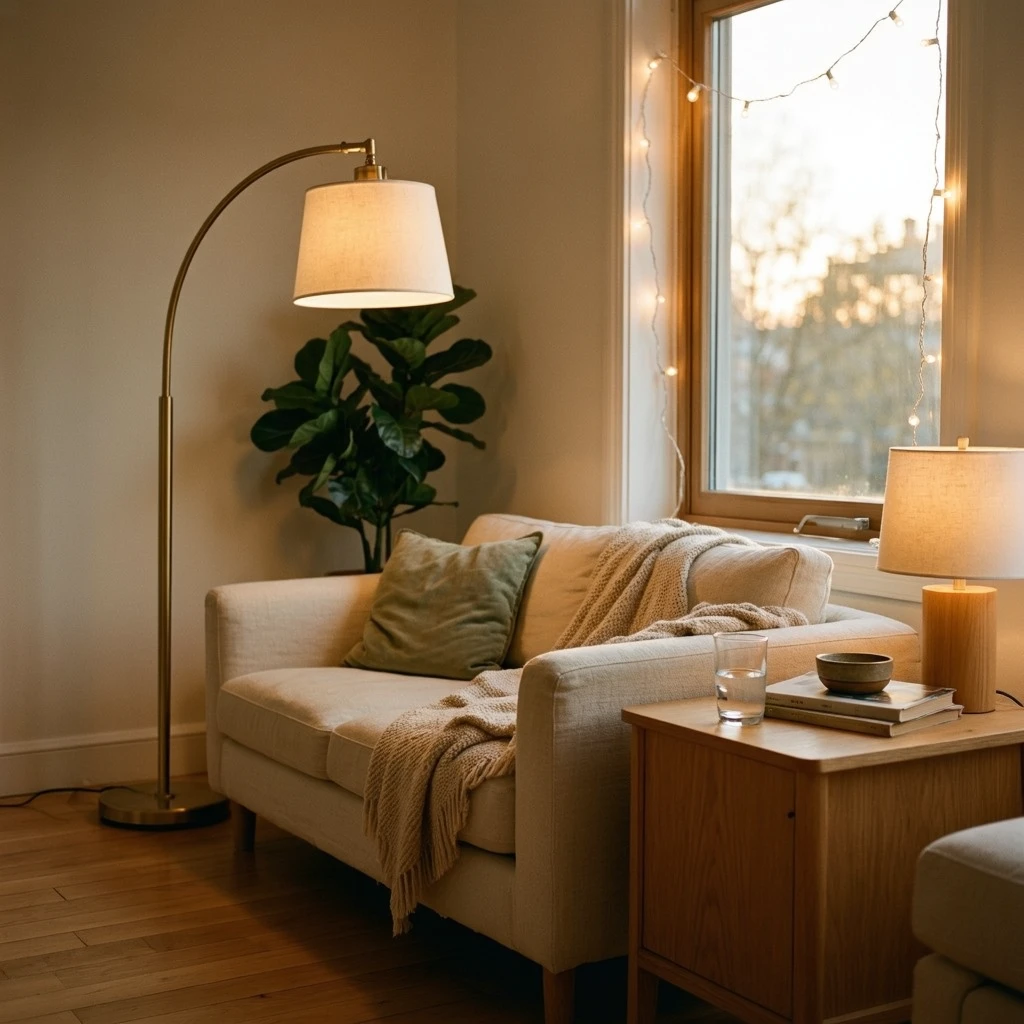
Almost every rental apartment has overhead lighting that's harsh, cold, and in the wrong place for how you actually use the room. You can't rewire it. You can work around it.
The strategy is layered light: one floor lamp, one table lamp, and one accent source (string lights, a small lamp on a shelf). Together they create depth, warmth, and defined zones that a single overhead fixture can't.
Plug-in sconces that mount with Command strips are a real option for flanking a bed headboard or adding wall interest without hardwiring. The weight limit matters: check that the sconce plus cord runs under 5 lb. IKEA's NYMÖ pendant light on an extension cord costs about $12, clips over a hook, and reads as something you chose. For a bedside lamp effect, the plug-in version of almost any wall sconce, just the shade on a hook, works.
Floor lamps are the single highest-impact purchase in a rental. An arc lamp over a sofa ($80-200 range at IKEA or Target) changes how a living area reads. The IKEA HEKTAR with a dimmer runs about $79 and does exactly what it should.
One thing that surprises people: matching the bulb color temperature across all your lamps matters more than the lamp style. Everything between 2700K and 3000K reads as warm and intentional. Mix a 2700K lamp with a 5000K overhead and the room fights itself.
Freestanding storage that works like built-ins
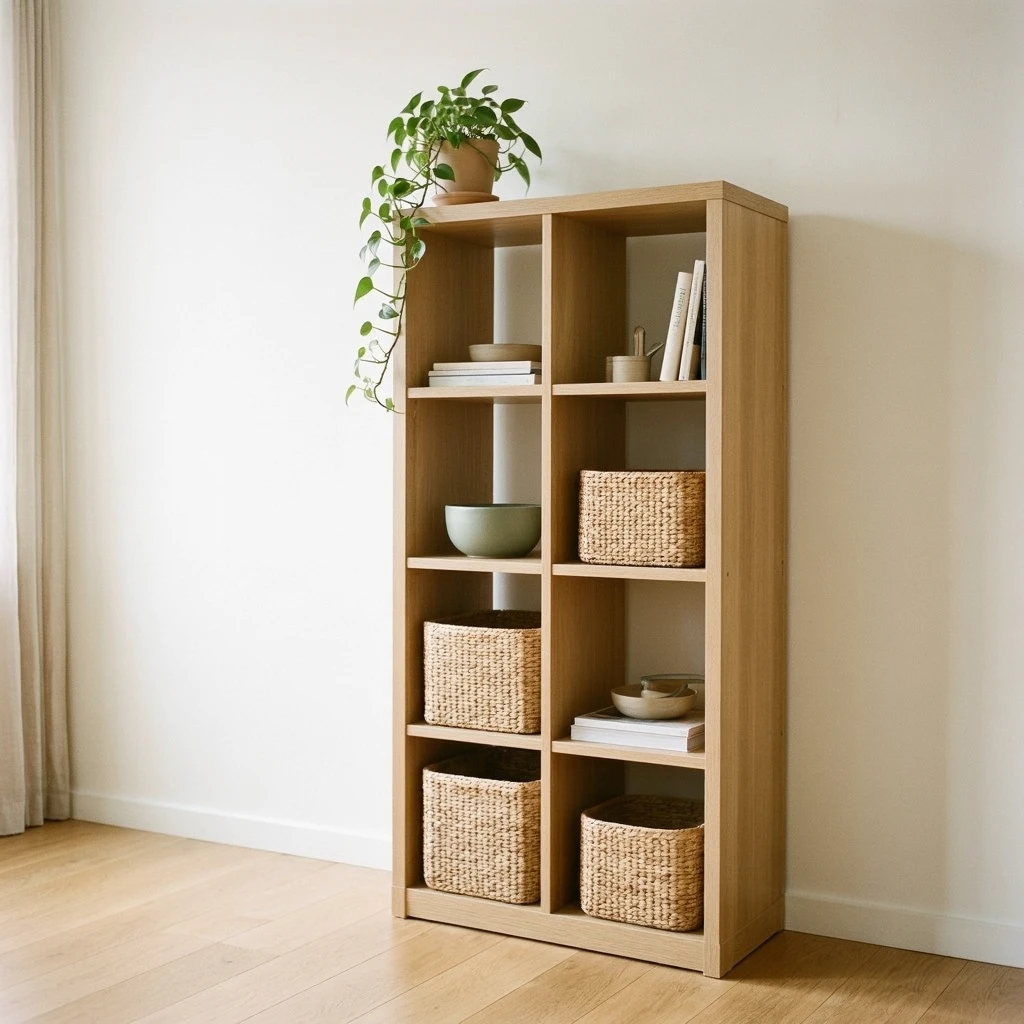
The best storage in a rental apartment is storage that looks like furniture. Freestanding shelves, wardrobes, and drawers that you own, can configure, and take with you.
The IKEA KALLAX is the most versatile piece for small rentals. The 4×2 (vertical orientation) measures 30⅞" W × 57⅞" H × 15⅞" D and runs $89-120 depending on finish. The 4×1 column (30⅞" W × 57⅞" H, narrower) fits in hallways and awkward gaps. Fill alternating cubes with woven bins to contain clutter while keeping the rest open for display. IKEA's KALLAX shelf unit page shows all sizes and compatible inserts.
For closet space, a freestanding wardrobe like the IKEA BRIMNES (31½" W × 74⅞" H, about $179-229) adds capacity without drilling a single wall stud. Pair it with under-bed drawers. The IKEA PLATSA drawer insert for under-bed use holds folded linens, off-season clothes, or anything else you'd otherwise shove in a corner.
Tension rods have more uses than most people think. Beyond curtains:
- Inside a closet: add a second horizontal rod for a tiered hanging system. 48-84" adjustable rods handle most closet widths.
- Under the sink: a short tension rod (18-30") for spray bottles keeps the cabinet organized without any tools.
- Between floating shelf brackets or narrow alcoves to hang cleaning supplies or mugs.
The rule for tall freestanding furniture in rentals: anchor it to the wall with furniture safety straps. Not for aesthetics. For safety. A 6-foot KALLAX unit can tip if a child climbs it or it gets knocked. Safety straps attach with small screws (small holes, typically not charged as damage) or with heavy-duty Command strips if your building prohibits any wall contact.
What you can and cannot do in most leases
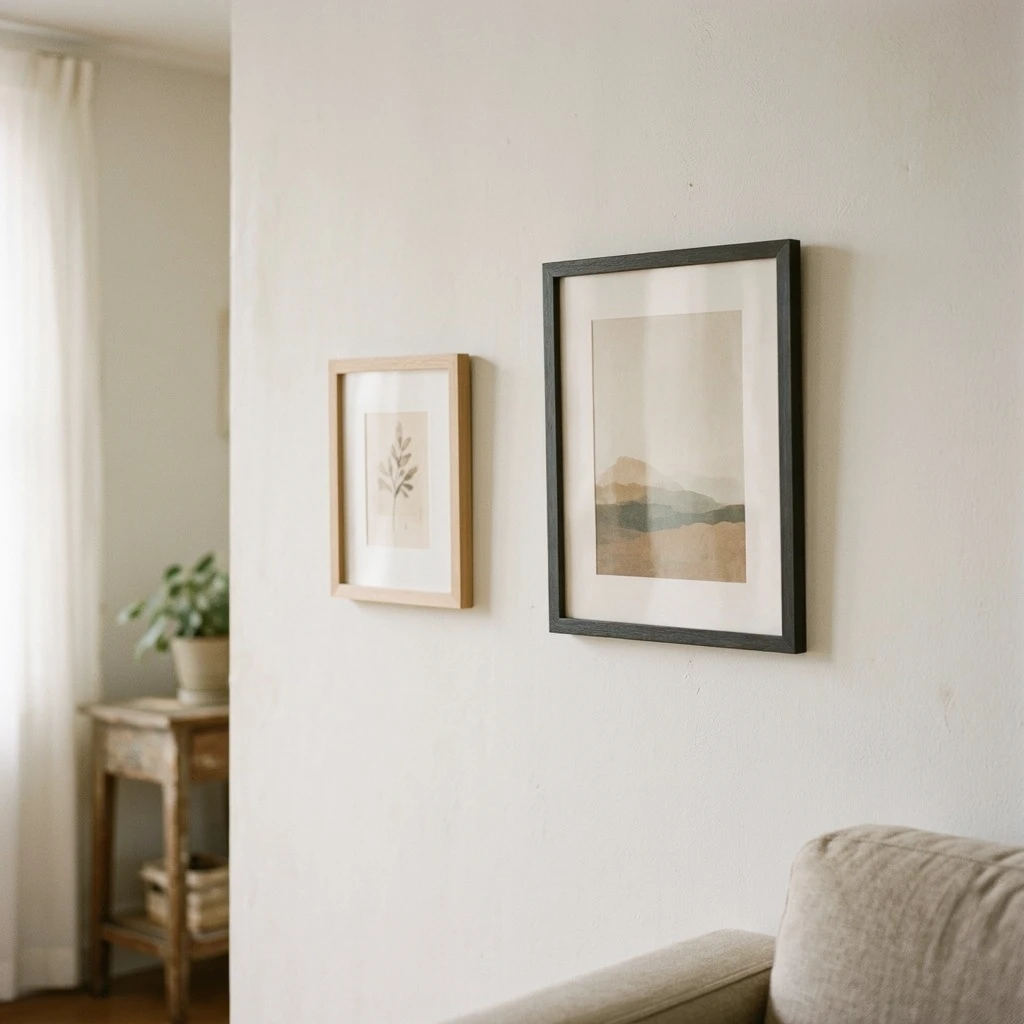
This is the section most decorating guides skip because it's less fun than product recommendations. But understanding what's actually damage versus what's normal wear and tear changes every decision you make.
What landlords generally consider normal wear and tear (not chargeable):
- Nail holes smaller than ⅛ inch diameter (a standard picture nail falls in this range)
- Minor scuffs on walls from furniture
- Faded paint from sunlight
- Worn carpet in high-traffic paths
What landlords generally consider damage (chargeable):
- Wall anchor holes at ¼ inch or larger (the kind required for shelf brackets and heavy hardware)
- Paint lifted or peeled from adhesive products
- Stains on carpet or flooring
- Unauthorized paint colors
- Unauthorized wallpaper (non-removable types)
The practical implication: you can hang art with small nails or Command strips freely. You cannot install floating shelves that require wall anchors without accepting that you'll need to patch and touch up before move-out. Patching small anchor holes with spackle and touch-up paint takes 20 minutes and eliminates most of the damage claim.
Lease clauses to check before painting or papering: look for language about "no alterations," "written consent for modifications," or "restore to original condition." Most leases prohibit permanent changes without written approval. Peel-and-stick wallpaper and removable products don't fall under these clauses because they're not permanent. If your landlord is strict, ask before applying.
Kitchen and bathroom upgrades under $100
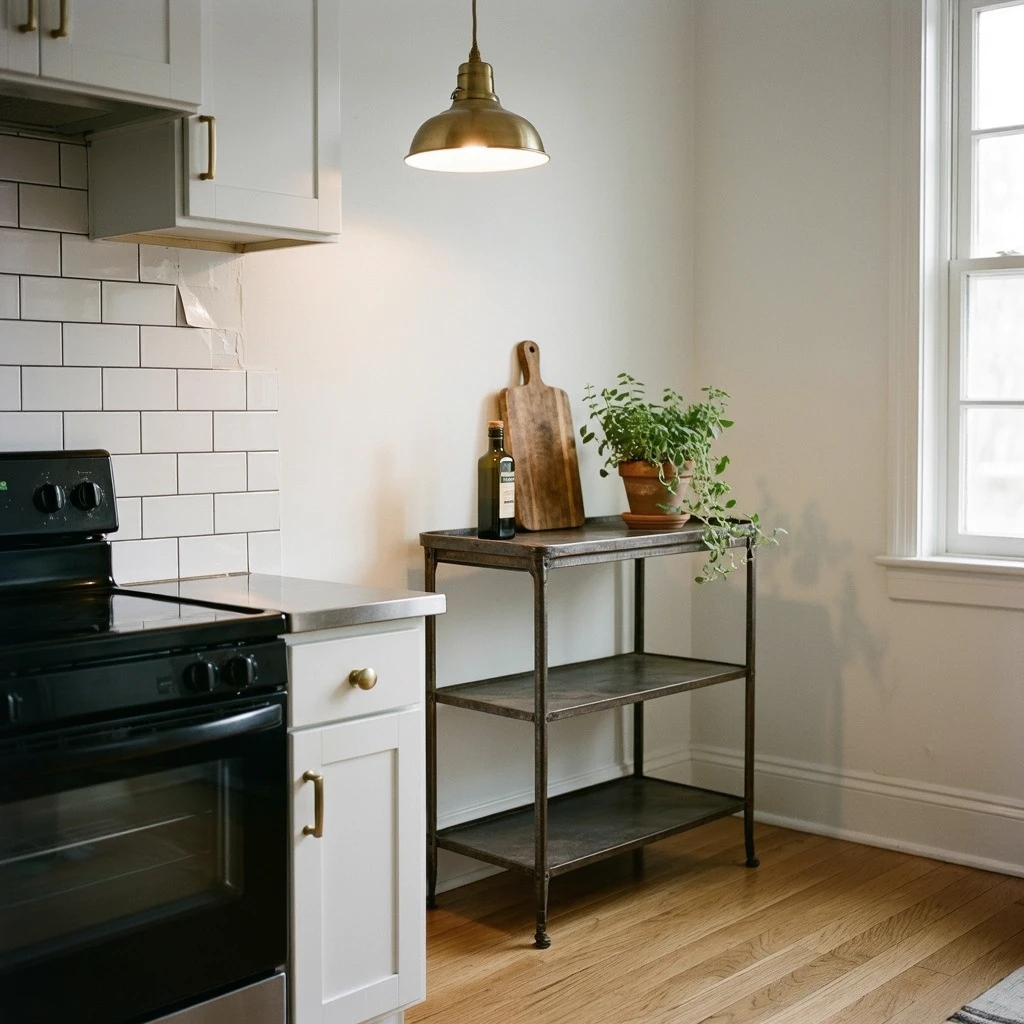
Kitchens and bathrooms are where most rentals look most generic. Both respond well to small, reversible changes.
Kitchen:
Peel-and-stick backsplash tiles behind the stove or sink are the highest-impact single upgrade. Smart Tiles run $10-20 per pack (10.95" × 10.95" per sheet). A typical kitchen backsplash needs 15-20 sheets. They go on in under an hour, remove without heat or chemicals, and you can see the difference from across the room.
Swap cabinet hardware. Standard rental cabinet knobs are almost always cheap chrome or brushed nickel that doesn't match anything. Remove them, store the originals in a labeled bag, and replace with brushed brass or matte black versions from IKEA, Amazon, or a hardware store. About $2-5 per knob. Takes 10 minutes. Swap back at move-out and your landlord will never know.
A narrow freestanding cart adds counter space and storage in kitchens too small for island furniture. IKEA's RÅSKOG cart (13" W, three tiers) costs $35 and rolls where it needs to go.
Bathroom:
An over-toilet freestanding shelf unit (typically $30-60 at Target or Amazon) turns dead vertical space into usable storage without touching the walls. Most designs straddle the toilet tank and hold towels, toiletries, and small plants comfortably.
A tension rod under the bathroom sink (span of about 18-22" for most vanities) holds spray bottles by their necks, freeing up shelf space below. The Mainstays 18" tension rod at Target costs about $4.
Swap the shower curtain. The builder-grade liner stays; the decorative curtain is yours to change. A heavy linen-look shower curtain in a neutral tone costs $25-40 and changes the entire bathroom.
Making a studio feel like more than one room
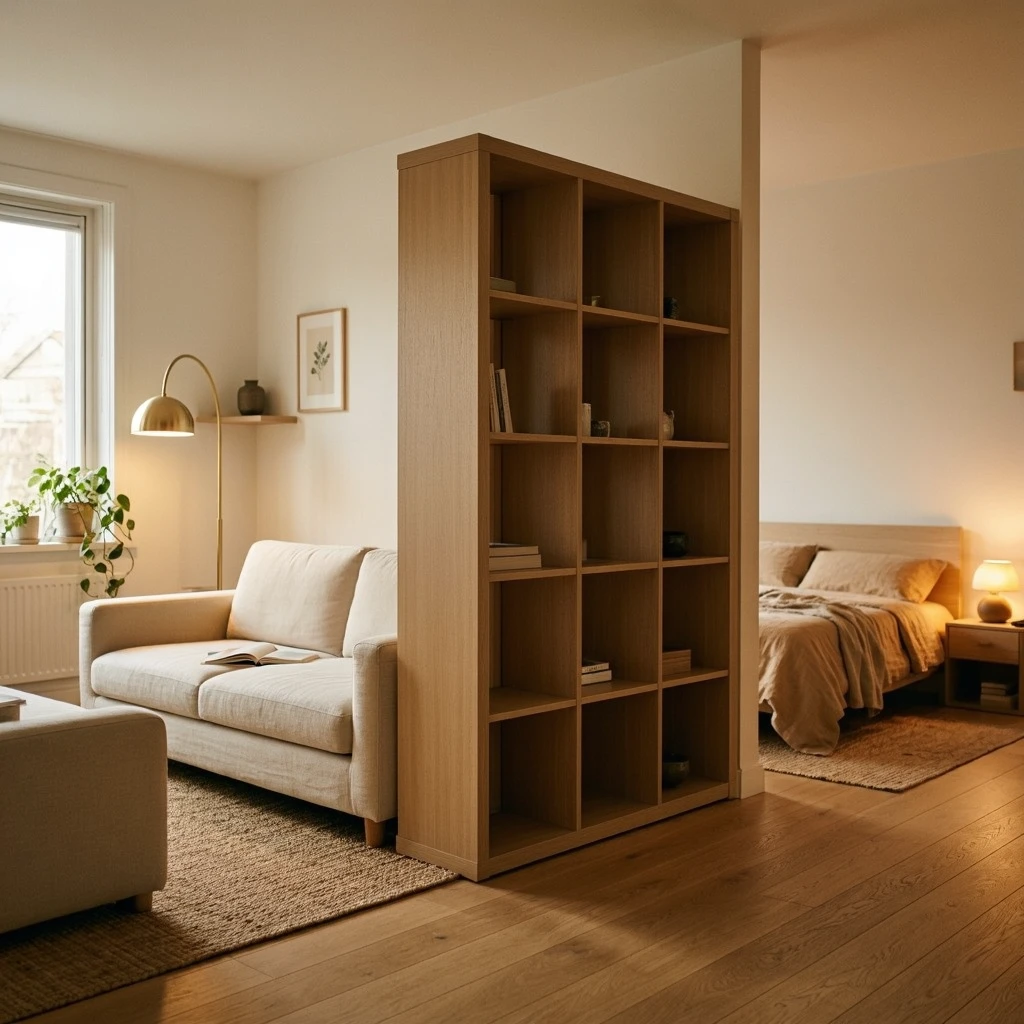
A studio apartment is one room that needs to do three things: sleep, live, and eat. The way to make that work is zoning: creating distinct areas through furniture arrangement, rugs, and lighting rather than walls.
The most effective studio layout principle: your bed and your sofa should not face each other. Position the sofa so its back is roughly toward the sleeping area. This single move divides the space into two zones without any divider at all. A KALLAX shelf placed behind the sofa back does the same job with actual separation.
One large rug per zone. The sleeping zone gets a rug that extends at least 2 feet on either side of the bed (a 5x8 or 6x9 under a queen). The living zone gets a rug that anchors the sofa and coffee table (at minimum 6x9, ideally 8x10). Two distinct rugs in different textures or tones signal two different rooms. One rug trying to cover everything usually looks stretched.
Lighting defines zones better than almost any other tool. A floor lamp beside the sofa, a pendant or table lamp on the dining side, and a bedside lamp in the sleeping zone each say something different about what that corner is for. When only the bedside lamp is on, the rest of the room recedes and the sleeping area reads as a separate room.
For layout approaches by studio dimension (where to put the bed, how to handle corner kitchens, whether to go furniture-light or zone-heavy), the studio apartment floor plans guide covers the configurations that actually work in 300-600 sq ft.
Closing thoughts
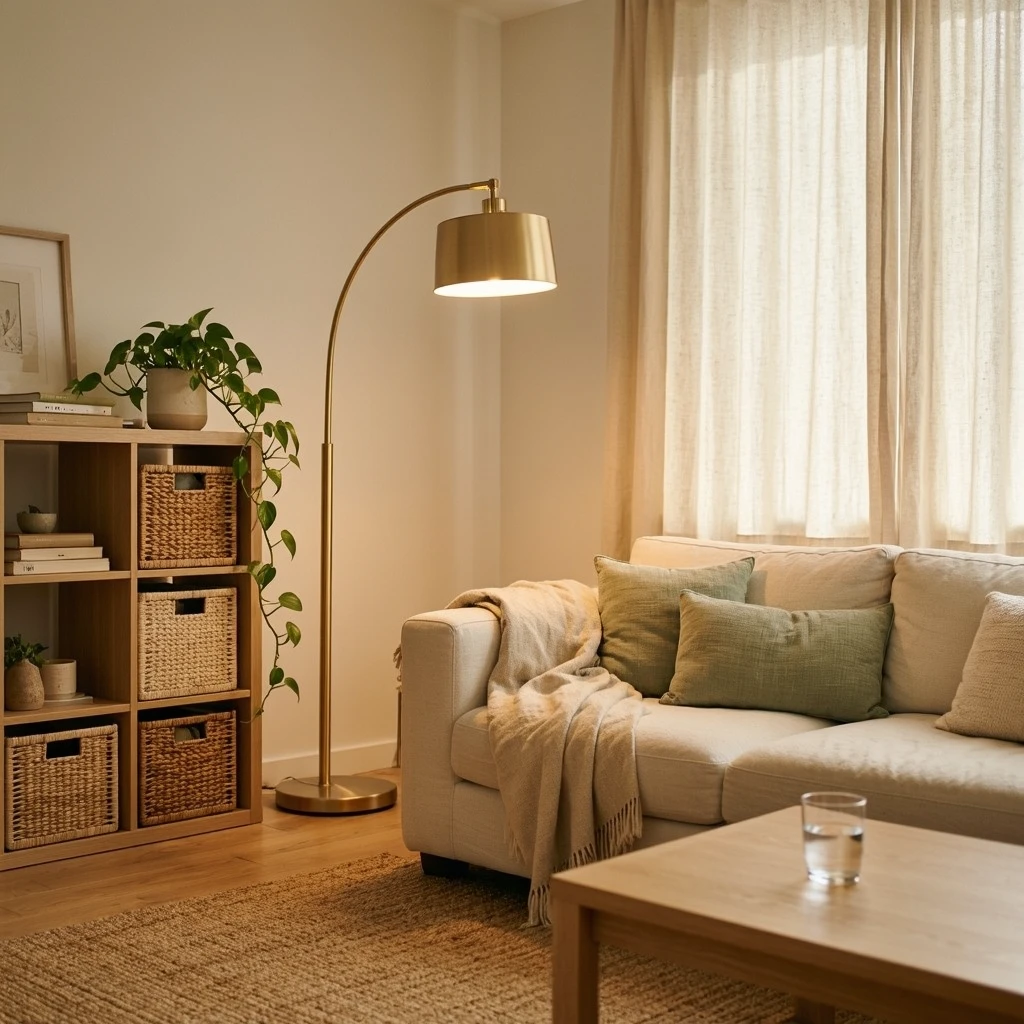
The sequence matters more than the budget. Rug first, curtains second, lighting third, storage fourth. Art and accessories last. Most renter apartments that look unfinished skipped a step in that order and tried to patch over it with smaller things. The gap is always visible.
Everything in this guide is reversible. None of it looks temporary if you get the scale right.
FAQs
How do I decorate my rental walls without losing my deposit?
Use 3M Command picture strips for framed art. Medium strips hold up to 12 lb per frame, large strips up to 16 lb. Nail holes smaller than ⅛ inch are typically considered normal wear and tear. Anchor holes at ¼ inch or larger are usually charged as damage. Avoid anchors entirely for zero move-out risk, or patch any holes with spackle and touch-up paint before you leave.
Can I put up wallpaper in a rental without damaging the walls?
Yes, with peel-and-stick wallpaper from RoomMates or NuWallpaper. Test a small patch first before committing to a full wall. Stick to one accent wall; removal is faster and the risk of paint lift is lower. When removing, pull the paper back at a 45-degree angle, not straight off the wall.
What is the best renter-friendly kitchen upgrade?
Peel-and-stick backsplash tiles from Smart Tiles behind the stove or sink. They go on in under an hour and come off without adhesive residue. Hardware swaps are close behind: pull the originals, bag and label them, put in brushed brass or matte black replacements from any hardware store, reinstall at move-out.
How do I hang curtains in a rental without drilling?
A tension rod inside the window frame works for lightweight curtains and any window up to about 84 inches wide. For heavier fabric or wider windows, 3M Command curtain rod brackets hold about 5-8 lb per pair. True floor-length curtains hung at ceiling height require drilling or existing wall hardware.
What renter-friendly storage works best in a small apartment?
Tall, narrow freestanding shelving (IKEA KALLAX in the 2×4 or 1×4 configuration) against walls. Under-bed drawers for linens and off-season clothes. Over-toilet freestanding shelves in the bathroom. Tension rods in closets to add a second hanging bar. Cube bins in the KALLAX to keep visual clutter contained.
Does renter-friendly decorating have to look temporary?
No. The most common mistake is using pieces that are too small for the room. A 4×6 rug in a space that needs a 6×9, art hung too low, or one table lamp in a room that needs three light sources. That's what makes renter apartments look unfinished, not the absence of permanent changes. Get the scale right and the reversibility is invisible.
How do I make a studio apartment feel like separate rooms without building walls?
One large rug per zone, a distinct light source for each zone, and a tall bookshelf used as a divider. Position the sofa so its back faces the sleeping area. The sleeping zone gets a rug under the bed and a lamp on the nightstand. The living zone gets its own rug with the sofa anchoring it. A KALLAX shelf between them creates visual separation without blocking light. For specific layout options by room dimension, the studio apartment floor plans guide covers configurations that work in 300-600 sq ft.
Related Articles
- Warm Minimalist Interior Design Ideas for Small Apartments: the palette and furniture approach that makes renter-safe pieces look cohesive
- Studio Apartment Floor Plans: Layout Ideas for Small Spaces: specific configurations for 300-600 sq ft studios
- Cozy Small Apartment Living Room Ideas for Renters: living room-specific ideas within the renter constraints this guide covers
- Decorating a Small Apartment Patio on a Budget: the outdoor extension of every idea in this guide