
Cozy Small Apartment Living Room Ideas for Renters
How to choose the right sofa, rug, and lighting for a small rental living room. Practical ideas from someone who has rented small apartments for years.

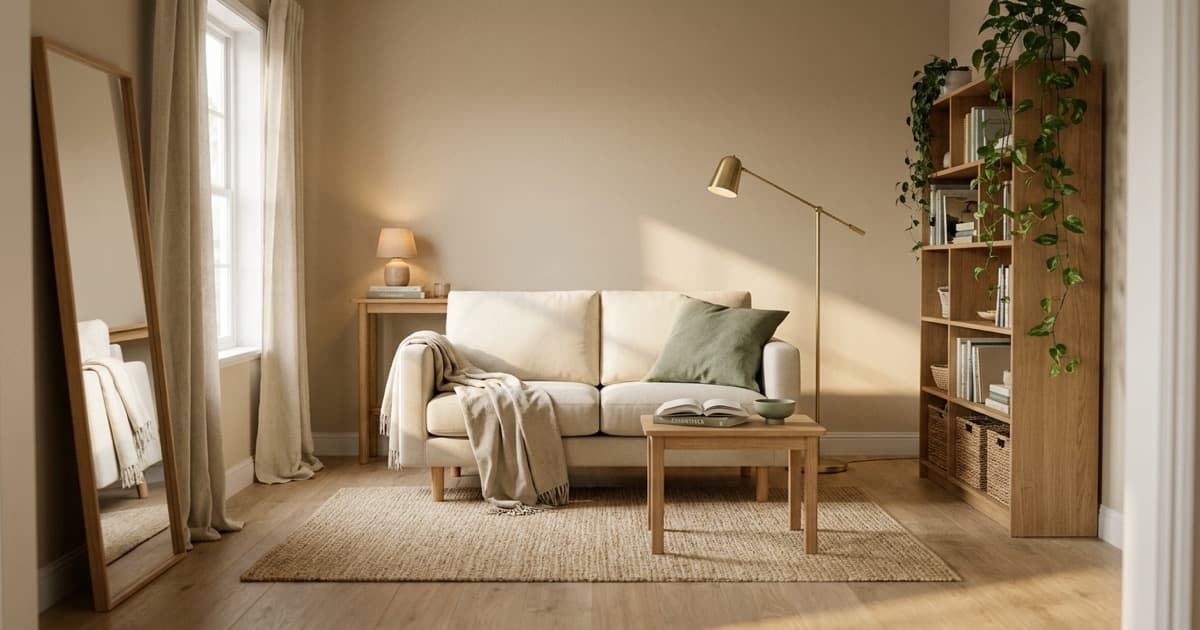
The furniture you choose and how you place it matters more than any paint color or decorating trick. Get the sofa size wrong and nothing you hang on the walls will fix it. Get the lighting wrong and a good layout still feels cold. Most small rental living rooms fail on one of those two counts before a single piece of decor enters the picture.
Jump to:
- Choosing the right sofa size
- Anchor the seating with one large rug
- Use three light sources, not one
- Go vertical for storage
- Define the living zone
- Mirrors and textiles
- Five mistakes to avoid
- Where to start
- FAQ
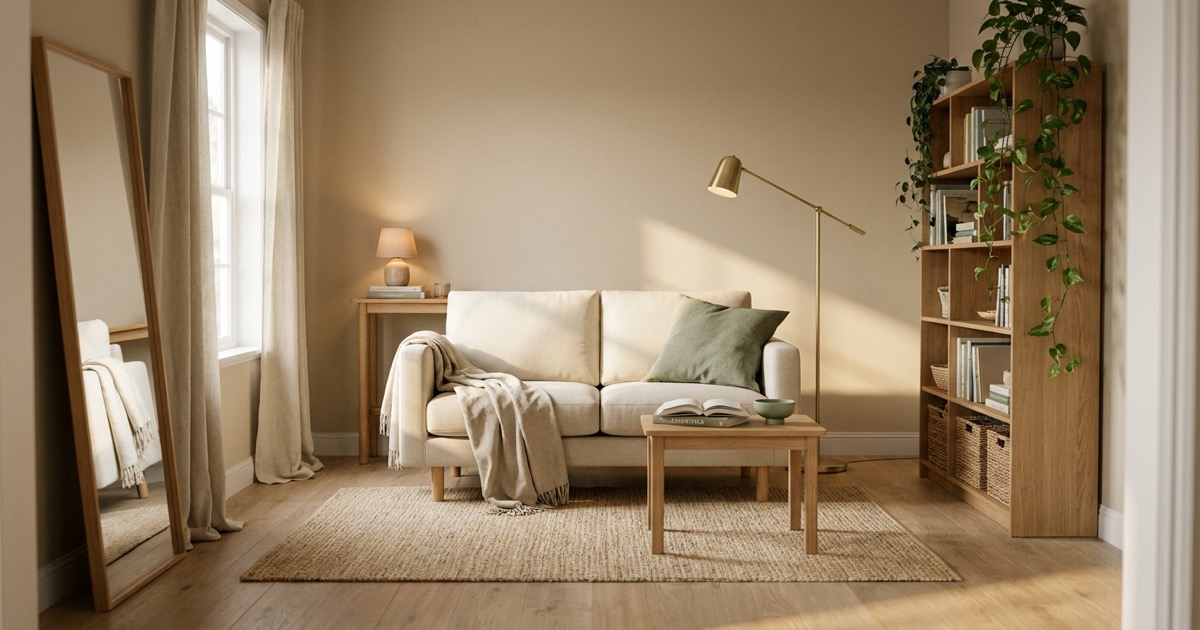
Choosing the right sofa size comes first
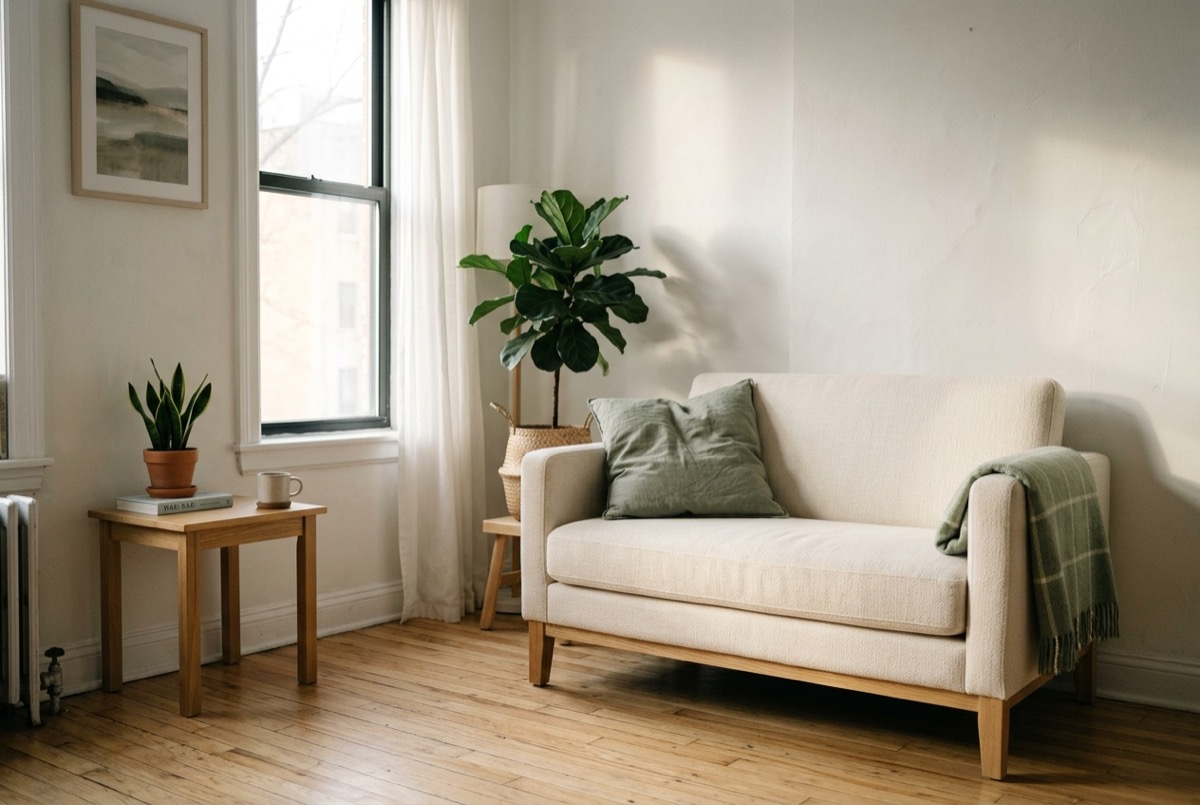
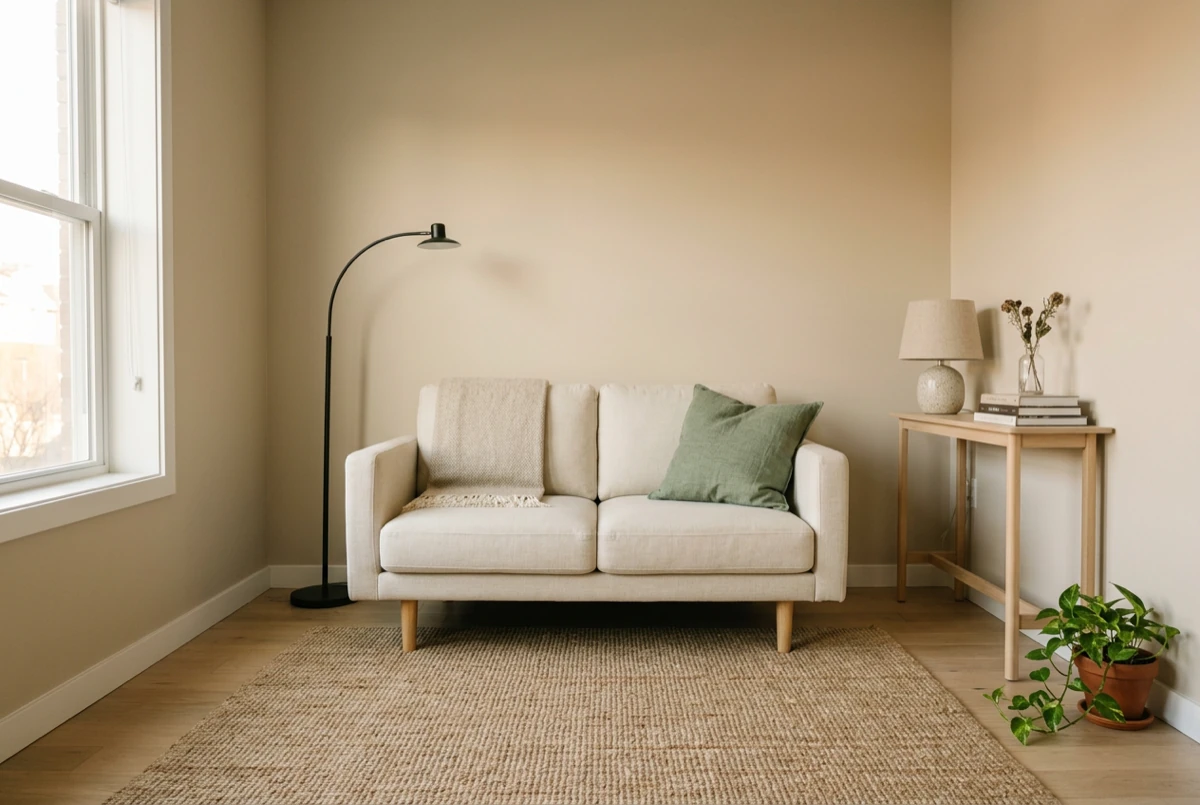
A sofa between 70 and 80 inches wide fits most studio and one-bedroom living zones without taking over the room. Go past 84 inches and you start losing the walkways.
The IKEA KLIPPAN loveseat is 70 inches wide and 34 inches deep. It fits a 10-by-12-foot living zone. The LINANÄS is narrower at 55 inches, worth considering when you need clear paths on more than one side of the sofa. Both have visible legs. Raised legs let light pass underneath, and the room reads bigger because of it.
Deep, pillow-backed sofas are a problem in studios. A sofa deeper than 36 inches takes up floor and visual space the room cannot spare. Go for a firmer back with a lower profile and keep the front-to-back measurement under 35 inches.
One accent chair and the sofa is the smarter combination for most small living rooms. A sectional looks fine in the store and commits too much floor space once it is actually in the room. A chair with an ottoman is easier to move and gives you real seating when someone visits.
Anchor the seating with one large rug
The most common rug mistake in a small living room: buying one that is too small. A 4-by-6-foot rug floating under the coffee table makes the room look like furniture deposited in a hallway.
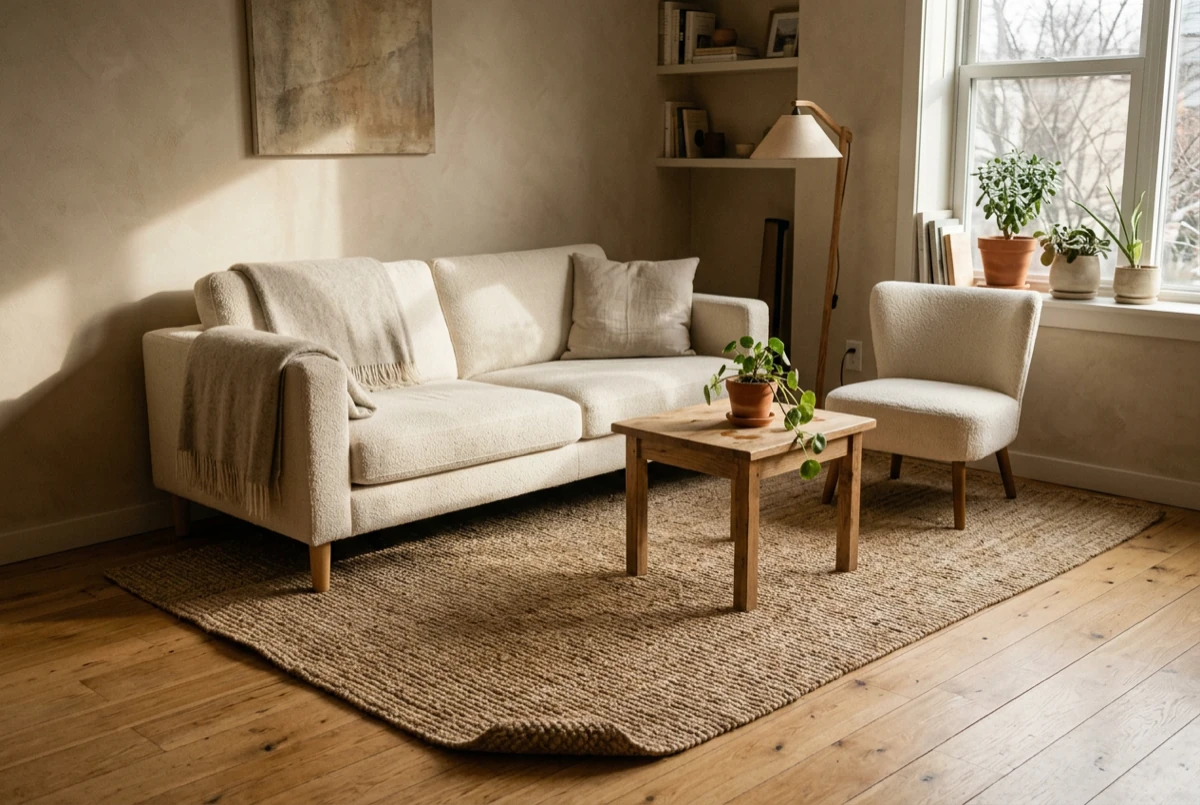
For a 10-by-12-foot living zone, a 5-by-8-foot rug is the minimum. A 6-by-9 works better when the space allows. Both the front legs of the sofa and the accent chair should rest on the rug. That groups everything together instead of leaving each piece isolated on bare floor.
Low or flat pile in natural fiber: jute, cotton flatweave, or a low-pile wool blend. High-pile rugs trap more dust and are harder to clean when furniture sits close. A hand-knotted jute rug in natural undyed fiber holds up well and works with almost any palette.
It also protects the floor under the furniture legs, which matters for your deposit.
Use three light sources, not one
The ceiling light in most rentals is a single overhead fixture. It flattens the room. One bright fixture at full intensity makes a living room feel more like a corridor, and no amount of decorating fixes that.
Add a floor lamp for fill, a table lamp for reading, and one accent source: a shelf lamp, a plug-in sconce, or string lights along the top of a bookcase. None of these need to be mounted. They all plug in.
Use bulbs between 2700K and 3000K, labeled "soft white" or "warm white." Above 3500K the light turns cool white and fights everything warm in the rest of the room.
A slim arc floor lamp behind the sofa adds ambient light without using a table surface. Look for a base under 12 inches in diameter so it is not a hazard in the walking path.
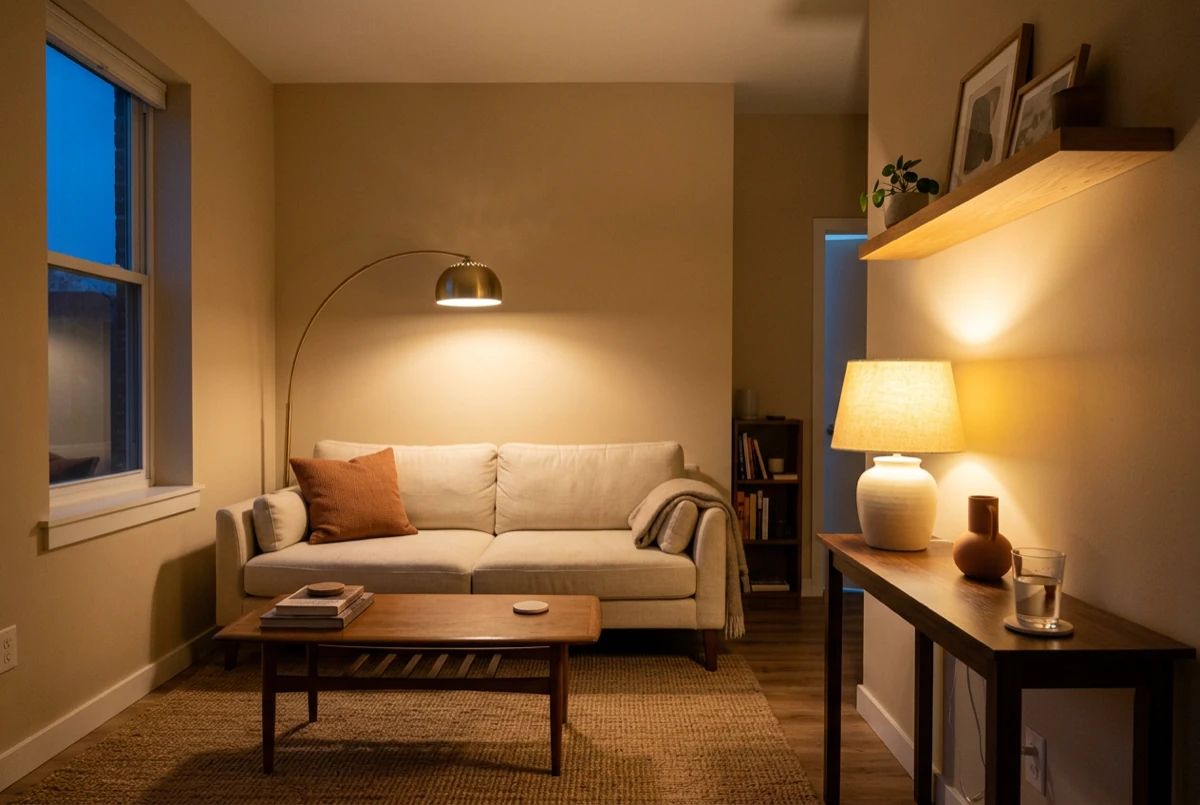
Go vertical for storage and keep the floor clear
Once you have a sofa, a coffee table, and a chair in a studio living zone, the floor is mostly spoken for. Books, plants, extra blankets, a media unit. All of that needs to go up.
A shelving unit between 60 and 72 inches tall draws the eye upward and holds a lot without spreading sideways. The IKEA BILLY bookcase is 79.5 inches tall and 11 inches deep. Against a wall it works well as a vertical storage column. It is not stable enough to stand free in the middle of a room.
For renters who cannot drill, a leaning shelf or ladder shelf is workable. They hold less weight but need no wall attachment and come with you at the end of the lease.
Keep the lower shelves for closed storage, baskets and boxes with lids, and leave the top third open. A shelf packed floor to ceiling looks chaotic no matter how neatly it is arranged.
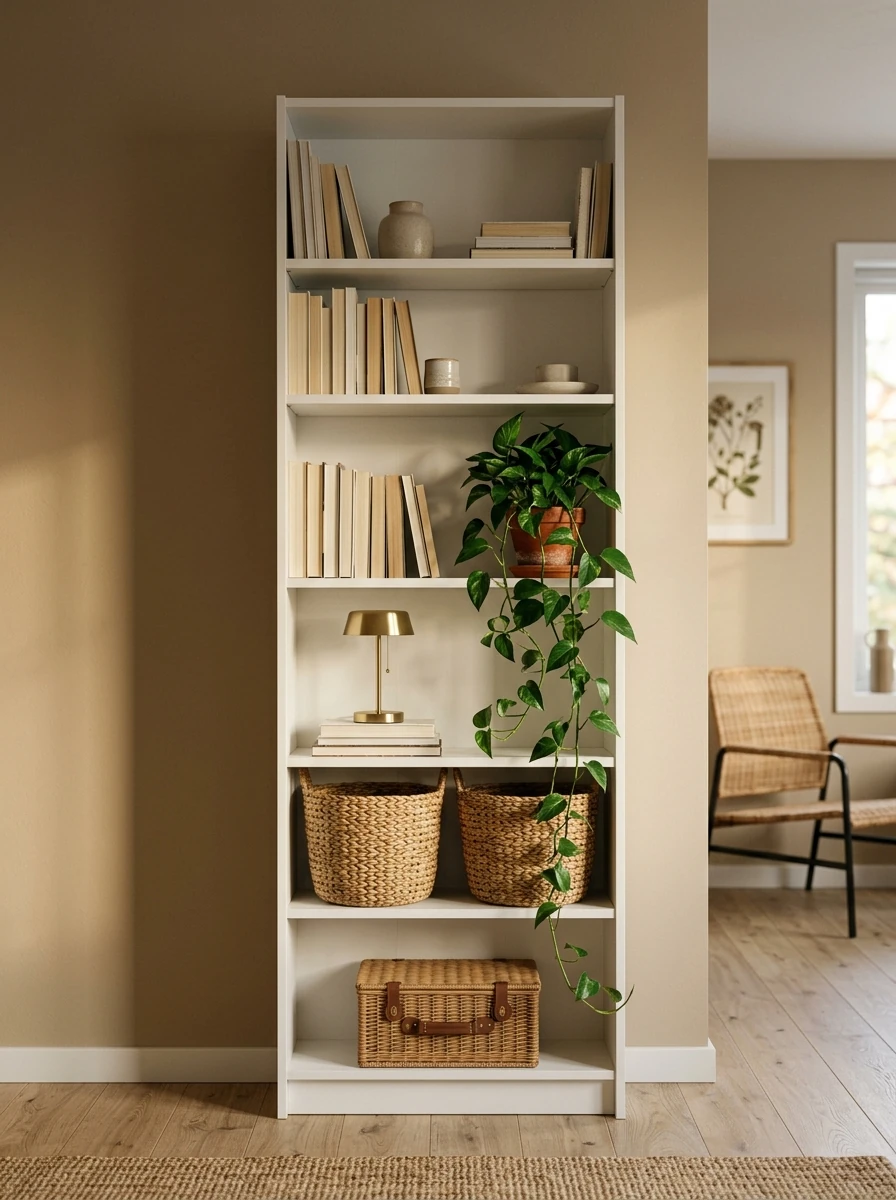
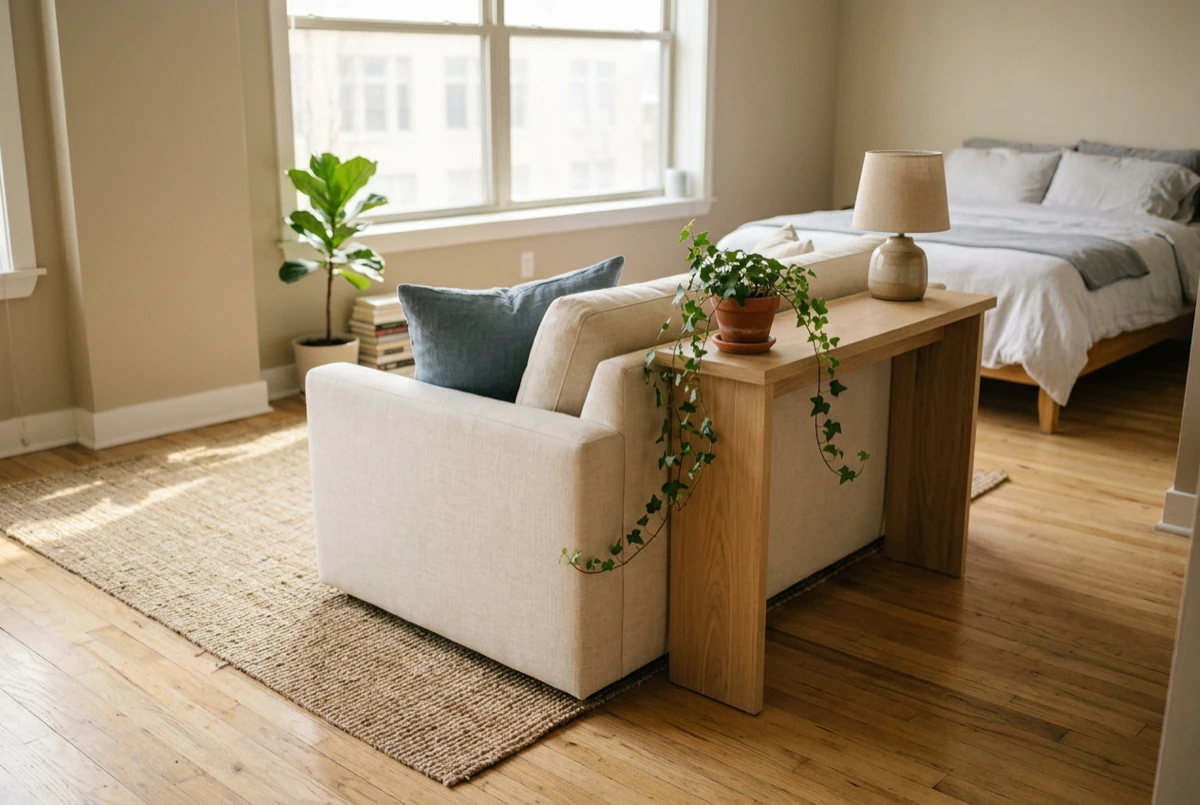
Define the living zone without building anything
In a studio, the living area has no walls around it. Bedroom, kitchen, and living space are all in one sightline. Without walls, furniture direction and the rug's edge do the work of telling the eye where one zone ends.
The sofa back is the clearest border available. Point the front of the sofa toward the window or TV and let the back face the bed. A narrow console table directly behind the sofa, 10 to 15 inches deep, gives that border some weight and adds a surface for a lamp or plant.
Keep 24 inches clear in every main walking path. Between the sofa and the coffee table, 18 inches is about right. Enough to reach forward without standing up, not so tight that you are threading between things. The moment you feel like you are navigating the furniture rather than living around it, something is too close.
Before you arrange anything, work through the studio apartment floor plans guide to map out where each zone should sit. Getting the zone placement right before anything moves saves a lot of backtracking.
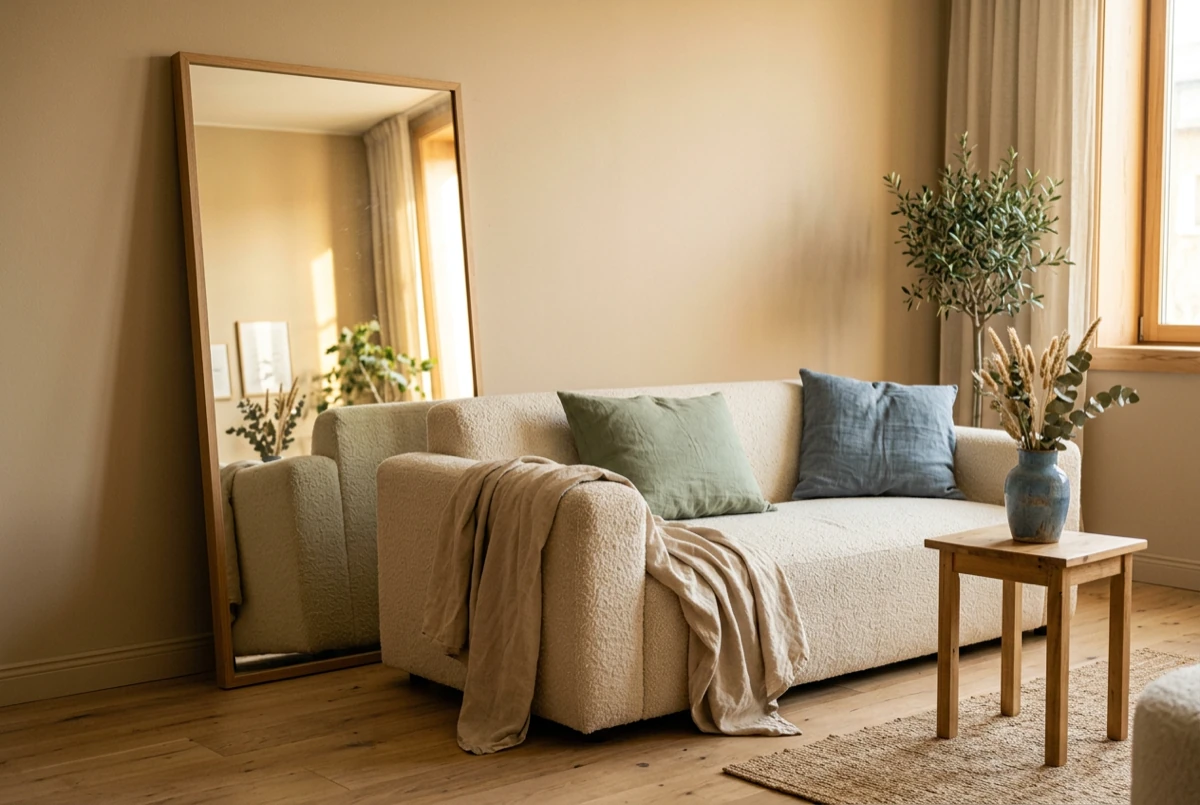
Mirrors and textiles do more than extra furniture
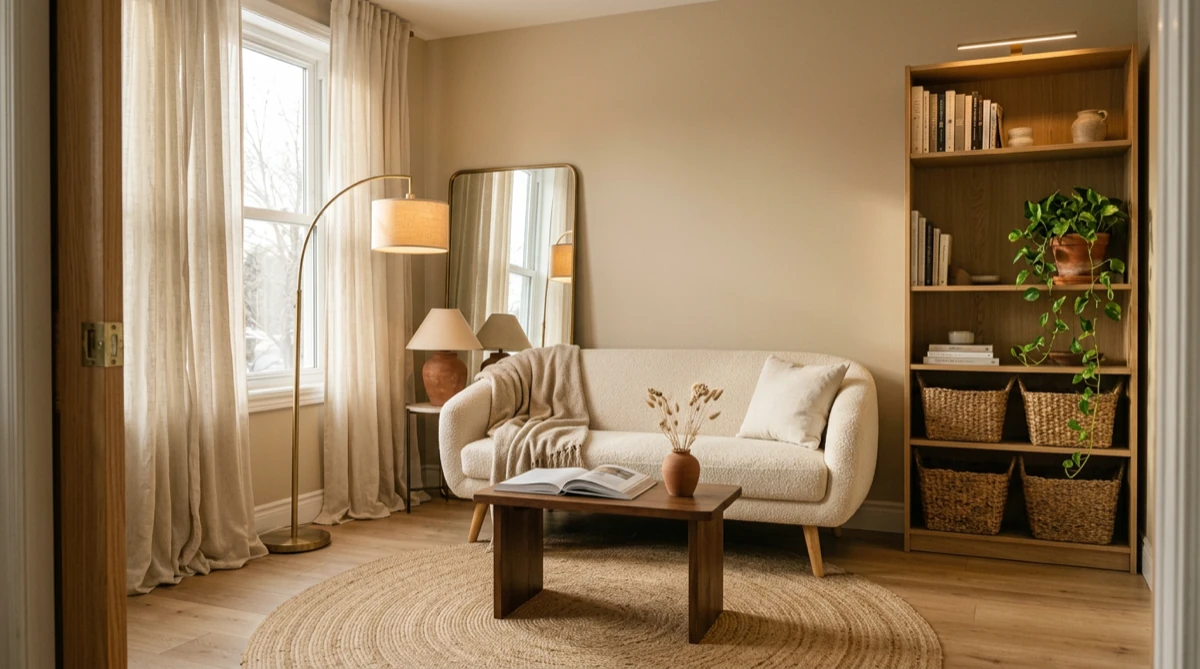
A large mirror placed opposite or beside a window reflects light to the far wall and makes the room feel a few feet wider. A 24-by-36-inch leaning mirror does this without any hardware at all. If you want it mounted, Command strips rated for the weight hold medium mirrors fine.
Textiles are where a room stops feeling like a rental. Three to five throw pillows in two or three related fabrics, bouclé, linen, woven cotton, add texture without adding furniture. One throw blanket draped over the sofa arm is enough. Two on a small sofa tips into looking like laundry.
Stick to one accent color across all the textiles and the room reads as one decision rather than ten separate purchases. Sage cushions, a terracotta vase, a natural jute rug, an oat throw: that works. A fourth unrelated color and it starts to show.
For the full palette logic behind this, the warm minimalist interior design guide goes into detail.
Five mistakes that make small living rooms feel smaller
The sofa is too big
A sectional in a 10-by-12-foot living zone leaves almost no walkway. The room becomes sofa. Anything over 84 inches or deeper than 38 inches is almost always the wrong call in a studio living area, and once it is in, it is very hard to rethink around it.
The overhead light is doing all the work
One bright ceiling fixture at full intensity is harsh and flat. Add the floor lamp and table lamp before spending on anything else. It costs under $100 to change the way the room feels at night.
Everything is pushed against the walls
This is the instinct in a small room, and it tends to backfire. Furniture lined up against every wall makes the room look like a waiting area. Pull the sofa 2 to 4 inches away from the wall behind it. That gap reads as intentional.
Multiple small rugs instead of one
A runner plus a small accent rug chops the floor into sections. One rug sized to cover the whole seating footprint does the job better and makes the floor feel like a single surface.
Colors with no through-line
A 70-20-10 split is a useful guide: 70% neutral base tones (soft white, cream, warm gray), 20% natural textures (wood, jute, rattan), 10% one accent color. It reads as calm and deliberate without looking blank.
Where to start if you are setting this up from scratch
Start with the sofa, because the size determines everything else. 70 to 80 inches wide, under 36 inches deep, raised legs, neutral fabric.
Then the rug. At least 5 by 8 feet for a 10-by-12 living zone. Natural fiber. Front sofa legs on the rug.
Then two lamps with warm white bulbs. You can do both for under $150 at IKEA or Target.
After that: pillows, throw, shelving, mirror. Adjustable. The sofa and rug are not, so get those right before anything else.
FAQ
How do I make a small rental living room feel warm without cluttering it?
One anchor rug, layered warm lighting at 2700-3000K, and a few pillows in related fabrics. Honestly, that covers most of it. People keep buying more objects, but the lighting is what actually makes the room feel warm.
What sofa size works best in a studio apartment?
70 to 80 inches wide, under 36 inches deep. The IKEA KLIPPAN at 70 inches is a practical starting point. Check the legs: visible legs keep the room feeling lighter than a skirted sofa that sits flat on the floor.
How can I separate my living room from my bedroom in a studio?
The back of the sofa is the simplest divider you have. Add a narrow console table behind it and you get a soft boundary that also gives you a surface. A different rug in each zone helps the eye read them separately. If you need more visual separation, a freestanding KALLAX unit works without permanent changes.
What rug size should I use in a small apartment living room?
5 by 8 feet minimum for a 10-by-12-foot seating area. Both the sofa and the accent chair should have their front legs on the rug. Smaller than that and the furniture looks like it is sitting in open space rather than grouped.
How do I decorate a rental living room if I cannot drill?
Leaning mirrors, freestanding shelves, Command strip art, and removable wallpaper are all deposit-safe in most leases. Plug-in lamps cover all the lighting without touching the wiring. If you're unsure what your lease actually allows, ask your landlord before you do anything. It's a five-minute conversation worth having.
What clearance do I need between my sofa and coffee table?
About 18 inches. Enough to reach forward to a drink without standing up. In tighter rooms, two small round tables (18 to 24 inches diameter) work better than one large rectangular coffee table. Easier to move and less visually heavy.
How do I make low ceilings look higher?
Hang curtains as close to the ceiling as you can and let them reach the floor. That vertical line does most of the work. Tall, narrow furniture reads better than wide, low pieces. A large mirror opposite the main window reflects the upper part of the room and adds the impression of height.