
Studio Apartment Room Divider Ideas: Renter-Friendly Ways to Zone Your Space
The best room divider ideas for studio apartments: no drilling, no permanent changes. KALLAX, curtains, clothing racks, and more with exact measurements.

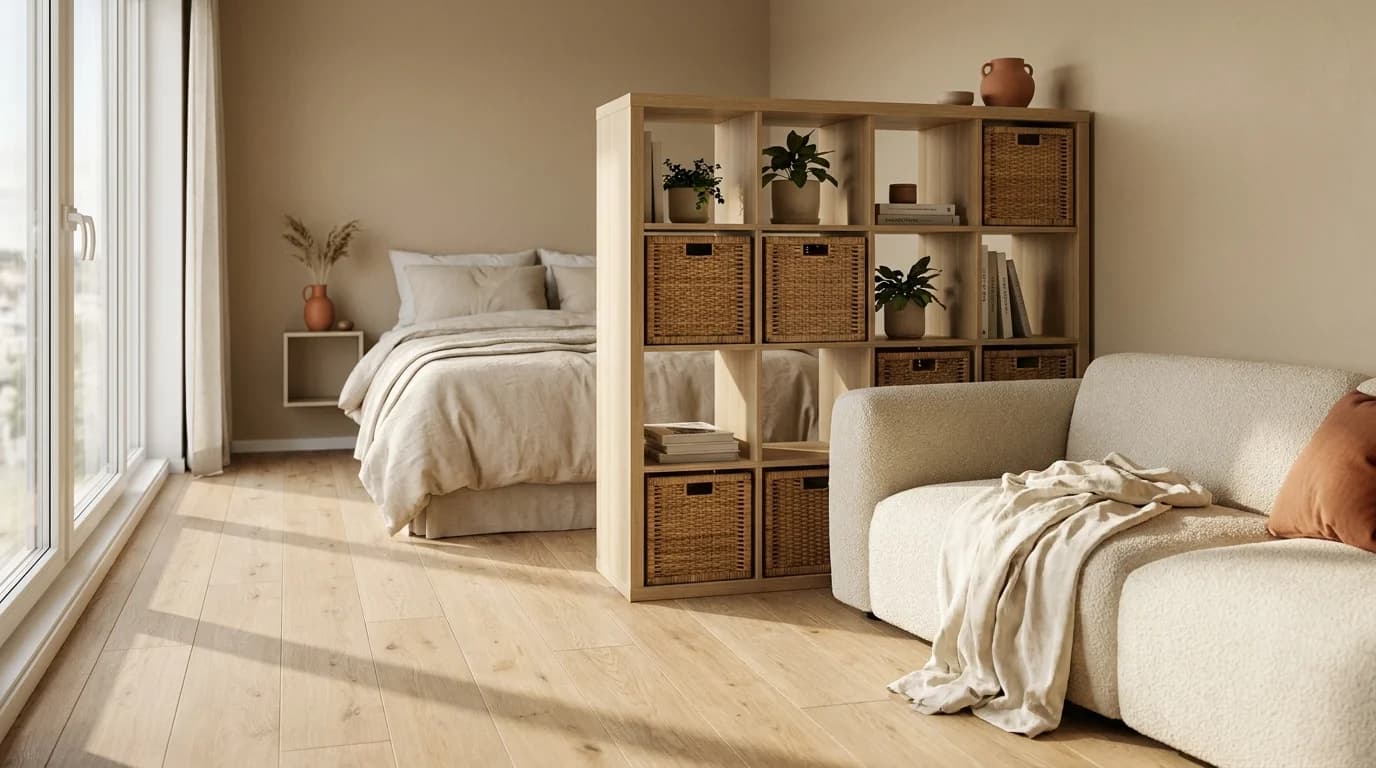
A studio apartment room divider has one job: make a one-room space feel like it has two. Nothing permanent required.
Jump to:
- The Sofa Method
- KALLAX as a Room Divider
- Curtain Room Dividers
- Folding Screens
- Clothing Rack Dividers
- Plant Walls
- Rug and Lighting Zones
- Common Mistakes
- Where to Start
- FAQ
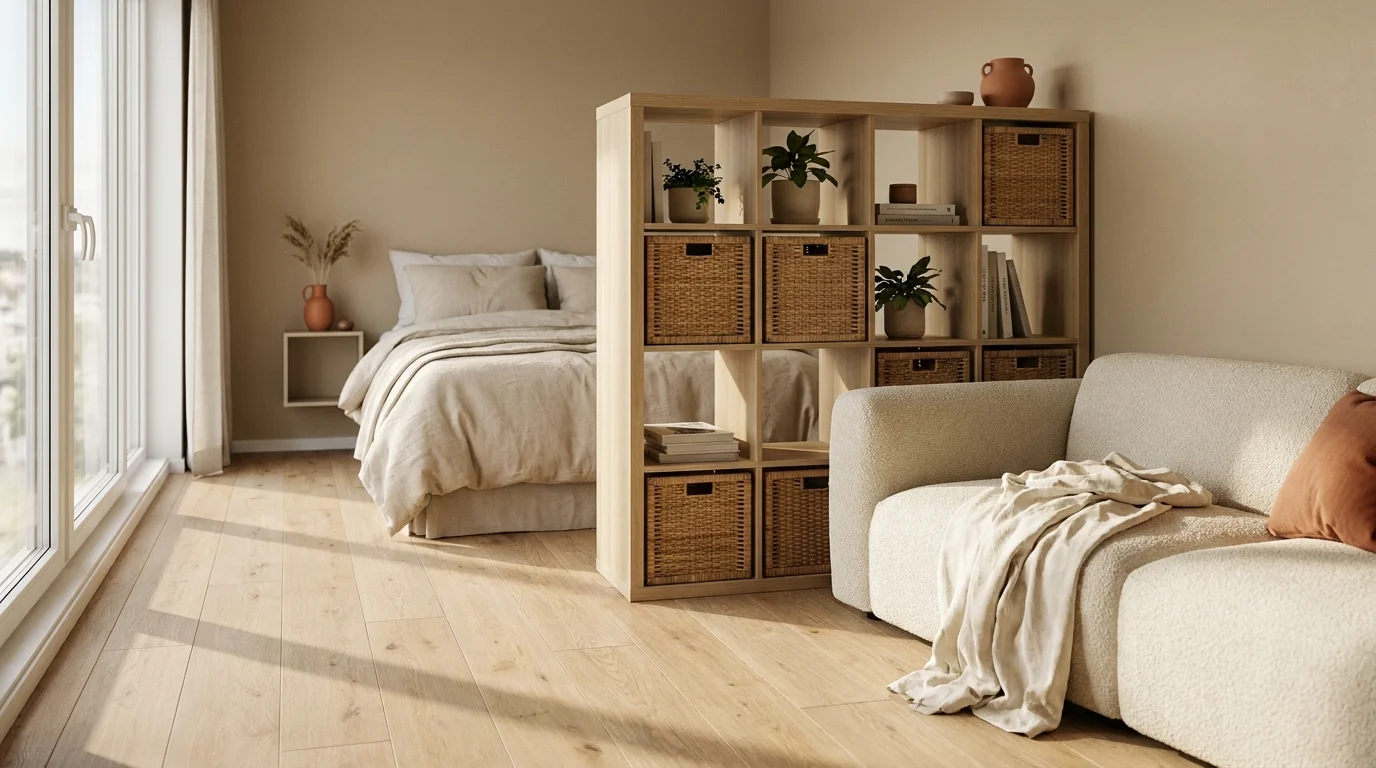
None of this requires drilling. Some of it costs nothing. What matters more than the divider itself is where it lands and how high it reaches. Chest height marks a zone. Ceiling height gives you actual privacy. Not the same thing.
Sort out your layout before you choose anything. The studio apartment floor plans guide works through the clearances and zones to figure out first, so the divider ends up where it belongs.
The Sofa Method
The cheapest divider is the one you already own. Pull the sofa off the wall, turn its back toward the bed, and you have a low boundary between sleeping and living without buying anything.
Front door to sofa, sofa to bed. That order matters. I've lived in studios where the bed hit you the second you opened the door, and it stays with you, this feeling that you never quite left your bedroom. The sofa changes that.
A slim console table behind the sofa helps. Together they look like a decision, not just furniture that ended up in the middle of the room. A lamp or plant on the console finishes the edge.
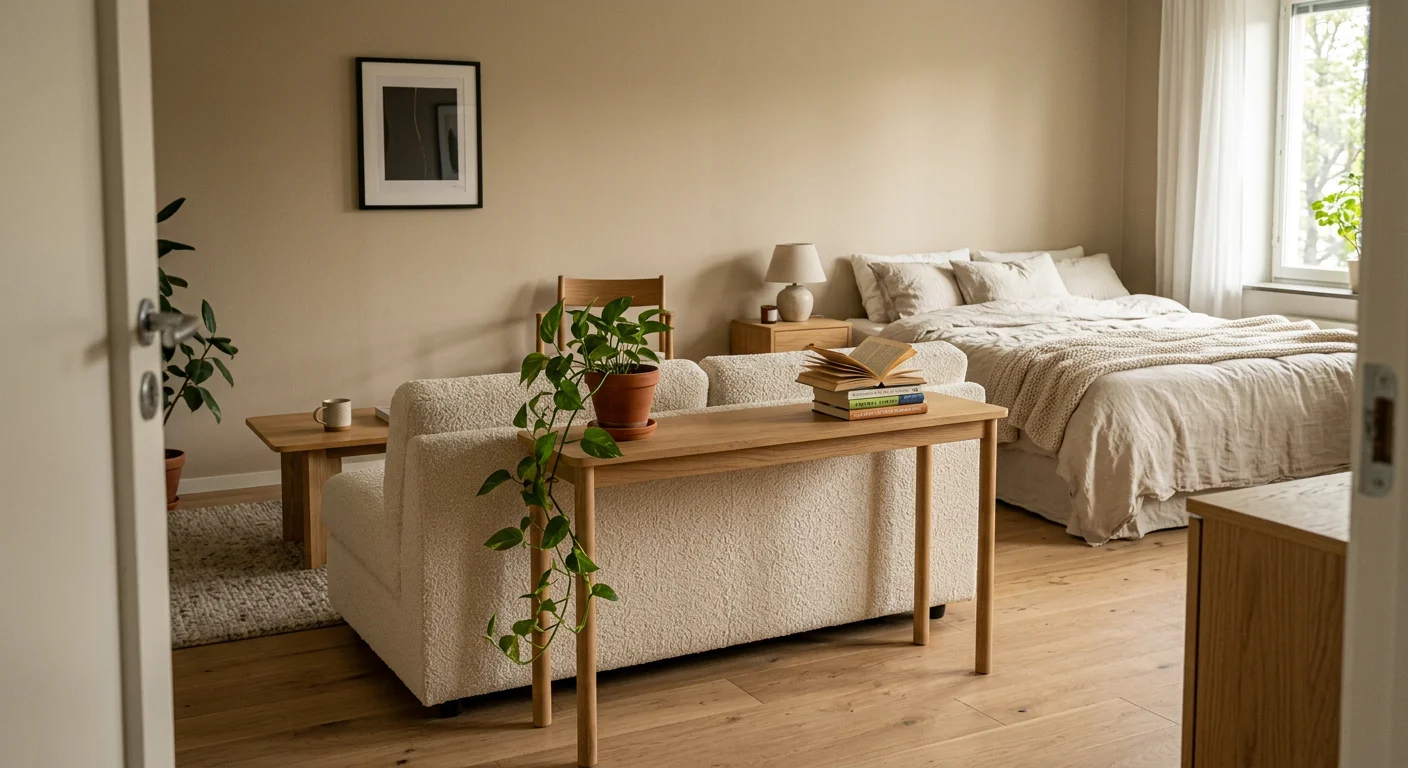
The sofa back should roughly line up with the foot of the bed. Keep 30 inches of clearance between it and the nearest wall. Less than that and every trip through the room is a sideways shuffle.
KALLAX as a Room Divider
IKEA's KALLAX 4x4 is 57 and 7/8 inches wide, 57 and 7/8 inches tall, 15 and 3/8 inches deep, and costs $90 to $110. The part that makes it useful in a studio: it stores things from both directions. Books and baskets from the living side, storage from the bedroom side, zone separation in between.
Don't float it in the center of the room. Place it perpendicular to a wall so one end connects to something. Floating looks accidental. Perpendicular looks deliberate.
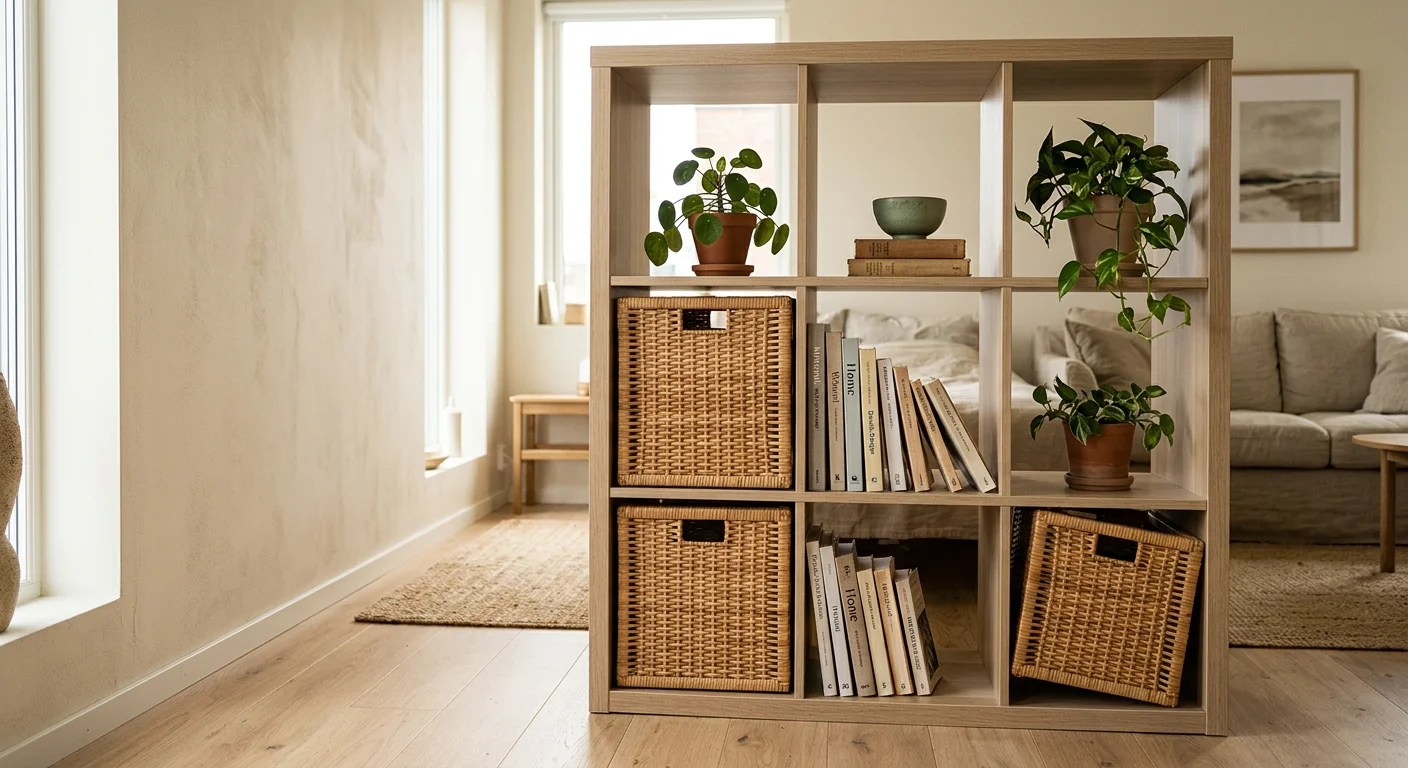
Use a furniture strap. A 58-inch-tall unit in the middle of a room can tip. A strap runs $5 to $10, one small screw into the nearest wall stud, patches cleanly at move-out. Just do it.
Mix open cubbies with baskets. Open cubbies let light through so neither side of the studio goes dark. Baskets in the other slots handle storage that would otherwise take over every surface.
The KALLAX 2x4 (vertical) is narrower at 30 and 3/8 inches wide, runs $60 to $80, and makes more sense in tighter spaces. The BILLY bookcase reaches 79 and 1/2 inches tall but is only 11 inches deep and not stable enough free-standing in the middle of a room. The KALLAX is the one to use.
Curtain Room Dividers
A floor-to-ceiling curtain is the closest thing to a wall you can add without building one. Use it when you genuinely need privacy around the sleeping area, not just a visual boundary.
Mount a ceiling track, not a wall rod. IKEA's VIDGA curtain track runs along the ceiling so the curtain hangs straight from top to floor with no gap. A rod mounted below the ceiling always leaves an opening at the top, and that gap is exactly what ruins the effect.
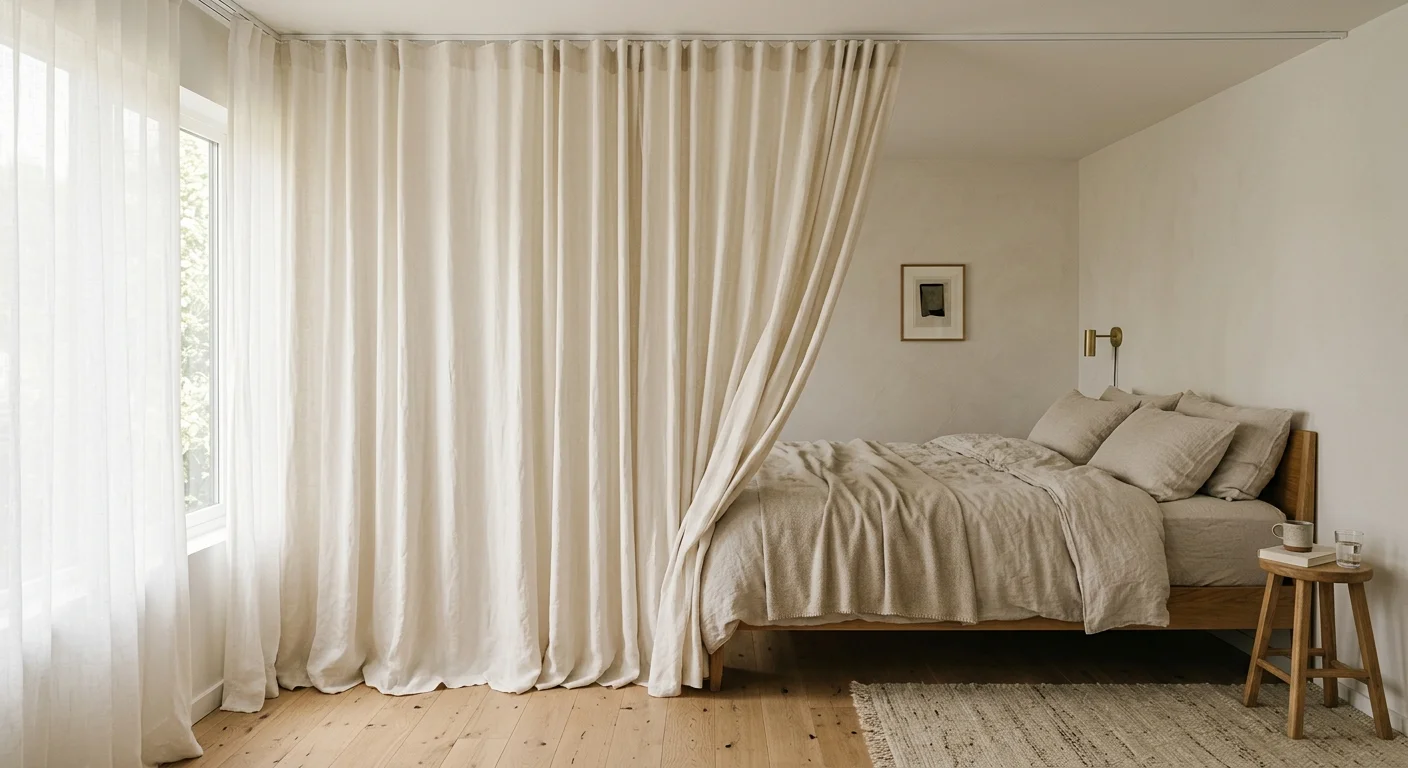
Measure floor to ceiling and add 2 inches. Curtains hovering above the floor look unfinished. Puddling too much looks like a mistake. Two inches of contact with the floor is right.
Opaque linen or cotton if you need actual privacy. Sheer if the studio is already dim and you can't afford to lose more light. The curtain room divider guide for studio apartments goes deep on fabric weights, track types, and no-drill hardware options.
If ceiling drilling is not allowed, a heavy-duty tension rod between two walls holds curtains up to about 72 inches of span before it starts to sag.
Folding Screens
A folding screen is the only divider you can move in 30 seconds. If you occasionally have people over, take video calls from home, or just want to be able to clean the floor without dismantling your layout, that flexibility is real.
Most four-panel screens have 18-inch panels at 70 to 72 inches tall, extending to about 72 inches wide. That spans a queen bed with nightstands, which is usually exactly the section of wall you want to close off from the entry.
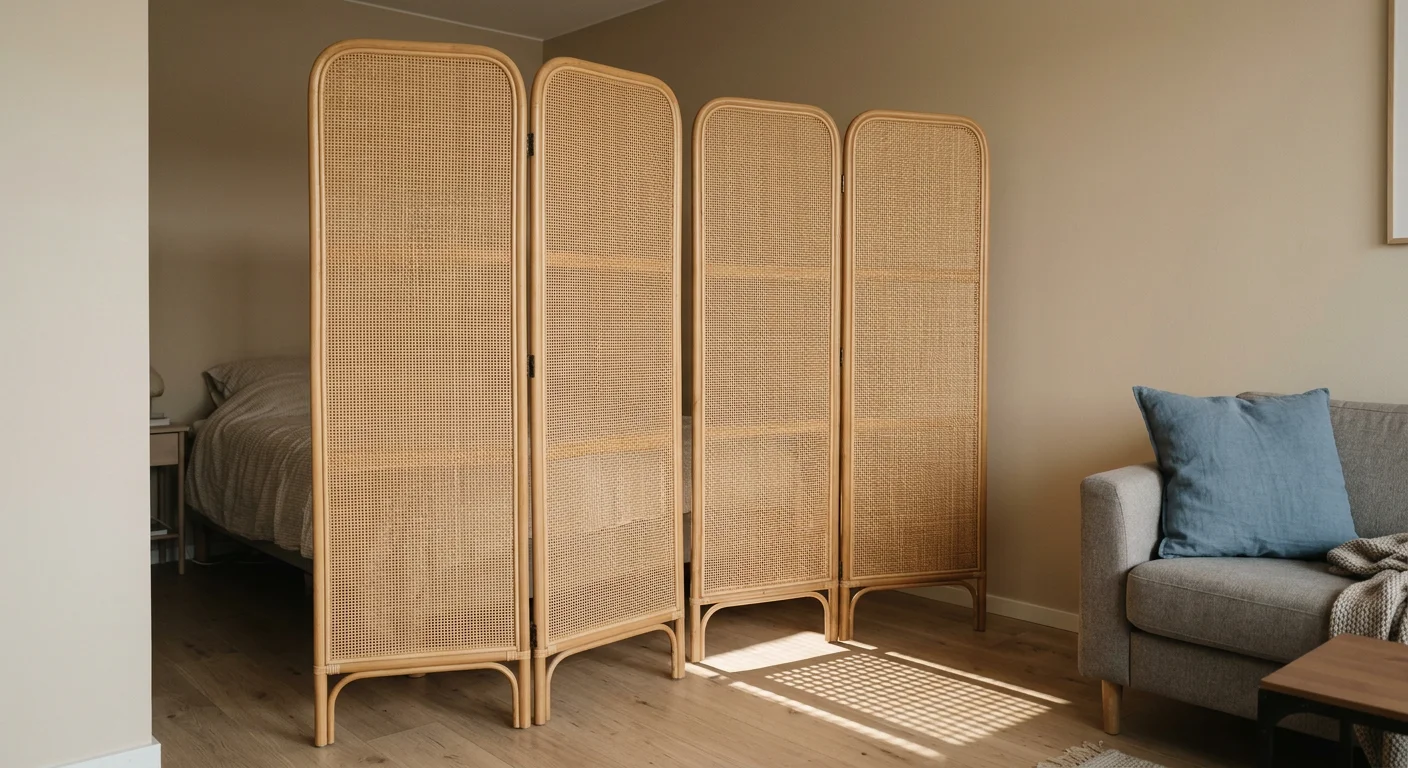
Four-panel screens run $60 to $150. Rattan or woven panels pass light at low density so the studio doesn't go dark. Solid wood or painted fabric blocks more but cuts more light. In a small studio, rattan is almost always the better pick.
One thing worth knowing: screens tip at the hinges if pushed. Place them perpendicular to the bed wall rather than parallel to the room's long axis. That angle is more stable.
Clothing Rack Dividers
If your closet is already at capacity, a freestanding rack solves two things at once. The hanging clothes make a soft wall. The rack handles the overflow your closet cannot.
Industrial pipe racks run $60 to $140, typically 48 to 60 inches wide and 60 to 70 inches tall. Position it between the bed and the living area, clothes at full length. The garments do the work, not the frame.
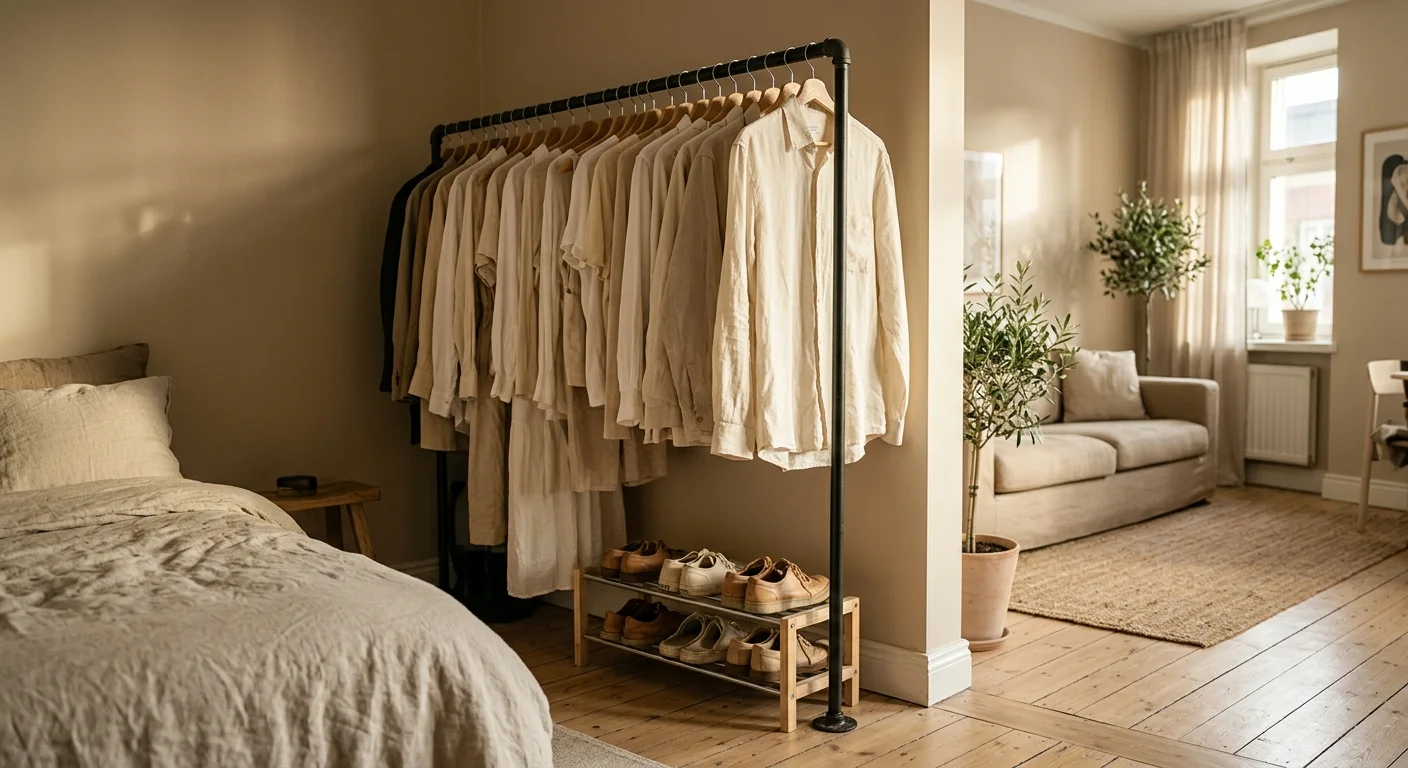
Stick to one color range. Neutrals, cream, white. A mixed rack looks like laundry. A rack of all cream and tan reads as a warm panel. Same clothes, different effect.
Get a rolling version if you can. Push it aside when the space needs to open up and roll it back when it doesn't. Most models have locking wheels.
Plant Walls
Three to five tall plants in a line make a soft divider that lets light and air pass through. This works between the living area and a desk or dining corner where you want the zones to feel distinct without needing real privacy.
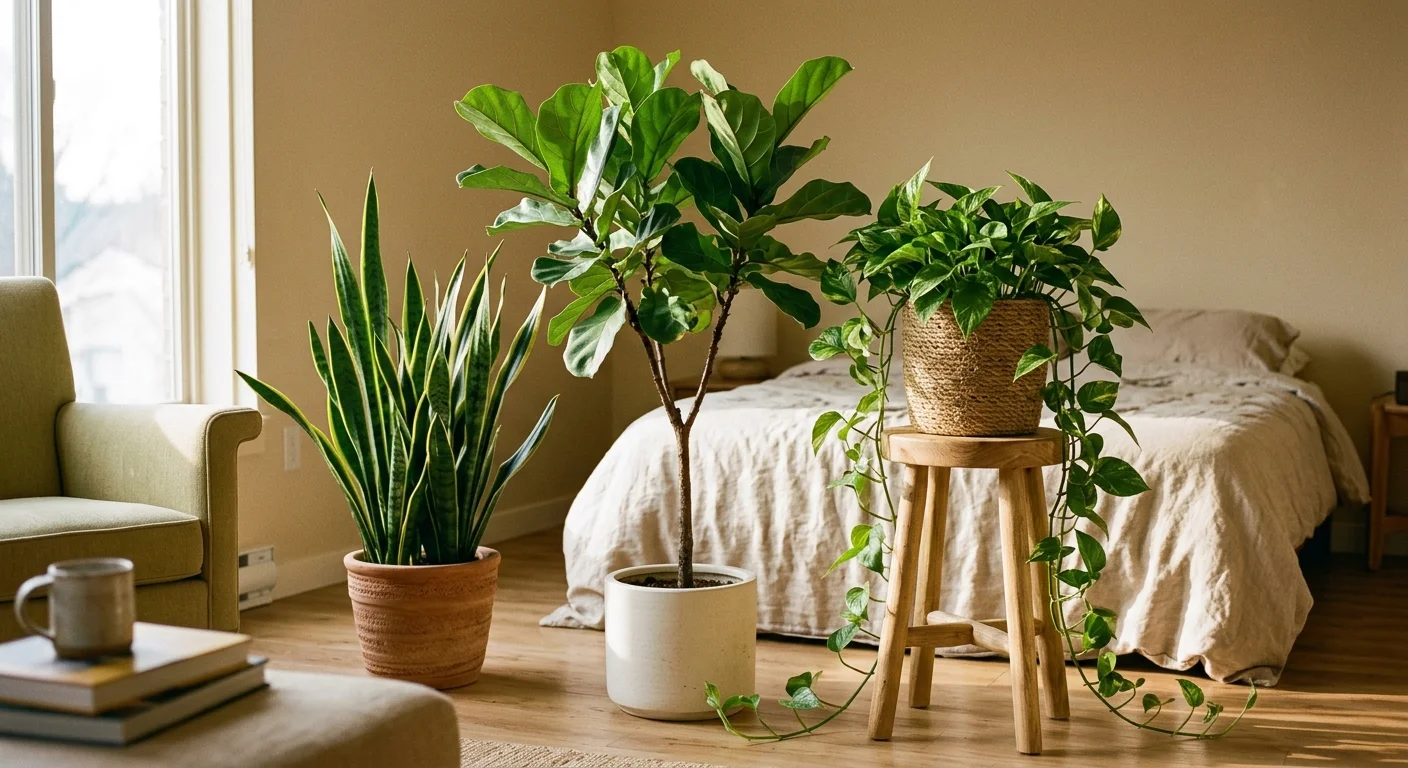
Snake plants, fiddle leaf figs, and parlor palms are the ones to use. They grow tall, handle lower light without falling apart, and don't drop leaves onto the floor constantly. Space them 6 to 12 inches apart, vary the heights, and they read as an arrangement rather than just plants placed in a row.
They move with you when you leave. They don't damage anything. The only cost is watering. I'd take that trade over patching walls every time.
Rug and Lighting Zones
For studios too small for anything vertical, or if your lease is strict about what goes into walls and ceilings, rugs and lighting are how you separate the zones.
Two different rugs, two different rooms. Jute under the sofa and coffee table for the living zone. Something different under the bed. The surface change gives the eye a boundary to land on.
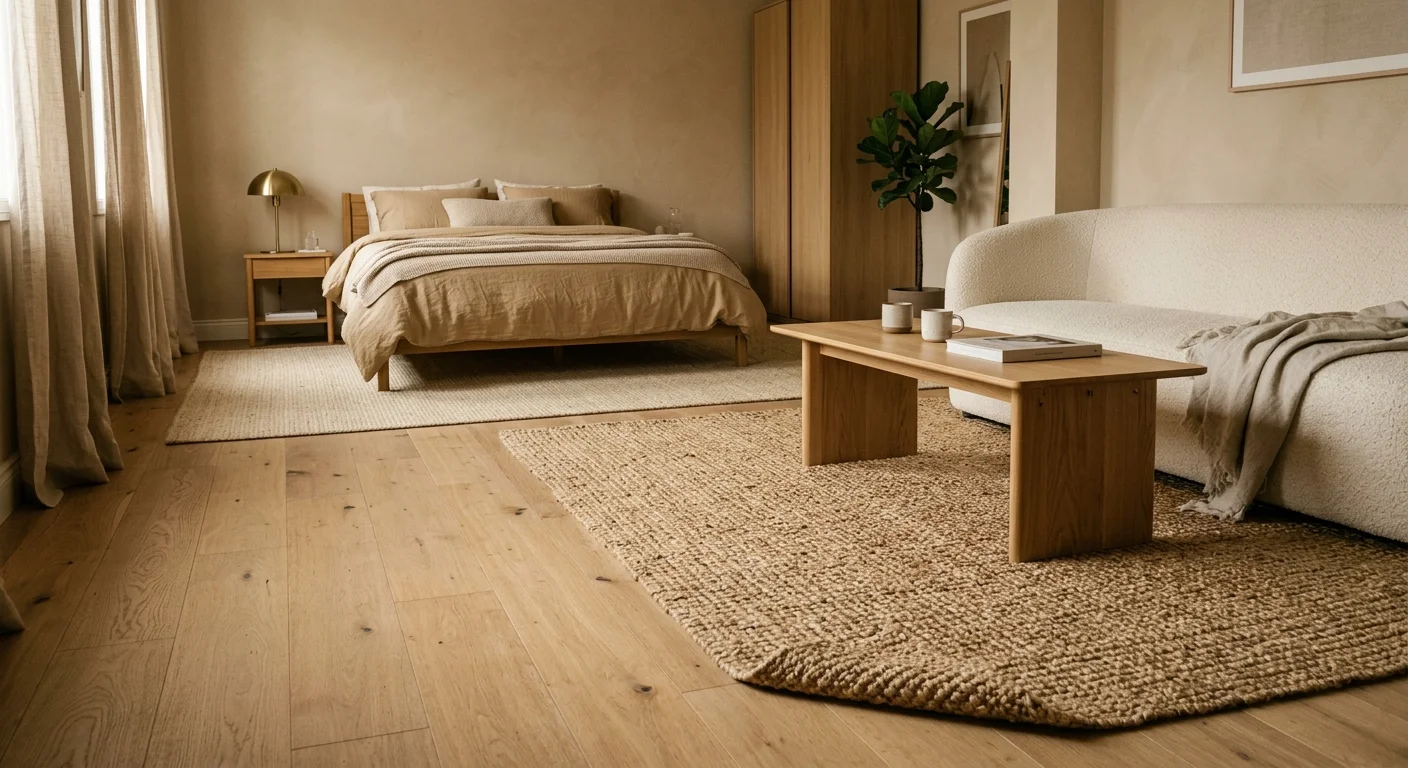
One light source per zone. Floor lamp near the sofa. Table lamp at the bed. Desk lamp in the corner. Switch one on and the other off, and the brain reads it as a different room even though you moved three feet. It sounds minor. It works every time.
Layer rugs and lighting over any physical divider you choose and the whole thing feels complete rather than provisional.
The bedroom and living room in one guide covers the strategy when a desk zone and a dining area also need to share the same floor plan.
Common Mistakes
Picking a divider that's too short. A 30-inch dresser at the foot of the bed marks where the sleeping zone ends. It does not make you feel like you've stepped into a different room. You need at least 60 to 72 inches for that. A curtain reaching the ceiling does it best.
Blocking the only window. A solid bookcase in front of your only daylight source cuts light to both sides of the room. Run the divider parallel to the window wall or perpendicular to it, not in front of it.
And layering too many dividers into the same small space. A curtain and a KALLAX and plants and two rugs in 450 square feet and you've built a maze. One primary divider. Rugs and lighting handle the rest. Pick the one that solves whatever is actually missing: privacy, storage, or the ability to reconfigure quickly.
Where to Start
First, decide whether the problem is privacy or definition. Bed visible from the door? Curtain or folding screen. Studio just feels like one large undefined room? The sofa method or a KALLAX will do it without touching the ceiling.
Get the bed to the far corner from the entry. Sofa facing the door, bed behind it. That position alone creates most of the separation before any divider is involved.
One divider. One rug per zone. One light per zone. That's the whole setup.
FAQ
How do I separate my bed from the living area without making the studio feel smaller? Use open dividers. A KALLAX with open cubbies or a sheer curtain lets light through so neither side goes dark. Pair it with one rug per zone and one lamp per zone, and the space reads as two rooms without making either side feel squeezed.
Are curtains a good room divider for a studio apartment? Yes, and specifically ceiling-mounted tracks. They hang from ceiling to floor with no gap at the top, which is what makes them feel like a wall. Measure floor to ceiling, add 2 inches, and choose opaque fabric for real privacy or sheer if the studio is already dim.
What is the safest way to use a bookcase as a room divider? At least 15 inches deep, so the KALLAX. Shallower units tip when placed free-standing in the middle of a room. Set it perpendicular to a wall rather than floating it, and anchor it with a furniture strap to the nearest wall stud. One small screw. Patches cleanly at move-out.
What room dividers can I use if I cannot drill? KALLAX, folding screen, rolling clothing rack, and tall plants all need no wall or ceiling contact. Tension rods between two opposing walls hold curtains reliably up to about 72 inches. If even a tension rod feels like too much, two different rugs plus one lamp per zone is enough to make the space feel defined with nothing mounted at all.
How much space should I leave around a room divider in a studio? 30 inches in any main walking path. 12 to 18 inches at the foot of the bed between the mattress and the divider. 18 to 24 inches on the side of the bed for a nightstand and easy movement in and out. Tighter than those and you are working around the divider instead of living with it.
Is an open shelf or a solid panel better as a room divider? Open shelf, almost always. Solid panels split the studio into two dim halves. Use a solid option, curtain or folding screen, only in the sleeping zone where blocking the view actually matters. Everywhere else, open works better.
Can plants work as a room divider in a small apartment? Yes. Group 3 to 5 tall plants, snake plants, fiddle leaf figs, or parlor palms, 6 to 12 inches apart with varied heights. Light and air pass through, which is why they work well between the living area and a desk or dining corner. Right beside the bed is not the right spot for them if privacy is the goal.