
Small Entryway Bench Ideas for Apartments
Small entryway bench ideas for apartments with no real foyer. Exact bench dimensions, hook height, and real renter-safe products that fit a tight hallway.

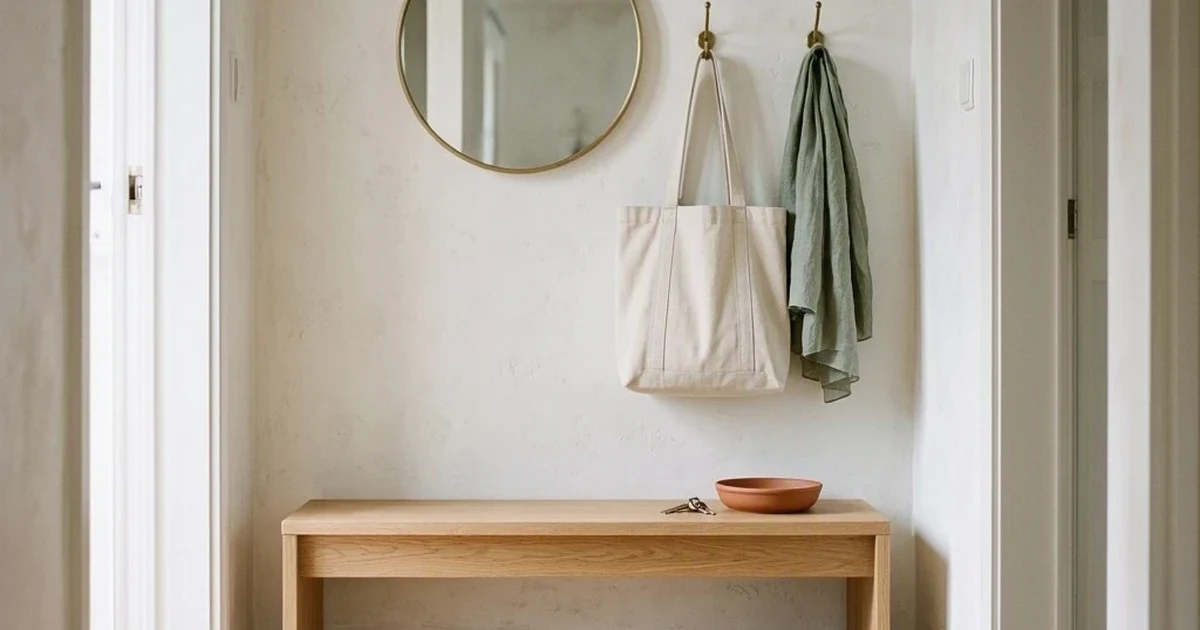
A small entryway bench works when it's narrower than you think it needs to be and paired with hooks, not when it's the only piece of furniture doing the job.
Jump to:
- What This Setup Actually Solves
- The Right Bench Size for a Tight Entry
- The Vertical System That Makes a Small Bench Work
- What to Actually Buy
- No Real Entryway? Build One Anyway
- What Renters Can and Can't Do
- Mistakes That Break a Small Entry
- FAQs
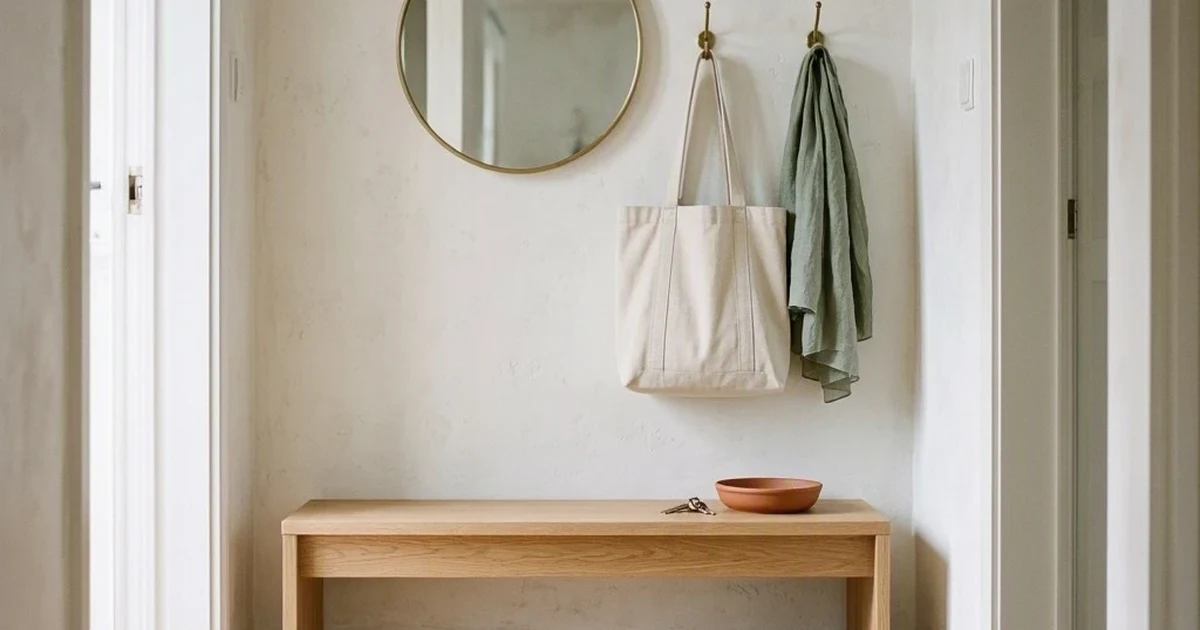
Most apartments don't have a real foyer. What they have is three feet of wall next to the front door, and that's enough. This guide covers the exact bench size, hook height, and real products that turn that stretch of wall into a working drop zone, no drilling required unless your lease allows it.
What This Setup Actually Solves
Think of it as a compact, deliberate landing zone by the door: somewhere to sit, set down bags, and corral shoes and keys before they scatter into the rest of the apartment.
That last part is the actual problem it solves. Without a defined spot, shoes end up by the couch, keys end up wherever your hand was when the phone rang, and bags land on the kitchen counter. A bench and a few hooks give all of that one place to go, which matters more in a small apartment than a big house, since there's no mudroom absorbing the mess before it reaches your living room.
The Right Bench Size for a Tight Entry
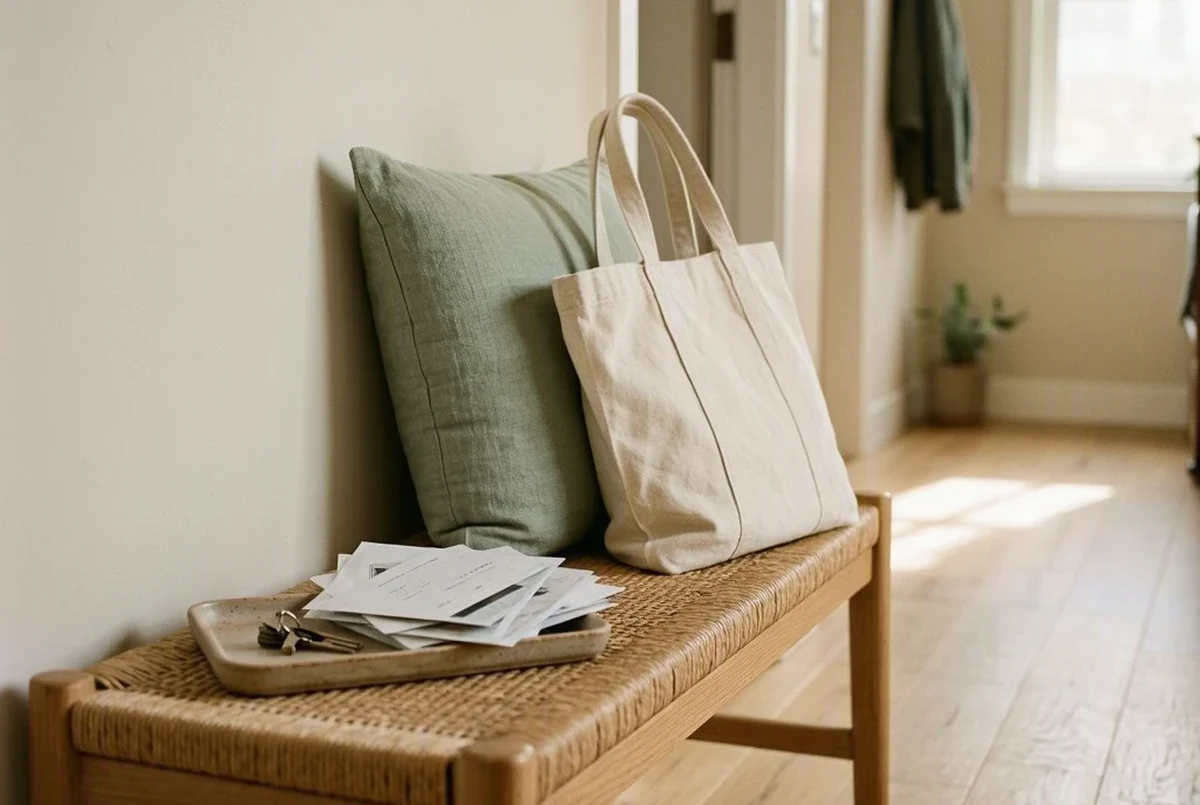
Look for a bench 12 to 16 inches deep and no longer than 30 to 40 inches. Anything deeper starts eating the walking path instead of sitting quietly against the wall.
If your hallway is under 44 inches wide, a bench that's 6 to 8 inches deep won't hold up under real use, it's more shelf than seat. Under 48 inches wide, stay around 11 to 12 inches deep. A rough rule that works without measuring the bench itself: take your hallway's width and subtract 36 inches, and whatever's left is roughly the deepest bench you can fit without blocking circulation.
Bench height matters too. 17 to 19 inches puts you at the right level to sit and tie a shoe without crouching or dangling your feet, and 18 inches is a safe default if you're comparing options online without measuring in person first.
The Vertical System That Makes a Small Bench Work
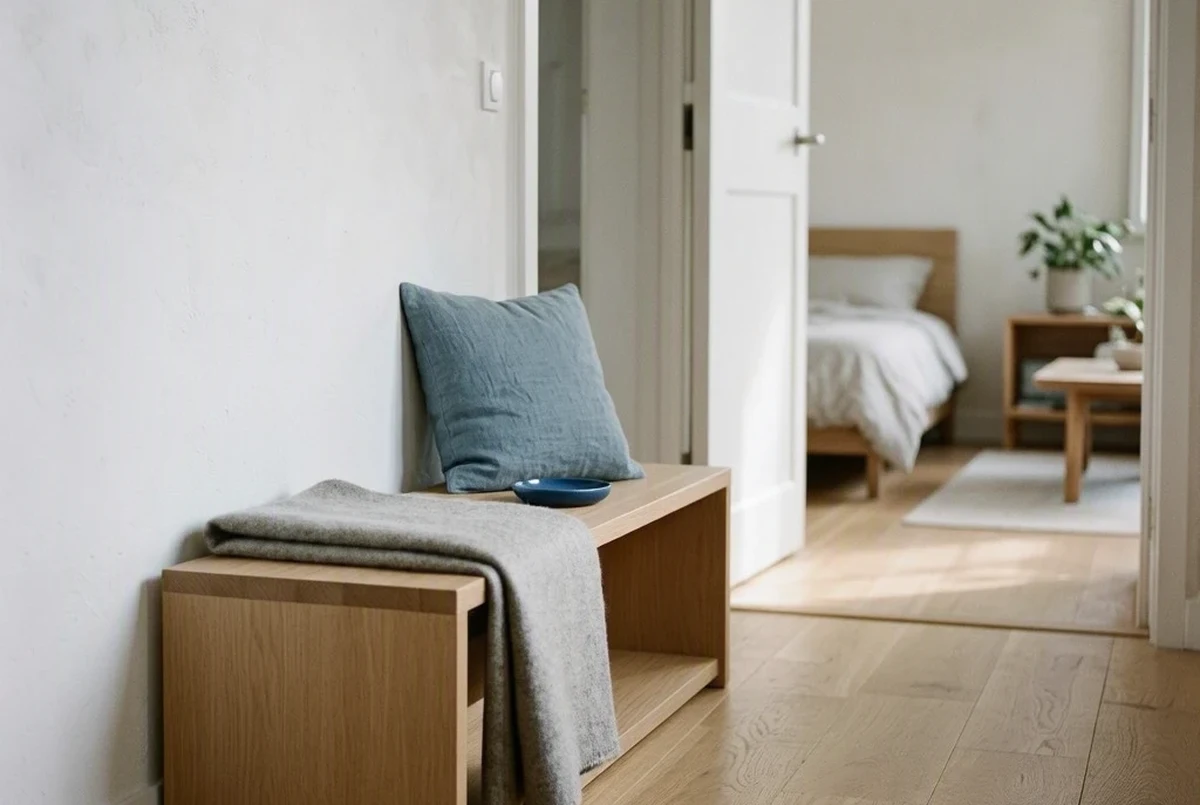
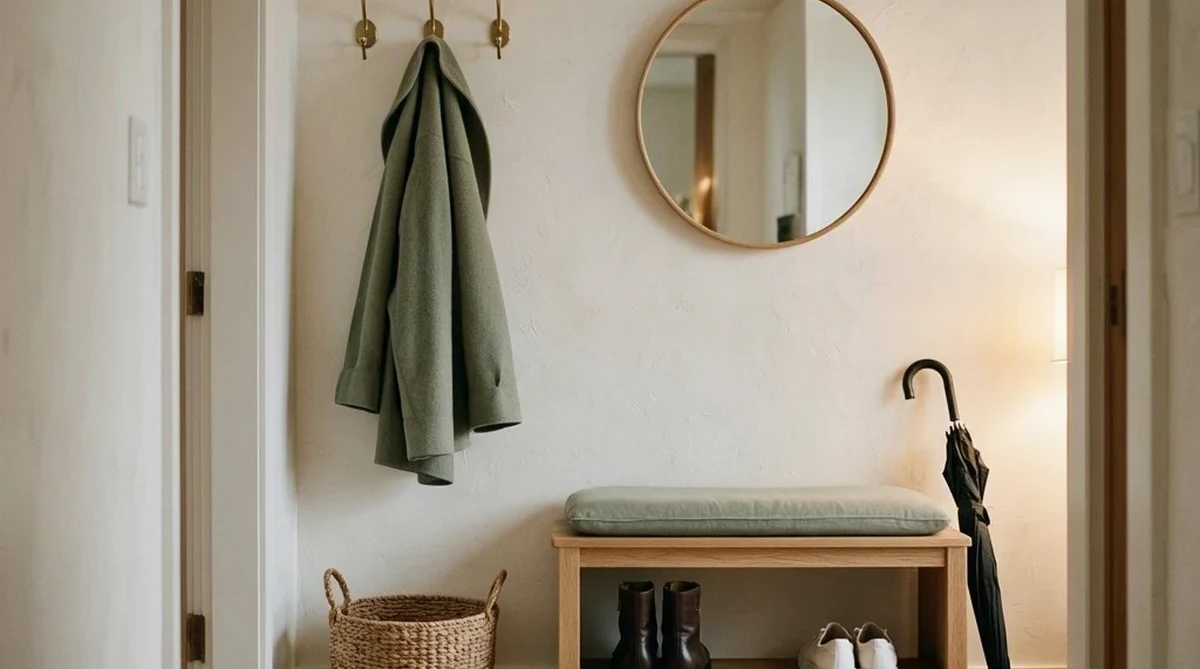
On its own, a bench only handles sitting. Add hooks above it and coats, bags, and scarves have somewhere to go too, without adding a single inch to the floor plan. I've lived in two apartments with a bench and no hooks, and in both, the bench turned into a coat pile within a week.
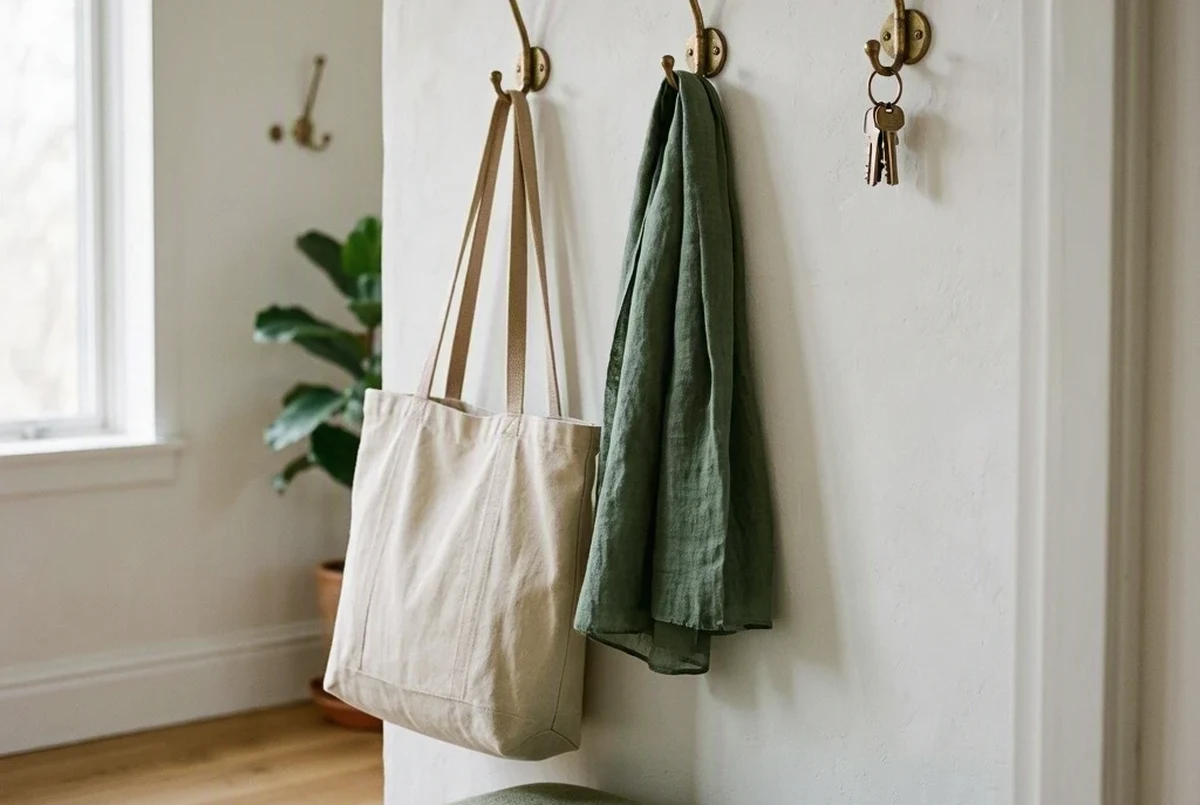
Mount hooks, or hang adhesive ones if you're not drilling, at 60 to 66 inches from the floor. That height clears the bench and puts hooks at a natural reach for most adults instead of forcing you to duck under a coat every time you pass. Three or four hooks is plenty. More than that and you're back to visual clutter, just vertical instead of horizontal.
A small mirror above the hooks earns its spot twice over: it's a last-look check on your way out, and it bounces light back into a hallway that's usually the darkest part of the apartment. If wall space is genuinely gone, skip the mirror before you skip the hooks. Hooks handle something you deal with daily, a mirror is a nice-to-have.
What to Actually Buy
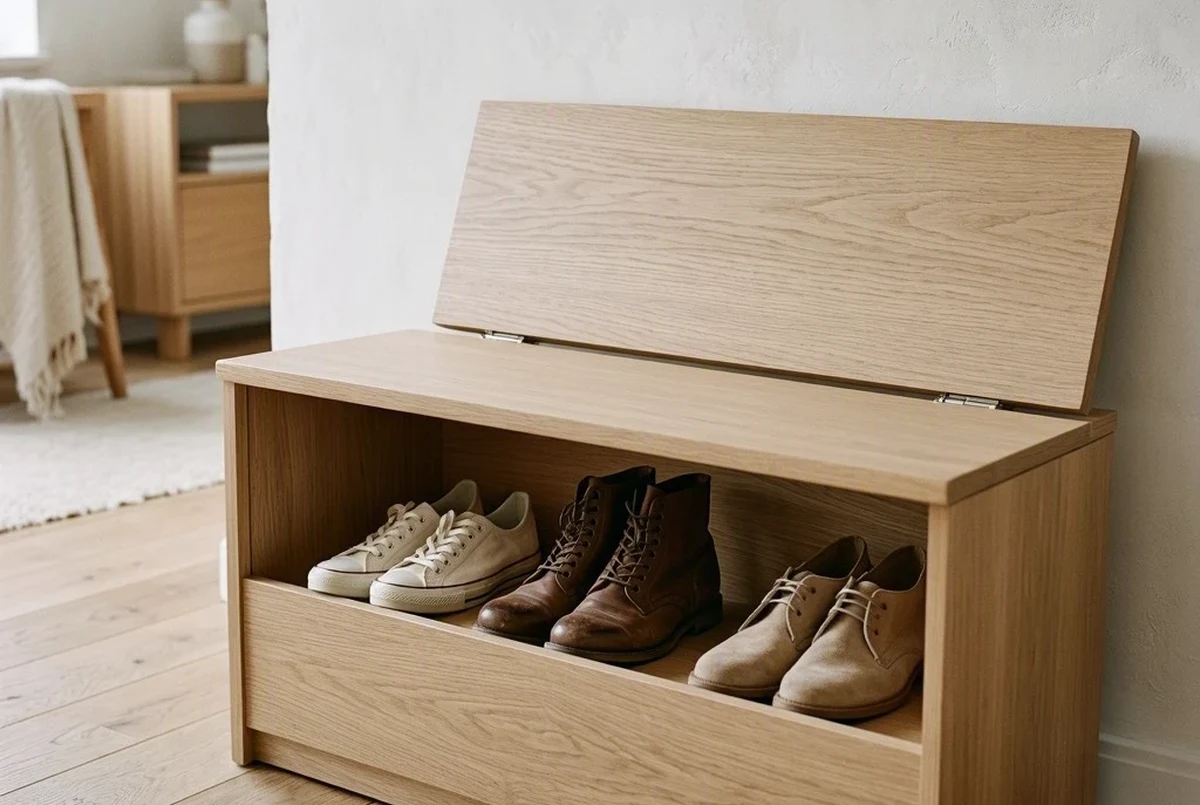
For a bench that actually holds shoes, IKEA's HEMNES bench with shoe storage runs $69.99 at 33½ inches wide by 12⅝ inches deep by 25⅝ inches high, with two open shelves that hold roughly 7 pairs between them. The depth sits right in the useful range, and the open shelves mean you're not lifting a lid every time you walk in.
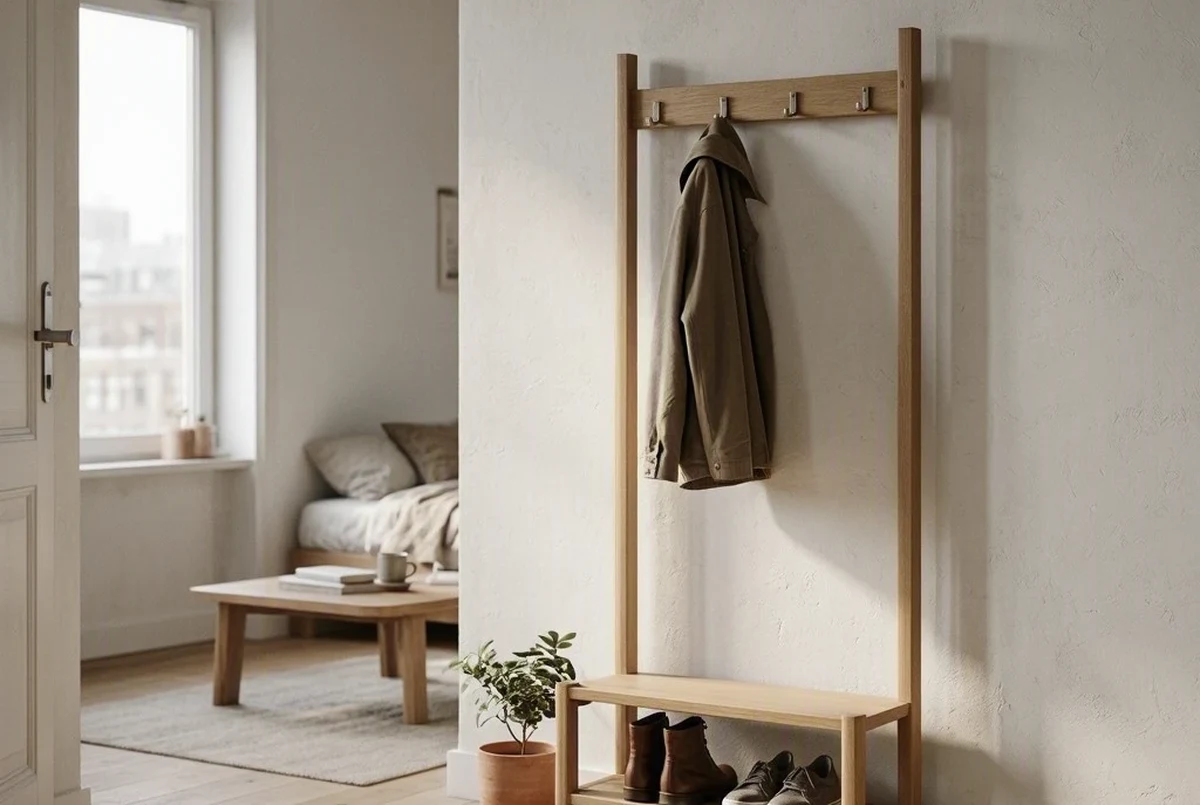
If your entry has zero built-in storage at all, IKEA's MACKAPÄR coat rack with shoe storage unit is a freestanding all-in-one at $49.99, 30¾ inches wide by 12⅝ inches deep by 78¾ inches tall, with a coat zone up top, a hat and umbrella shelf in the middle, and two lower shelves for shoes. It needs zero wall mounting, which makes it the safest option if you're not sure what your lease allows.
For a narrower footprint than either, TRONES shoe storage cabinets run $39.99 for a pack of two and stack or line up along a baseboard, shallow enough to tuck under a bench or beside a door where a full bench won't fit.
No Real Entryway? Build One Anyway
If you open your front door straight into the living room with no defined entry space, the fix isn't giving up on the idea. It's picking the nearest clear wall and treating it like an entryway on purpose.
Find the wall closest to your door with at least three feet of clear space, even if it's technically part of the living room. A freestanding coat rack with a lower shoe shelf, like the MACKAPÄR above, does the same job a built-in mudroom does elsewhere. Your floor plan didn't design a spot for this, so you're designating one instead.
The renter-friendly decorating guide covers this same idea, borrowing function from a space that wasn't built for it, applied to a full apartment rather than just the door.
What Renters Can and Can't Do
Everything recommended in this guide works freestanding, which means the whole setup leaves with you at move-out and none of it needs a landlord's sign-off.
If you do want to mount hooks or a mirror directly to the wall, check your lease first. Small nail holes are often fine under normal wear clauses, but confirm before you drill rather than after. Adhesive hooks rated for the actual weight of a coat, not just a towel, are the safer default when you're not sure. The wall decorating guide for rentals covers the full range of no-damage options if you want more than hooks on that wall.
Skip anything that requires cutting into a closet, building a mudroom bench, or otherwise altering the unit itself. Every idea here works because it's furniture, not construction.
Mistakes That Break a Small Entry
Buying a bench before measuring the hallway. A bench that's 18 inches deep looks reasonable in a photo and blocks the door from opening fully in a narrow apartment hallway. Measure first, every time.
Skipping the hooks. A bench with no hooks above it turns into a dumping ground. Coats pile on the seat instead of hanging, and the one clear surface you set out to build stops existing.
Choosing closed storage when you need daily access. A lift-top bench looks tidy, but if you're lifting a heavy lid every single morning for your shoes, you'll stop doing it within a month. Open shelving works better for anything you touch daily.
Overdecorating a three-foot wall. A runner rug, a gallery wall, a bench, hooks, and a plant in the same tiny footprint reads as crowded no matter how nice each piece is individually. Pick a bench, hooks, and one more thing. Stop there.
Ignoring door swing. A bench that fits the wall perfectly but sits in the arc of the front door will get bumped daily until you either move it or stop closing the door all the way.
FAQs
What size bench works in a tiny apartment entryway?
Aim for a bench around 12 to 16 inches deep and no more than 30 to 40 inches long. That's narrow enough to sit against a hallway wall without blocking the path, and long enough to actually work as a bench instead of a shelf.
Should I choose a bench with storage or a simple bench?
Choose storage if you're dealing with shoes at all, which is almost everyone. A lift-top or open-shelf storage bench does the seating job and the shoe job in one footprint, and in an apartment with no coat closet, that combination matters more than it would in a house.
Are wall hooks really necessary above an entryway bench?
Yes. A bench alone solves sitting and maybe shoes, but coats, bags, and scarves still need somewhere to go. Three or four hooks at 60 to 66 inches turn a bench into a full drop zone instead of one piece of furniture doing half the job.
What is the best bench height for putting on shoes?
17 to 19 inches is the range that works for most adults, with 18 inches as a solid default. Much lower and you're crouching, much higher and your feet don't reach the floor comfortably while you tie a lace.
How do I keep a tiny entry from looking cluttered?
Pick one bench, one hook rail, and one small tray for keys, then stop. The clutter in a small entry almost never comes from having too little storage, it comes from too many different storage types competing in a three-foot-wide space.
What is the best renter-friendly entryway setup?
A freestanding bench plus adhesive hooks plus a basket or tray. Nothing in that combination touches a wall permanently, so the whole setup comes down clean at move-out with no patching or repainting.
What if my apartment doesn't have a real entryway at all?
Pick the clearest wall closest to your front door and build the zone there anyway. A freestanding coat rack with a lower shoe shelf does the same job as a built-in mudroom, it just needs you to designate the spot since your floor plan didn't.
A bench, three hooks, and a tray for keys will do more for how your apartment feels than almost any other single change, and none of it requires touching the wall if you'd rather not.
Related Articles
- Renter Friendly Decorating Ideas That Damage Nothing: the broader approach to borrowing function from spaces your floor plan didn't design for
- How to Decorate Walls in a Rental Without Damage: the full range of no-damage options if you want more than hooks on your entry wall
- Warm Minimalist Interior Design Ideas for Small Apartments: the palette and material approach that keeps a small entry looking calm, not crowded