
Minimalist Studio Apartment Ideas: Furniture, Layout, and Decor
A minimalist studio isn't empty, it's edited. The exact furniture list, layout rules, and renter-safe changes that make a small studio feel calm, not bare.

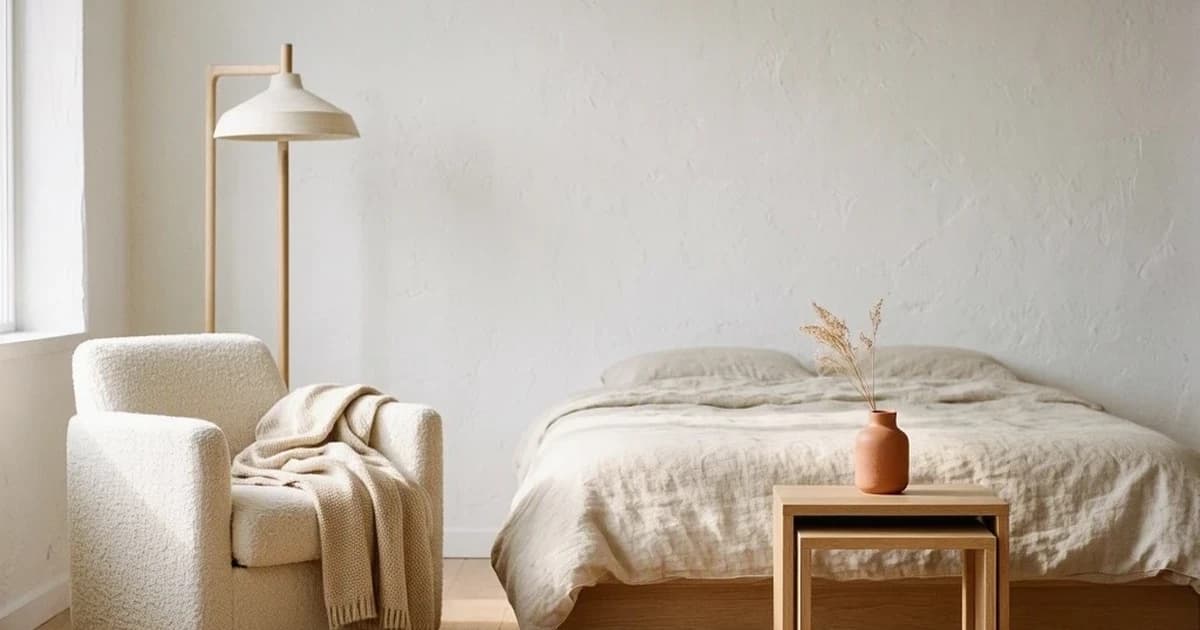
A minimalist studio apartment isn't an empty one. It's a room where every piece of furniture does two jobs and nothing sits on a surface without a reason.
Jump to:
- What Minimalist Actually Means in a Studio
- The Only Furniture You Actually Need
- How to Zone the Room Without a Wall
- The Color and Material Rule
- Where Everything Actually Goes
- What You Can Change as a Renter
- Mistakes That Break the Look
- FAQs
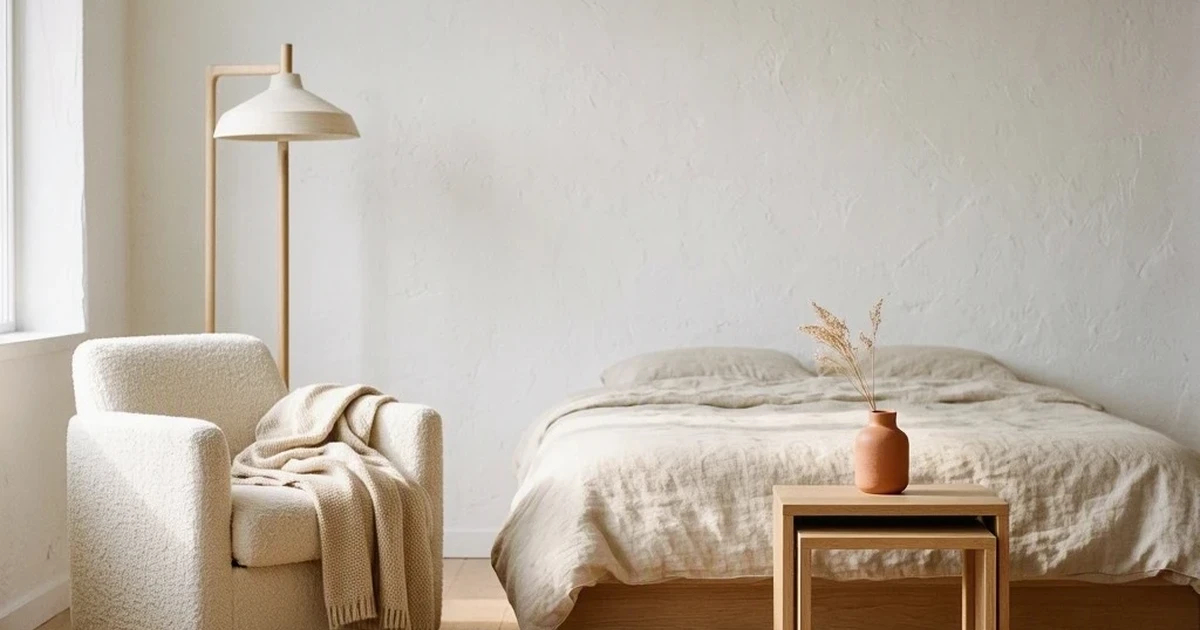
Most studio apartments fail at minimalism because they land too full or too bare. This guide covers the furniture list, the layout rules, and the storage habits that make a 400 to 600 square foot studio read as calm and intentional instead of cluttered or cold. Every idea here works within a standard lease, no drilling or permanent paint required.
What Minimalist Actually Means in a Studio
Minimalist doesn't mean empty. It means every object in the room has a job, and nothing is there just to fill space.
That distinction matters more in a studio than in a house with separate rooms, since one room has to sleep you, feed you, and hold your evenings all at once. Too little in it and the room looks unfinished, not calm. Overfill it instead and everything competes for attention in a single glance, since there's no hallway or doorway to break things up.
Here's the test I use before buying anything: if I removed this object, would the room function worse, or would it just look different? Furniture and real storage pass. Decor that's only there because a shelf looked empty doesn't.
The Only Furniture You Actually Need
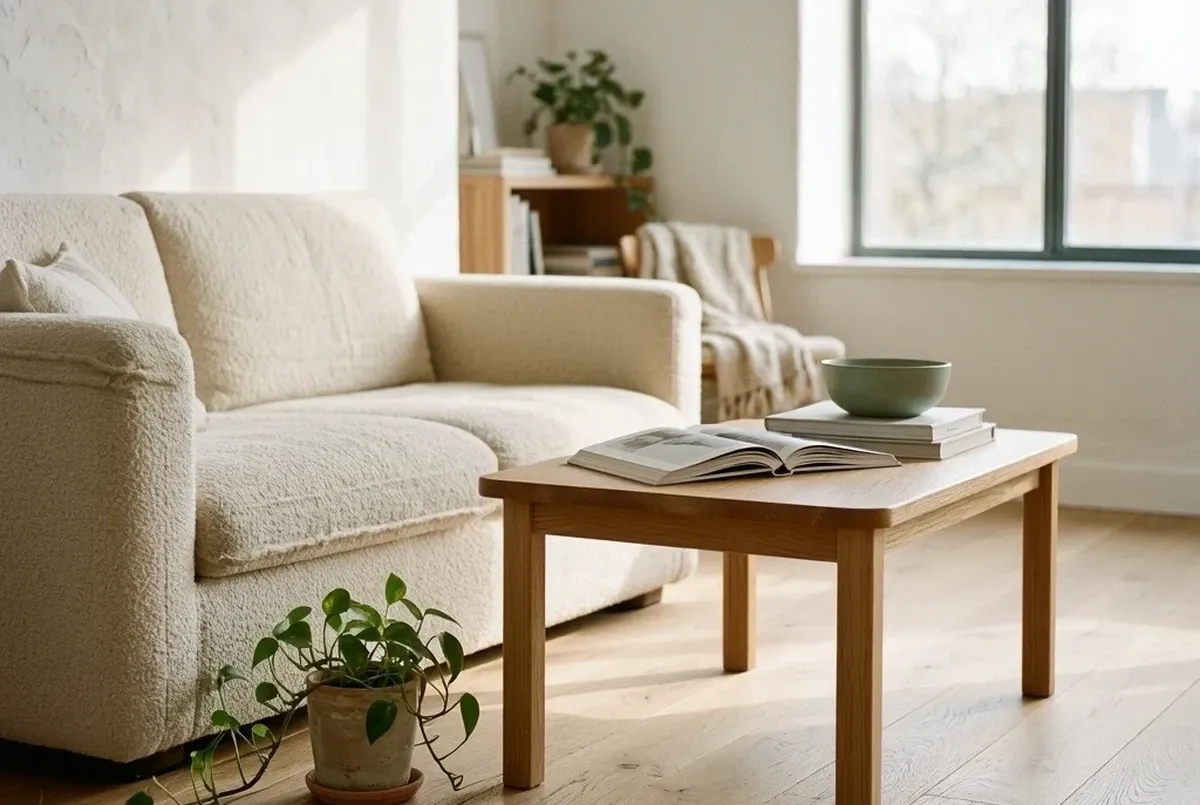
A minimalist studio needs four things: a place to sleep, a place to sit, a surface, and hidden storage. Everything else is optional.
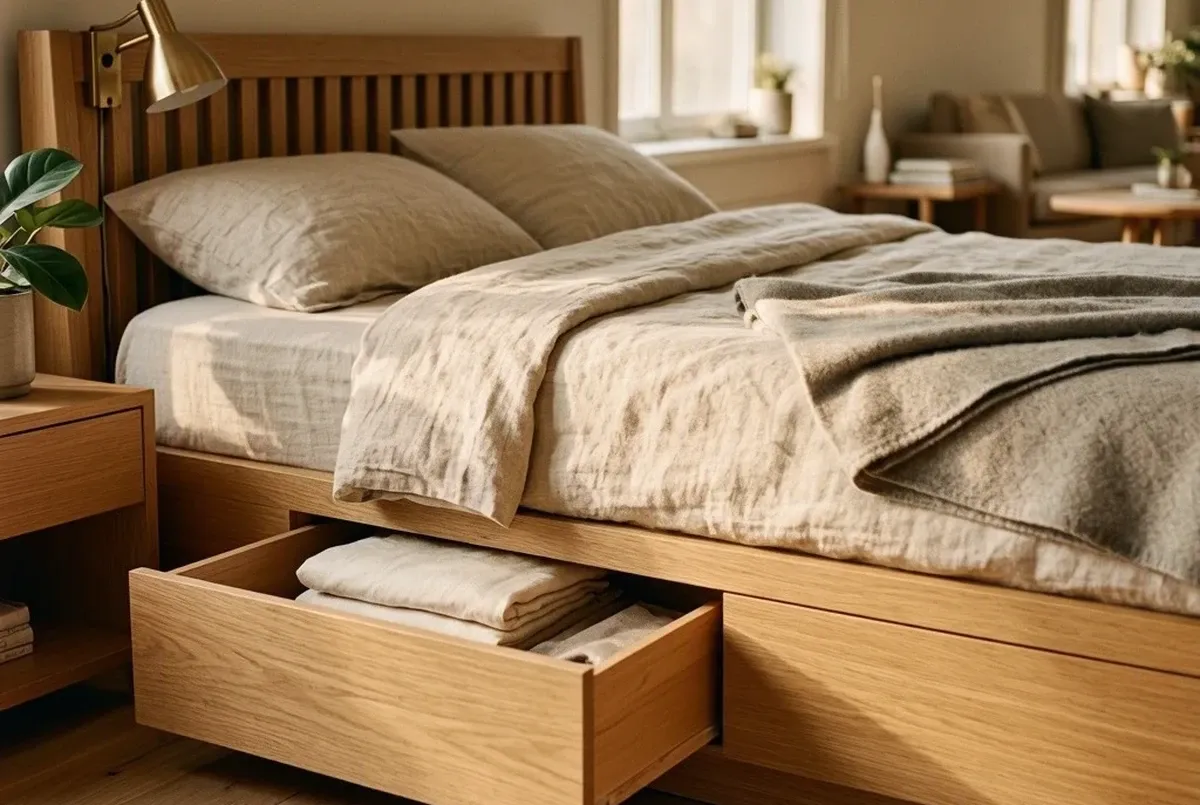
Skip a bed frame that's just a frame. IKEA's BRIMNES daybed frame with 2 drawers runs $199.99 for the frame alone, at 76¾ inches wide by 40½ inches deep, and turns the single largest object in the room into a storage piece, with two drawers underneath for bedding or off-season clothes.
The seat is where most people overspend on size. One armchair or a loveseat beats a full sofa in most studios under 500 square feet, since a three-seat sofa reads like a living room transplanted into a bedroom and eats the floor space you need to walk around the bed.
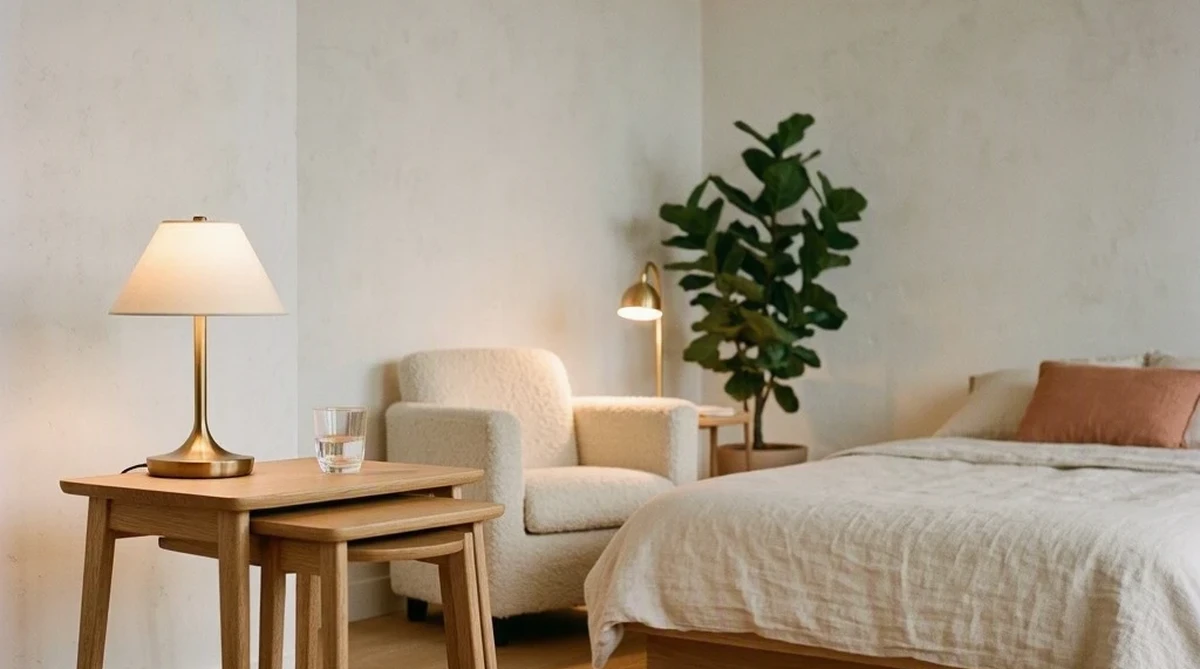
A single coffee table can't pull off what a set of nesting tables does. IKEA's LACK nesting tables, sold as a pair, slide together to take up almost no floor at all, or pull apart into a side table plus a footrest depending on the night.
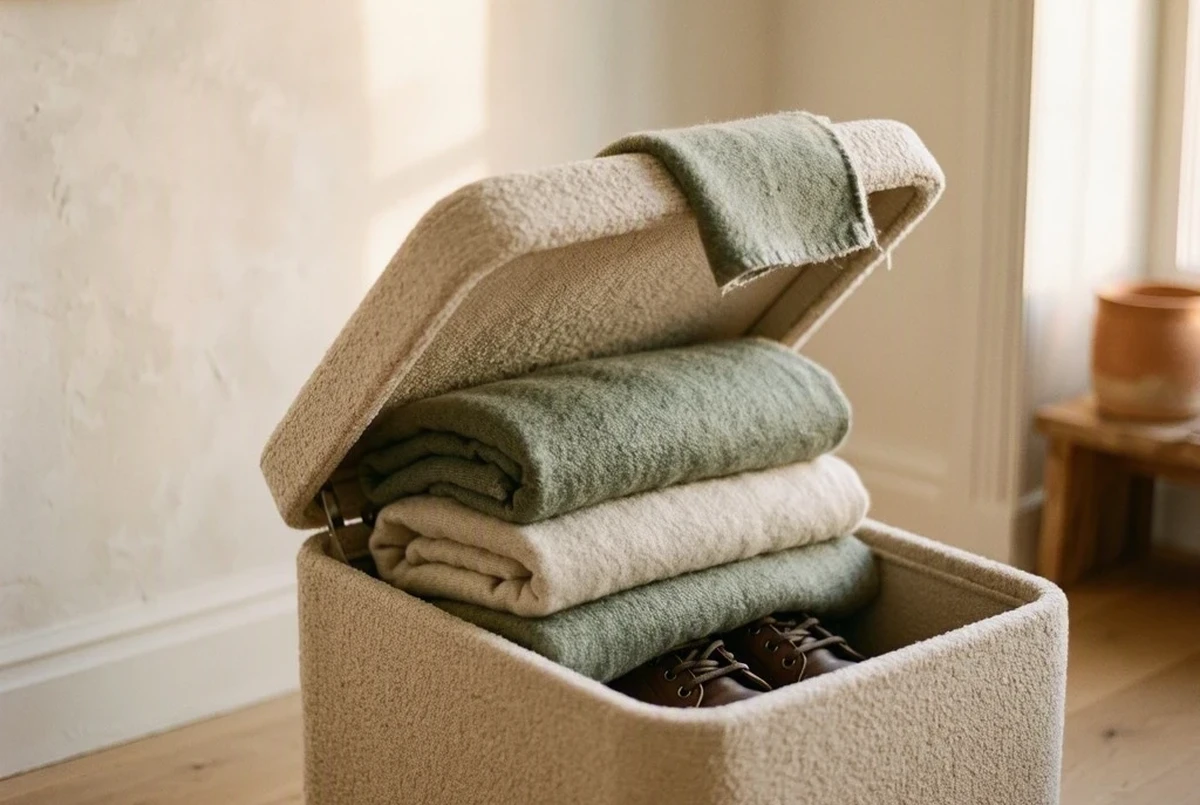
Storage is the piece people skip, and it's the one that matters most. A lidded ottoman replaces a dresser without looking like one. IKEA's BOSNÄS ottoman with storage runs $249 and holds folded clothes or linens under a boucle-upholstered lid that doubles as extra seating when people visit.
That's four pieces. If you can't name the job each item in your studio does, it's decor, not furniture, and decor gets edited harder.
How to Zone the Room Without a Wall
Use a rug and one piece of furniture to draw a line the eye respects, even though nothing physically divides the space.
A jute rug under the seating area, sized at least 5 by 8 feet, tells your eye where the living zone ends and the sleeping zone starts, the same way a floor material change would in a house. Anchor it under the front legs of your seating rather than floating it in the middle of the room.
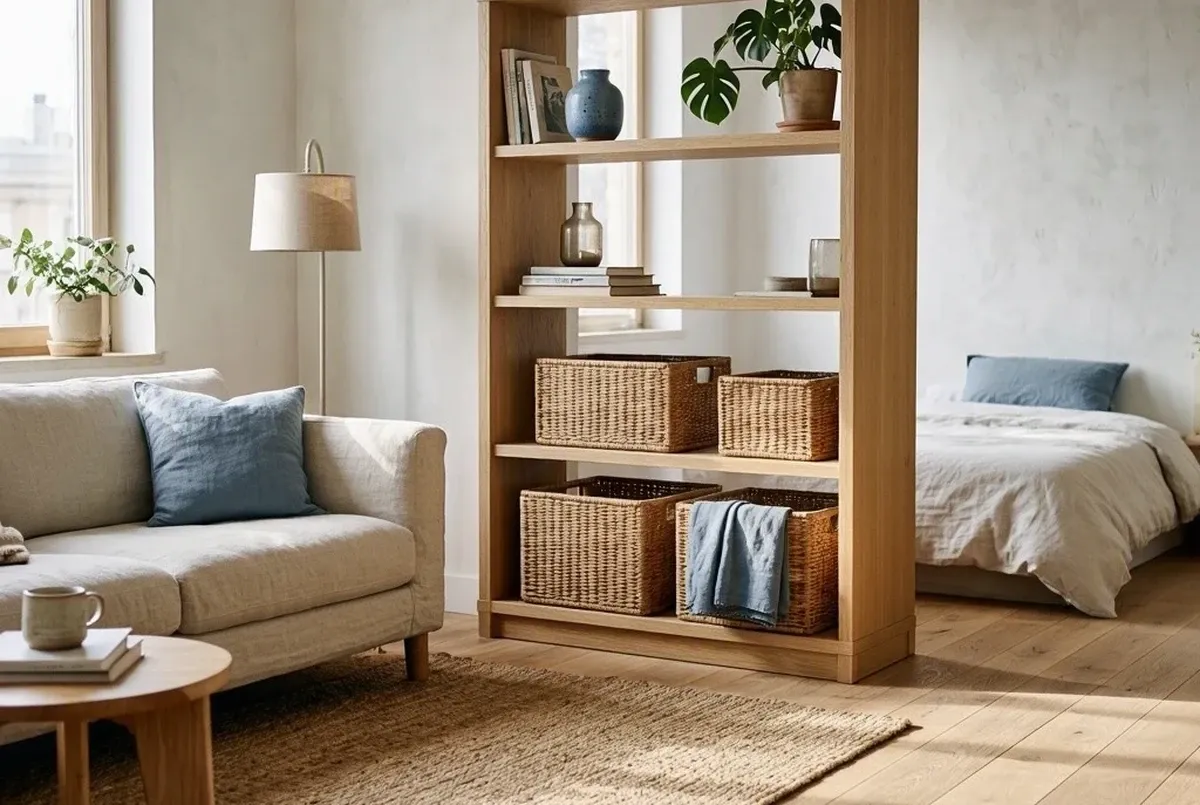
A freestanding open shelving unit does the same job with more storage attached. I cover the full range of freestanding and no-drilling divider options in the studio apartment room divider guide, but the short version here: position it perpendicular to a wall, between the bed and the seating area, and it reads as a room divider without blocking light the way a full partition would. Leave at least 30 inches on the main walking path around it, or the room starts to feel like an obstacle course instead of an open one.
Around the bed itself, aim for 24 to 30 inches of clearance on the side you actually use to get in and out. If the studio only allows one clear side, prioritize that one and let the other side sit close to the wall. The studio apartment floor plans guide walks through full layout options if you're still deciding where the bed goes at all.
The Color and Material Rule That Keeps It From Feeling Cold
Pick one wall color, or leave the existing white, then commit to two or three supporting neutrals and stop there.
The mistake I see most is renters treating "neutral" as an excuse to buy whatever's on sale, which produces a room with five different beiges that don't actually match. Choose warm white, oat, and light oak as your base, or cool gray, charcoal, and black as an alternative, and don't mix the two families in one room.
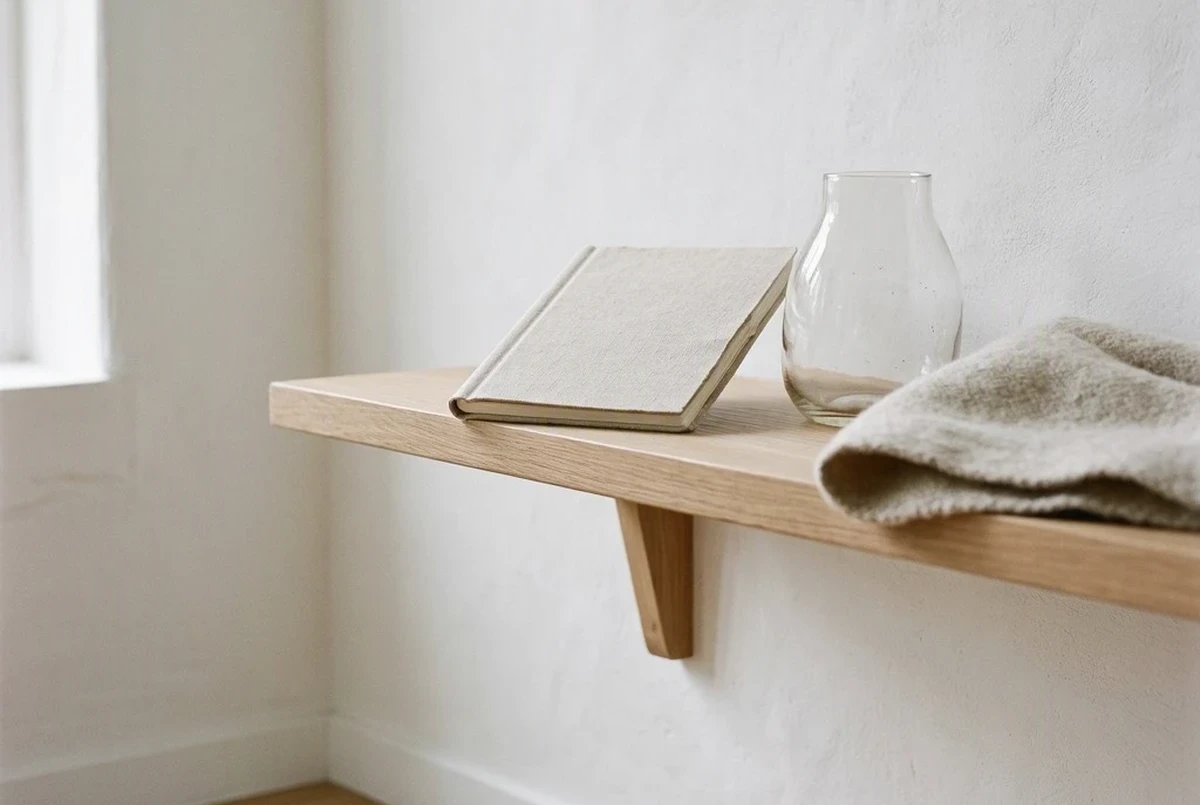
Warmth comes from material, not from adding more objects. A linen throw, a wool blanket, a glass vase, and unfinished wood grain read as considered even in a nearly empty room, because texture does the work that pattern and clutter usually do. The warm minimalist interior design guide covers this palette approach in more depth if you're applying it beyond just the studio's furniture.
One rule that saves a lot of second-guessing: no two adjacent surfaces share the same accent color. If your throw pillow is sage green, the vase next to it shouldn't be too. Repetition in a small room reads as decorating, not as a natural collection of things you own.
Where Everything Actually Goes
Every item that isn't currently in use needs a home inside a drawer, bin, or lidded container, not on a visible surface.
Under-bed storage handles clothes and linens if your bed frame doesn't already have drawers built in. Flat under-bed bins with lids keep dust out and stack two high under a platform bed with 8 or more inches of clearance.
A storage ottoman handles the items you reach for daily, shoes, a spare blanket, chargers, so they're one lid-lift away instead of visible on a chair. Vertical shelving above eye level holds things you use weekly but don't want competing for counter space, books, off-season decor, extra towels.
The rule that keeps this from sliding backward: for every new item that comes into the apartment, one existing item leaves. A minimalist studio isn't a one-time purge, it's a ratio you maintain.
What You Can Change as a Renter (and What You Can't)
Everything in this guide works with freestanding furniture, which means none of it needs landlord approval.
Rugs, curtains, freestanding shelving, nesting tables, and storage ottomans are all reversible. They move with you at the end of the lease and leave nothing behind for a walkthrough to flag.
Paint is the one place this guide asks you to check first. If you want to repaint toward the warm white or charcoal palette above, get written permission naming the color, and confirm whether you're expected to repaint to the original shade at move-out. Skip this step and a full repaint is one of the more common ways renters lose part of a deposit.
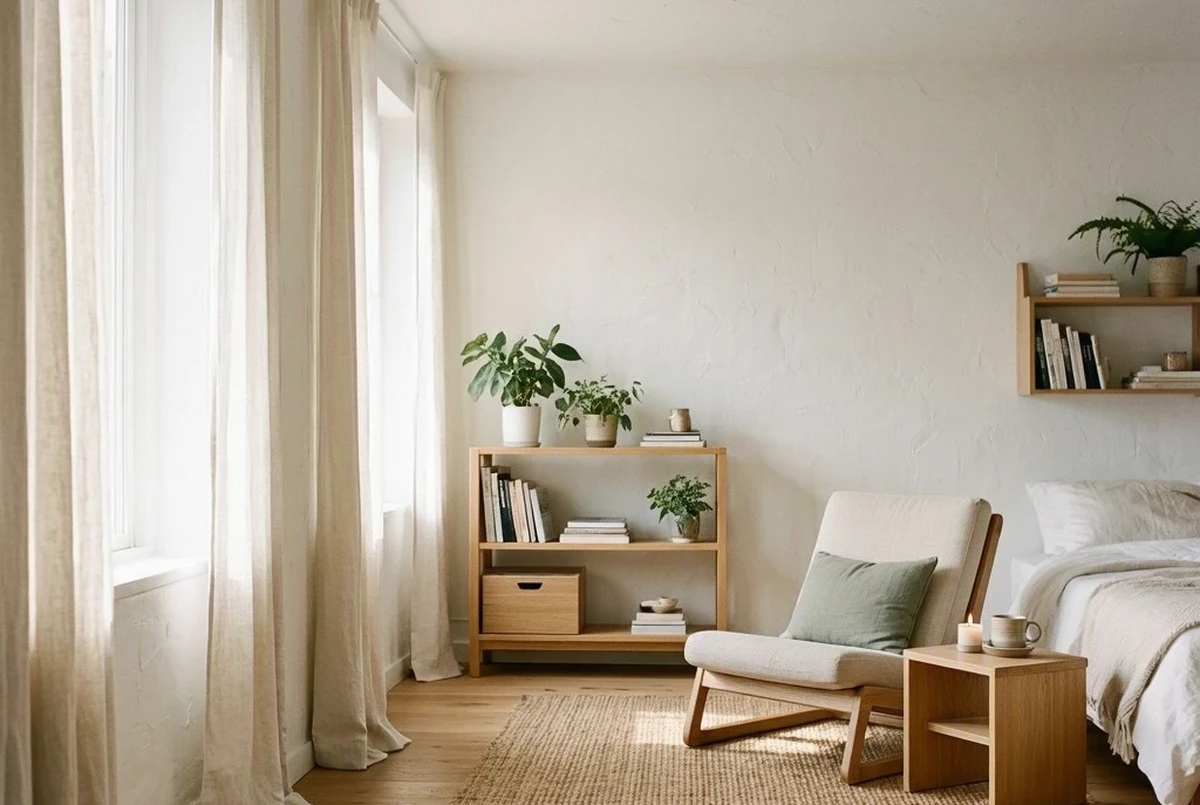
Wall-mounted shelving falls in between. Some leases allow small nail holes with reasonable wear, others don't. If yours is ambiguous, use a freestanding shelving unit instead of a wall-mounted one. It does the same visual job without a single hole.
Mistakes That Break the Look
Buying furniture before measuring the room. A sofa that looks small in a showroom can eat a third of a 450 square foot studio. Measure your actual clearances before you buy anything larger than a side table.
Matching everything too closely. A room where every piece of wood is the exact same shade of oak looks like a showroom, not a home. Slight variation between pieces reads as authentic.
Treating shelves as display cases. An empty shelf with three perfectly spaced objects photographs well and lives badly, real minimalism has slightly uneven stacks and one book left open somewhere.
Skipping storage to save money. A studio without enough hidden storage will always look cluttered no matter how few decorative objects you own, because the clutter is just your actual life with nowhere to go.
Going fully monochrome. An all-white or all-gray studio with zero material contrast reads as sterile, not minimalist. I've walked into rentals styled exactly this way and they photograph beautifully and feel like nobody lives there. The warmth has to come from somewhere, usually wood grain and natural fiber.
FAQs
How do I make a studio apartment look bigger?
Use a light, consistent color palette, add one mirror across from your main window, and pick furniture with visible legs instead of pieces that sit flush on the floor. All three let more of the actual floor show, which is what makes a room read as larger, not the square footage itself.
What furniture is essential in a minimalist studio apartment?
Four pieces: a bed that includes storage, one seat sized for the room, a flexible surface like nesting tables, and one lidded storage piece such as an ottoman. Everything beyond these four should earn its place by solving a specific problem, not just filling empty floor.
Should I use a room divider in a minimalist studio?
Yes, a freestanding open shelving unit works better than a curtain or screen because it adds storage while it divides. Position it perpendicular to a wall between your sleeping and living areas, with at least 30 inches of walking clearance on the main path around it.
What is the best bed for a small minimalist studio apartment?
A platform bed with built in drawers, like IKEA's BRIMNES daybed frame, since it turns the largest object in the room into your main storage piece. If your current bed frame has no storage, flat under bed bins are the next best option.
How do I keep a minimalist studio from feeling empty or cold?
Add warmth through material, not through more objects. A linen throw, a wool blanket, unfinished wood grain, and warm lamp light instead of overhead lighting do more for how a room feels than any amount of extra decor.
Can I fit a full sofa in a tiny minimalist studio?
Usually not comfortably. In a studio under 500 square feet, an armchair or a loveseat leaves enough clearance to walk around the bed, while a full three seat sofa tends to eat the exact floor space you need for circulation. Measure your actual clear path before buying.
How do I store things without ruining the minimalist look?
Give every item a closed home, a drawer, a lidded ottoman, or a bin, rather than a visible shelf. The rule that keeps it working long term: for every new item that comes into the apartment, one existing item leaves.
Start with the furniture list, not the decor. A studio with the right four pieces and nothing else already looks more finished than one with twenty small objects and the wrong bed.
Related Articles
- Studio Apartment Floor Plans: Layout Ideas for Small Spaces: full layout options for where the bed, seating, and storage actually go
- Studio Apartment Room Divider Ideas: the complete range of no-drilling ways to zone a one-room apartment
- Warm Minimalist Interior Design Ideas for Small Apartments: the broader palette and texture approach behind the color rule in this guide